
 E-Paper



Rethinking how the UN keeps the world together
This article is authored by Gunwant Singh, scholar, international relations and security studies, Jawaharlal Nehru University, New Delhi.

 Prefer HTon Google


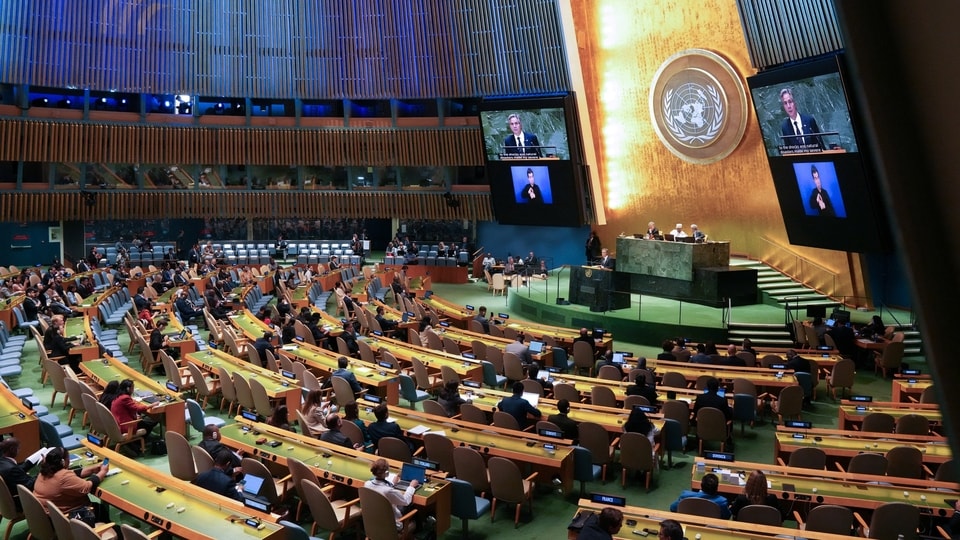
At a time when multilateralism is being tested like never before, the United Nations faces a formidable challenge: Dwindling funding for its vast network of programmes and missions. The UN has long been the bedrock of global cooperation, advancing causes ranging from peacekeeping and humanitarian relief to sustainable development and climate action. Yet, recent years have witnessed an unsettling pattern: member states have delayed or reduced their contributions, private donations have plateaued, and new crises continue to emerge faster than resources can be mobilised. The result is a growing gap between the UN’s mandates and its means. This funding shortfall threatens not just the functioning of the UN but also the stability of a global order that relies on a neutral arbiter to tackle transnational challenges. The question is no longer whether the UN needs alternative mechanisms to bridge this gap, but which ones are viable and what consequences they might carry.
One alternative gaining momentum is the expansion of voluntary contributions from non-state actors such as philanthropic foundations, corporations, and wealthy individuals. Organisations like the Bill & Melinda Gates Foundation have already played a pivotal role in supporting global health initiatives, partnering with UN agencies to tackle diseases like polio and malaria. By harnessing such private capital, the UN can tap into flexible funding streams that are not constrained by state politics or budget cycles. The advantage of this approach lies in its speed and ability to support innovative pilot projects that might otherwise get mired in bureaucratic delays. However, critics warn of the risk of corporate agendas shaping global priorities. When private funding becomes a significant driver of UN work, there is the danger that issues attracting media attention or aligning with corporate interests receive disproportionate focus, while less visible but equally critical problems, such as stateless populations or chronic poverty, are underfunded.
Another promising avenue is the use of blended finance and innovative funding mechanisms. This involves leveraging limited public funds to attract private investment for development projects, such as infrastructure, renewable energy, and health systems. Instruments like social impact bonds, green bonds, and development impact partnerships could allow the UN to multiply its impact while reducing reliance on assessed contributions from member states. The upside is the ability to unlock large-scale resources, encourage private-sector participation in global public goods, and promote shared accountability for results. The downside is that such mechanisms often work best in sectors where returns on investment are measurable, which may leave humanitarian work or peacekeeping, where outcomes are less tangible, struggling for resources. Moreover, dependence on financial markets makes this approach vulnerable to global economic fluctuations, as seen during the COVID-19 pandemic, when private investment sharply contracted.
Some have argued that the UN should adopt a form of global taxation to create a predictable revenue stream. Proposals have ranged from levies on international air travel to taxes on financial transactions or carbon emissions. The benefit of this model is clear: It could establish an independent and stable source of funding that does not rely on the political whims of member States. This would empower the UN to act more decisively in crises without waiting for pledges or negotiations. Yet, such an idea faces steep political and practical hurdles. Global taxation would require unprecedented international consensus and robust mechanisms to ensure fair collection and distribution, something that is difficult to achieve given current geopolitical rivalries. Additionally, critics caution against granting the UN what could effectively become a supranational taxing power, raising concerns about accountability, sovereignty, and bureaucratic overreach.
Technology also offers potential alternatives. Digital fundraising campaigns, blockchain-based transparency tools, and micro-donation platforms could democratise global giving, allowing ordinary citizens to directly fund UN initiatives they care about. This model has already shown promise in humanitarian crowdfunding, where millions of small contributions add up to significant sums. The advantage here is the empowerment of global citizens and increased trust through real-time tracking of funds. On the other hand, relying too heavily on small-scale donations risks creating volatility in funding and may not be sustainable for large, ongoing programs. Moreover, digital inequality means that the voices and resources of populations in the Global South, those most affected by UN work, could remain underrepresented in such efforts.
Regional cooperation is another avenue worth exploring. Rather than leaving the UN to carry the full burden, regional organisations such as the African Union, ASEAN, or the European Union could take on greater responsibility for funding and implementing solutions within their geographic areas. This approach could bring more tailored, context-specific interventions and reduce duplication of efforts. It also reinforces a sense of local ownership, which is often essential for sustainable peace and development. However, regionalising funding risks fragmenting the universality of the UN’s mission. Regions with greater wealth could afford better services, while poorer areas might be left behind, undermining the principle of equal treatment for all member States.
Despite these concerns, it is undeniable that a mix of these alternatives will likely be needed to address the funding shortfall. The challenge is to strike the right balance, preserving the UN’s neutrality and universality while allowing flexibility and innovation in financing. Policymakers must ensure robust governance structures to guard against undue influence, build transparency into all new funding mechanisms, and create safeguards that prioritise the most vulnerable populations. The UN itself must also reform internally to improve efficiency, cut waste, and demonstrate results more clearly, thereby earning the trust of both traditional donors and new contributors.
The future of the UN’s work depends on its ability to adapt to a shifting financial landscape. Relying solely on member State contributions is no longer a sustainable model in an era of rising geopolitical competition and domestic pressures on national budgets. Diversifying funding through private partnerships, innovative finance, global levies, technology-driven campaigns, and regional cooperation could provide the cushion needed to keep essential programs running. Each alternative brings its own benefits and risks, and careful calibration will be necessary to avoid undermining the core principles of multilateralism. What is ultimately at stake is not just the survival of the UN but the capacity of the international community to respond to the pressing challenges of our time: climate change, pandemics, displacement, conflict, and inequality. In a world where problems are increasingly global, the cost of an underfunded UN is one that humanity can ill afford to bear.
This article is authored by Gunwant Singh, scholar, international relations and security studies, Jawaharlal Nehru University, New Delhi.


