
 E-Paper



Russia's mixed fortunes and Europe's shifting balance
This article is authored by Pravesh Kumar Gupta, associate fellow (Eurasia), Vivekananda International Foundation, New Delhi.

 Prefer HTon Google


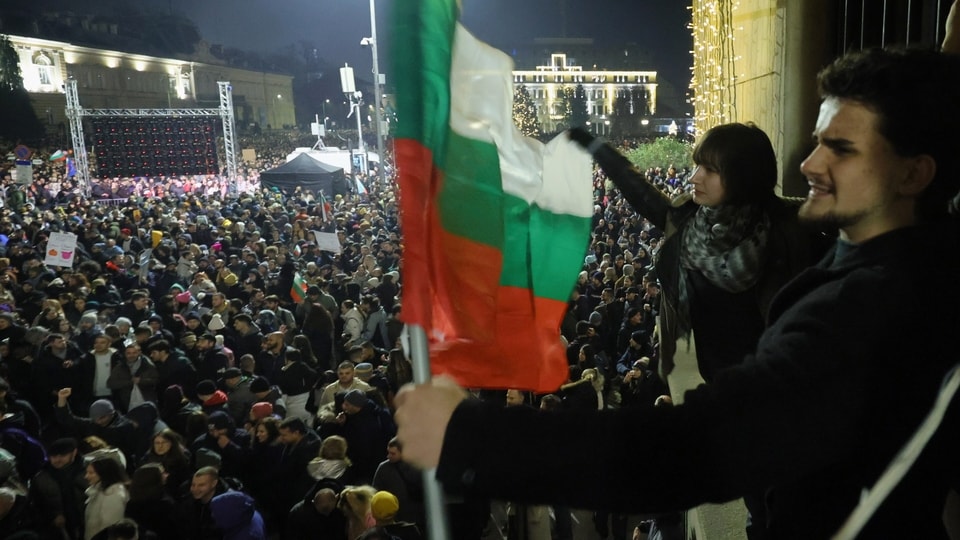
The dramatic political upheavals in Central and Eastern Europe in mid-April 2026 have delivered a blow to Russia's long-cultivated strategy of exploiting divisions within the European Union. Viktor Orbán's stunning electoral defeat in Hungary on April 12 removed Moscow's most dependable and high-leverage ally inside the EU and NATO, stripping the Kremlin of a reliable veto-wielder who had repeatedly slowed or diluted collective European responses to the war in Ukraine. Just days later, on April 19, Bulgaria delivered a contrasting result. Former President Rumen Radev and his newly-formed Progressive Bulgaria party secured a landslide outright majority. It emerged as the first decisive single-party government in nearly three decades.
While Radev's Russia-leaning stance offers Moscow a fresh opening for pragmatic dialogue and narrative influence in the Balkans, the net impact on EU-Russia relations tilts clearly negative for the Kremlin. Losing Hungary's obstructive power hurts far more than the partial compensatory gains in Sofia, as it strengthens overall European cohesion on sanctions, support for Ukraine, and strategic autonomy.
Hungary's election marked a historic turning point. After 16 years in power, Orbán and his Fidesz party suffered a crushing landslide loss to Péter Magyar's centre-right Tisza party. Magyar, a former Fidesz insider turned reformer, campaigned effectively on anti-corruption, economic renewal, and a return to mainstream European alignment. Voters rejected Orbán's illiberal democracy, persistent inflation, and the scandals that had eroded public trust.
For Russia, this represented a major strategic reversal. Orbán had positioned Hungary as a persistent internal brake on EU policy. He used veto threats or actual blocks to delay sanctions packages against Moscow, obstruct military and financial aid to Ukraine, slow Kyiv's EU accession process, and shield Russian energy interests. Hungary maintained heavy dependence on Russian oil and gas, often exceeding 80 per cent of its imports, and advanced controversial projects such as the Rosatom-built Paks II nuclear expansion.
In a consensus-based EU, one determined veto player like Orbán could create paralysis at critical junctures. With Hungary moving toward the European mainstream, decisions on tighter sanctions, sustained military support for Ukraine, and long-term security architecture become easier to advance. Analysts noted that even Slovakia's Robert Fico, another populist voice sceptical of full-throated aid to Ukraine, would struggle to replicate Orbán's level of obstruction alone.
Bulgaria's election, held against the backdrop of Hungary's result, offered Russia a glimmer of hope. Radev's Progressive Bulgaria party, formed only months earlier, surged to around 44.7% of the vote and an absolute majority of roughly 130-135 seats in the 240-seat parliament. This ended years of fragile coalitions and political instability. Radev, a former air force commander and president known for his pragmatic yet Russia-sympathetic positions, campaigned primarily on anti-corruption measures, tackling oligarchic influence, and delivering stability and economic relief. He has opposed sending arms to Ukraine, criticised aspects of EU sanctions, advocated practical relations with Moscow based on mutual respect, and in the past made remarks favourable to Russian narratives, including on Crimea. The Kremlin welcomed his calls for dialogue, seeing potential for resumed energy flows and reduced confrontation.
Bulgaria's deep historical and cultural ties to Russia, rooted in liberation from Ottoman rule, combined with lingering energy links, such as the Lukoil refinery, and pockets of pro-Russian sentiment in society, provide fertile ground for Moscow. Radev's victory taps into genuine public frustration with corruption and endless political gridlock rather than an outright rejection of the West. His government could amplify voices calling for peace talks in Ukraine, resist deeper militarisation of EU policy, and push for pragmatic economic engagement with Russia where possible.
However, the Bulgarian gain is significantly more limited and conditional than Orbán's former role. Unlike the Hungarian strongman, Radev has pledged to keep Bulgaria on its European path and has not threatened blanket vetoes that could paralyse EU decisions. Bulgaria is smaller, more economically dependent on EU cohesion funds, and has already taken steps toward deeper integration, including efforts to join the eurozone. Radev's style leans toward balanced pragmatism rather than aggressive obstruction. He will likely need cooperation from pro-European forces for major reforms, constraining any sharp pivot toward Moscow. Bulgaria may become a cautious advocate for dialogue and energy pragmatism, but it lacks Hungary's institutional leverage or willingness to act as a consistent spoiler.
A more cohesive EU, no longer hampered by one of its most persistent internal obstacles, stands better equipped to maintain sanctions enforcement, accelerate energy diversification and advance Ukraine's integration path.
For Europe, the mixed results from Budapest and Sofia represent cautious progress toward greater strategic unity. The shift in Hungary opens space for renewed momentum on Ukraine aid and sanctions, while Bulgaria's new government, though more Russia-friendly in tone, is unlikely to replicate the same level of disruption. This does not eliminate all frictions; energy realities, domestic politics in both countries, and broader war fatigue will keep Russia-relevant issues contentious.
The situation remains fluid. New governments in both capitals must navigate pressing domestic priorities; anti-corruption drives, economic recovery, and coalition or opposition dynamics, against the backdrop of ongoing geopolitical pressures from the Ukraine war. Péter Magyar's administration will balance pro-EU realignment with conservative instincts and practical energy needs, while Rumen Radev will test how far pragmatic engagement with Russia can go without alienating EU partners. April 2026 has nonetheless narrowed Russia's manoeuvrability inside the European project. Losing a high-impact ally in Hungary while gaining only a softer, more constrained voice in Bulgaria leaves Moscow adapting to a less favourable landscape, one where dividing Europe from within grows incrementally harder. In the months ahead, the test will be whether the EU capitalises on this opening to present a more resolute front, or whether residual dependencies and new populist undercurrents allow Russia to regain lost ground. For now, the balance has shifted, however modestly, in Europe's favour.
(The views expressed are personal)
This article is authored by Pravesh Kumar Gupta, associate fellow (Eurasia), Vivekananda International Foundation, New Delhi.


