
 E-Paper



A Sir Syed is born but once in centuries
This article is authored by MJ Warsi, president, Linguistic Society of India.

 Prefer HTon Google


Sir Syed Ahmad Khan was a great intellectual, an enlightened and forward-looking educationist, an outstanding literary genius, an erudite theologian, a versatile writer and a fearless journalist, a pragmatic social reformer, an apostle of secularism and Hindu-Muslim unity and very distinguished architect of modern India. Sir Syed Ahmad Khan had a clear vision with a very broad idea of what is needed by the Indian people to fight for their freedom and progress in centuries to come. His philosophical intellect made him a liberal rather than conservative.
It was the true nationalist in Sir Syed, who in 1859 had the courage of conviction to publish one of his most famous works Asbab-e-Baghawat-e-Hind (The Causes of the Indian Revolt) in which he exposed the aggressive expansionist policies of the British East India Company and their lack of understanding about Indian culture as the primary causes of the 1857 revolt.
Sir Syed was born at a time when there were a lot of rebellious and religious insurrections aided and led by the East India Company. He saw this as an opportunity and used his educational prowess to make an impact in such dire circumstances. Sir Syed is referred to by many as the “man who knew tomorrow”. He played a very influential role in bridging the gap between the Oriental and the western world. He knew what changes were required in society in order to move forward and keep up with the rest of the world. He dedicated his life to strike a balance between tradition and modernity and strived for traditional Oriental and western scholarship.
Sir Syed was one of those pioneering and revolutionary figures of history who have shaped the destiny of the nation and changed the course of history. Sir Syed, a great doyen of education in India who devoted his entire life to the educational upliftment of a community--which was despondent, dejected and had a deplorable socio-economic condition after the fall of Mughal Empire. Aftermath of the tragic events of the mutiny of 1857, and pondering deeply over the chaos into which the Indian Muslim had plunged, Sir Syed was the man whom destiny has chosen to play the role of a messiah for the community.
Sir Syed Ahmad Khan, a great thinker and a man with a vision always considered education as the basic need of modernisation, progress and development. His thoughts and ideas were not only central to the Indian freedom movement but became the bedrock of movements waged against oppressive regimes in various states. “Our focus is to carry the mission and philosophy of Sir Syed Ahmad Khan by making our students a good human being and also a successful professional through strategic teaching and guidance,” said Prof Naima Khatoon, the first woman vice-chancellor of Aligarh Muslim University, in one of her recent speeches.
Sir Syed Ahmad Khan also had forward-looking views on women and their rights. He was a strong voice, defending women’s rights and recognised their potential to contribute to the society, which again never used to be the case. Sir Syed was termed as a “collective individual” by French sociologist Pierre Bourdieu. He successfully managed to take up roles of a free-thinker, an administrator, reformer, educationalist, religious scholar and a devout family man. Sir Syed was a major proponent of western-style education and gaining a modern outlook of the world. He believed that this was the fundamental driving force the Muslim community needed in order to match the rest of the world.
Sir Syed also proposed a modern take on Islamic education, which included present-day science. This was not the norm at that time. Sir Syed was himself one of the most respected scholars of his time and despite being involved in political struggle as an active social reformist, he always found time for his academic pursuits. His topics of interest included history, politics, archaeology, journalism, literature, religion and science. Sir Syed felt like the future of Muslims would be in jeopardy if they continue to avoid modern science and technology. That is why he published many writings that promoted a liberal, rational and pragmatic train of thought. While posted in Aligarh in 1864, he founded the first scientific association in India called the Scientific Society of Aligarh.
Sir Syed gathered Muslim scholars from different parts of the country and modelled it after the Royal Asiatic Society. The society held several conferences and even collected and spent money for different educational causes. The purpose of this society was to translate western works into Indian languages so that Indian scholars can learn from the western world. Sir Syed was appointed as the fellow of Calcutta University in 1876 and fellow of Allahabad University by the Viceroy in 1887.
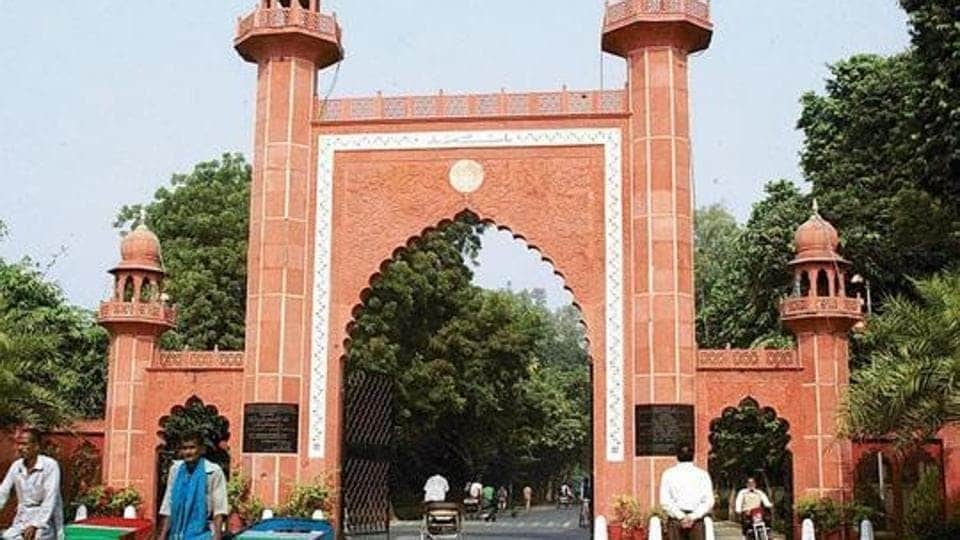
Sir Syed was the leader of the Aligarh movement and founded the Mohammadan Anglo Oriental College in 1875. This move marked the birth of the first Muslim University in South Asia and drove modern Muslim education to make a large political impact on Indian Muslims. Sir Syed modelled this college after Oxford and Cambridge after he took a trip to England. He wanted to build a college that aligned with the British education system without compromising on Islamic values. This movement encouraged poets and writers to switch from a romantic style of prose and poetry to a more cultural and political mind-set which influenced the common life of Indian Muslims. His philosophy and educational movement is more relevant today than ever before. Aligarh Muslim University is the outcome of this movement because a Sir Syed is born but once in centuries.
This article is authored by MJ Warsi, president, Linguistic Society of India.


