
 E-Paper



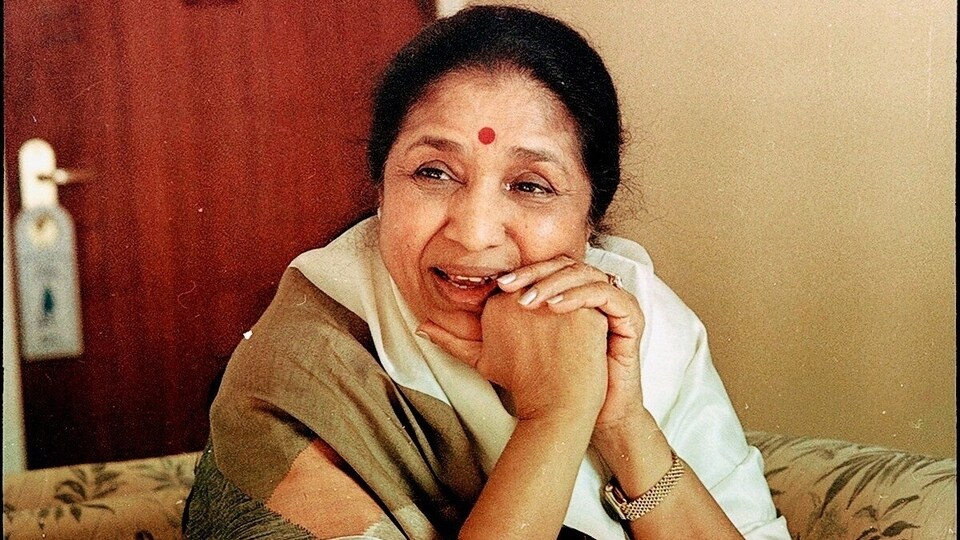
RIP Asha Bhosle: The voice that refused to age, reinventing itself across seven decades
Across seven decades, Asha Bhosle reshaped her sound with each era—remaining relevant from Hindi cinema’s golden age to global collaborations.

 Prefer HTon Google


With a repertoire of over 12,000 songs spanning more than 70 years, Asha Bhosle’s career resists the conventional arc of rise and decline. Instead, it unfolds as a story of constant reinvention, where each decade reflects not only her evolving musical instincts but also the shifting landscape of Indian film music.
1950s: The struggle years — finding a foothold
Entering playback singing in the late 1940s after the death of her father, Dinanath Mangeshkar, Bhosle spent much of the 1950s navigating the margins. With leading opportunities often going to Lata Mangeshkar and other established voices, she worked extensively in low-budget films. Collaborations with composers like Sajjad Hussain and Ghulam Mohammed helped her gradually gain recognition.
1960s: Crafting a distinct sound
A turning point came through her partnership with O. P. Nayyar. Bhosle became synonymous with rhythm-driven, western-influenced songs, often associated with cabaret and dance sequences. Tracks like Aaiye Meherbaan and Yeh Hai Reshmi Zulfon Ka Andhera carved out a unique space for her in mainstream Hindi cinema.
1970s: Reinvention and mass appeal
The 1970s marked her most commercially dominant phase, driven by her iconic collaboration with R. D. Burman. Songs such as Piya Tu Ab To Aaja and Dum Maro Dum captured the era’s shift toward youthful, experimental sounds. During this time, she also recorded extensively with leading male voices like Kishore Kumar and Mohammed Rafi.
1980s: Classical depth and ghazals
Moving beyond mainstream playback, Bhosle explored semi-classical and ghazal compositions. Her work in Umrao Jaan (1981), composed by Khayyam, earned her the National Film Award for Best Female Playback Singer for Dil Cheez Kya Hai. The phase highlighted her command over classical nuances.
1990s: Staying relevant in a new era
As Hindi film music evolved, Bhosle adapted seamlessly, collaborating with composers like A. R. Rahman. Songs such as Tanha Tanha and Rangeela Re from Rangeela resonated strongly with younger audiences. She also ventured into non-film music, embracing pop and independent formats.
2000s–2010s: The legacy phase
While her recording output became more selective, Bhosle remained active through international performances and collaborations. Her album You’ve Stolen My Heart, created with the Kronos Quartet, earned a Grammy nomination. Her contributions were further recognised with honours including the Padma Vibhushan in 2008.
2020s: The collaboration with Gorillaz
Even in her later years, Bhosle continued to engage with contemporary global music. In 2026, she featured on The Shadowy Light from The Mountain, a project by Gorillaz. The track, which included artists like Gruff Rhys and sarod players Amaan Ali Bangash and Ayaan Ali Bangash, was recorded across multiple countries. Her presence on the project underscored a rare continuity—remaining artistically relevant across generations, genres, and geographies.
In the end, Asha Bhosle’s journey is less about longevity and more about an instinctive ability to evolve with time without losing identity. From playback’s golden era to global collaborations, she didn’t merely adapt to change—she often anticipated it, staying a step ahead of the industry she helped shape. Decades on, her voice remains not just a relic of nostalgia, but a living, breathing force in music.


