E-Paper



12 cheetahs from South Africa set to arrive in India tomorrow
Twelve cheetahs from South Africa are set to arrive in India on Saturday, taking the total count of the big cats to 20 in Madhya Pradesh’s Kuno National Park, the Union environment ministry said on Thursday.

 Prefer HTon Google


Twelve cheetahs from South Africa are set to arrive in India on Saturday, taking the total count of the big cats to 20 in Madhya Pradesh’s Kuno National Park, the Union environment ministry said on Thursday.
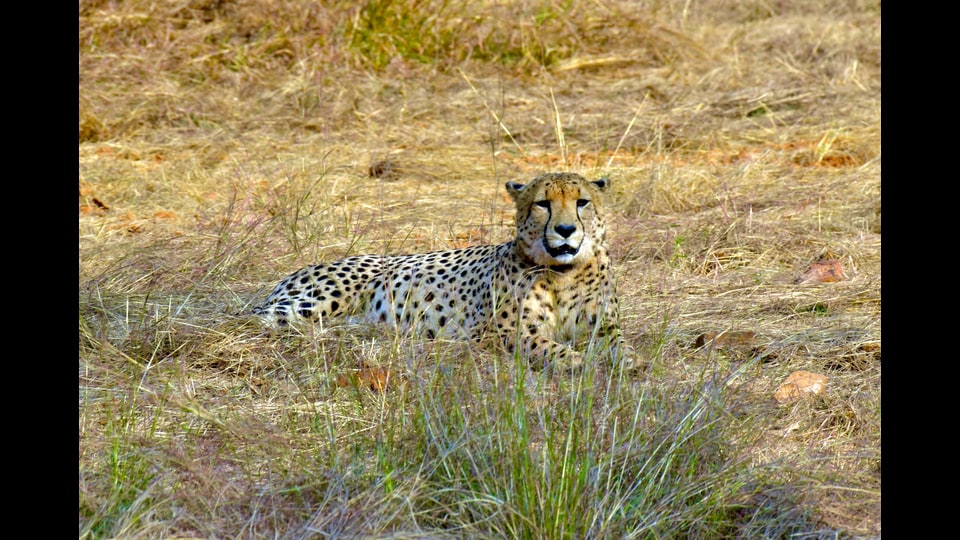
Kuno earlier received eight cheetahs — three male and five female — from Namibia on Prime Minister Narendra Modi’s birthday on September 17. The animal will return to a wild enclosure in India 71 years after the last recorded cheetah was hunted down in Chhattisgarh in 1952.
The seven male and five female cheetahs arriving on Saturday comprise the second tranche of big cats coming to Kuno, which was home to Asian cheetahs over 100 years ago.
The Indian Air Force’s C-17 Globemaster Cargo plane that will bring the 12 cheetahs from South Africa landed at Johannesburg’s OR Tambo airport on Thursday evening, and is set take off late on Friday, an official familiar with the matter said.
“They will arrive in MP from South Africa at 11am on Saturday. MP CM Chouhan and Union minister for environment, forests and climate change Bhupender Yadav will later release them in the quarantine bomas (enclosures),” Ramesh Gupta, the state’s head of forest force (HoFF), told news agency PTI.
The cheetahs identified for translocation are from Phinda Game Reserve in Kwazulu Natal (two male, one female) and Rooiberg Game Reserve in Limpopo Province (five male, four female).
According to experts in South Africa, seven of the 12 cheetahs have been in quarantine for more than seven months, which may impact their prospects for successful reintroduction.
“The seven-month quarantine period has the potential to negatively impact prospects for successful reintroduction, as the cheetahs would also have lost considerable fitness, condition and vigilance during this period,” said the expert, who didn’t wish to be named. The other five cheetahs are stated to be fit as they were recaptured in December 2023, the expert added.
“The reproductive ability of the females would have been compromised as fertility is reduced if females only start breeding later in life, or go through long periods without breeding. This has the potential to compromise their successful establishment in Kuno,” said Vincent Van der Merwe, cheetah metapopulation project head.
He, however, added: “They are wild-born and know what to do. They will slowly regain fitness and conditions, but it would have been better if they only did two months in boma...”
Indian officials said that the cheetahs have undergone extensive health check-ups and they are fit to be translocated.
“The longer duration of captivity will not leave any impact on the cheetahs. The Namibian cheetahs were also in captivity, but after release in 6 sq km predator-free boma, they hunt properly and satisfying their hunger by killing preys that were totally new herbivores for them,” National Tiger Conservation Authority (NTCA) member secretary SP Yadav said
Once they arrive, the cheetahs will be kept in quarantine for a month and their health will be closely monitored, he added.
“We have a goal of creating a sustainable and viable meta population in India which is around 40 individuals. We will consider Project Cheetah a success when we have a viable population of 40 cheetahs and there is successful breeding every year,” Yadav said.
On the eight cheetahs from Namibia living at Kuno, Yadav said: “They are marking, or scratching on trees, and you can see them in groups which means they are forming coalitions. They are also hunting every 3-4 days...”