E-Paper



12 years of Modi govt, from 2014 to 2026, ‘golden period’ for India's security, says Amit Shah
Shah said that after the repeal of Article 370, “India has succeeded in reducing violence in Kashmir, North-East, and Maoist-infested areas by 80%”.

 Prefer HTon Google


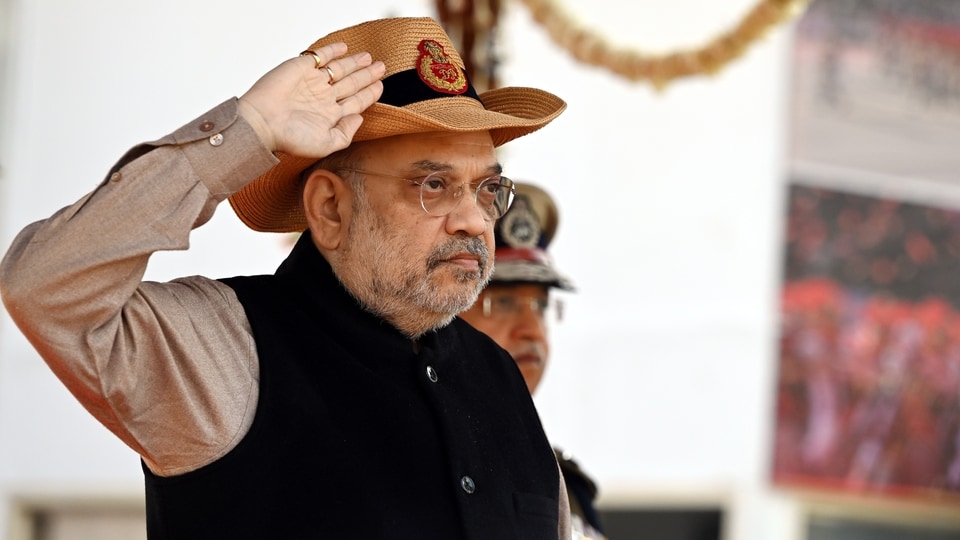
Union home minister Amit Shah on Monday described the period from 2014 to 2026 as a “golden period” for India’s internal security, asserting that the country has significantly curbed violence in key conflict regions and that the day is not far when it will be eradicated entirely. He was addressing the 79th Raising Day celebrations of the Delhi Police as the chief guest.
In his address, Shah said that before 2014, three major challenges posed serious threats to internal security: Kashmir, the entire North-East, and Maoist-affected areas spread across around 11 states.
“I feel proud to share this… After the repeal of Article 370, India has succeeded in reducing violence in Kashmir, North-East, and Maoist-infested areas by 80%. The day is not far when there will be no violence here,” he said.
ALSO READ | Amit Shah lays foundation stone for 10 Delhi Police projects on 79th Raising Day
The home minister inspected the ceremonial parade, awarded medals to personnel and commended the force for its dedication and role in maintaining public safety.
The celebrations featured a coordinated march past by the police’s best marching contingent, SWAT team, dog squad, band unit, motorcycle riders, PCR units and other specialised formations.
Shah also announced a series of initiatives aimed at strengthening policing infrastructure in the Capital. He said a Police Families Welfare Society was being inaugurated, along with the first phase of the “Safe City” project for Delhi. A newly built integrated headquarters of the Delhi Police Special Cell, constructed at a cost of ₹368 crore, was also inaugurated and is expected to bolster counter-terror operations.
ALSO READ | Amit Shah accuses Rahul of misleading on trade deals, says PM Modi safeguarded farmers
“The first phase of the Safe City Project has also been inaugurated. The modern Integrated Command Control Communication and Computer Centre (C4I), built at a cost of approximately ₹857 crore, is being dedicated to the people of Delhi. A total of 11 district-level C3I centres and 75 police station-level C2I units will also be integrated with it. In the first phase of the programme to connect Delhi with 10,000 cameras, 2,100 cameras have already been connected live... I am confident that the ‘Safe City’ project will advance Delhi’s security in the coming days” he said.
Shah also said that the conviction rate in criminal cases will rise to 80% after the full implementation of the three new criminal laws – the Bharatiya Nyaya Sanhita (BNS), Bharatiya Nagarik Suraksha Sanhita (BNSS), and Bharatiya Sakshya Adhiniyam (BSA), replaced the Indian Penal Code (IPC), Code of Criminal Procedure (CrPC), and Indian Evidence Act – in the country in the coming years.
ALSO READ | Naxalism has reached the verge of its end, says Amit Shah after review meet
He said the laws were passed by Parliament to ensure faster justice delivery. “Within three years, we will ensure that any FIR filed in any corner of the country, not only punishes the criminal but also provides justice to the victim, and reaches the Supreme Court,” he said.
He added that a separate chapter has been introduced in the new laws for crimes against women and children.
Provisions such as e-FIRs and Zero FIRs have been given legal backing, community service has been formalised as punishment for minor offences, and properties of proclaimed offenders located abroad can now be confiscated.
Shah highlighted the unique responsibility of policing the national capital – the city houses the offices and residences of the President and the Prime Minister and hosts numerous national and international events. He said that this means that the responsibility of Delhi Police increases significantly, and the force has consistently discharged its duties with excellence.
He praised the Delhi Police’s Special Cell for playing a successful role in probing narcotics syndicates, fake Indian currency notes, cybercrimes, organized crime, and several major terrorist incidents not only in Delhi, but across the nation.
Delhi Police commissioner Satish Golchha, welcoming the home minister, said the force remains prepared to handle any situation in the Capital.
The police chief said the priorities of the force include building a “drug-free India”, eliminating cyberterrorism and dismantling organised crime. He said nine gangsters were killed in encounters in 2025 and that the Special Cell, with support from central agencies, is monitoring 32 gangsters who fled abroad.