
 E-Paper



Naxalism has reached the verge of its end, says Amit Shah after review meet
Union Home Minister Amit Shah announced progress in combating Left-Wing Extremism in Chhattisgarh, citing security strategies and infrastructure development.

 Prefer HTon Google


Raipur: Security-centric strategy, infrastructure development, and disruption of Maoist financial networks have yielded positive result in the fight against Left-Wing Extremism (LWE), Union home minister Amit Shah said on Sunday after chairing a high-level security review meeting in Chhattisgarh’s Raipur.
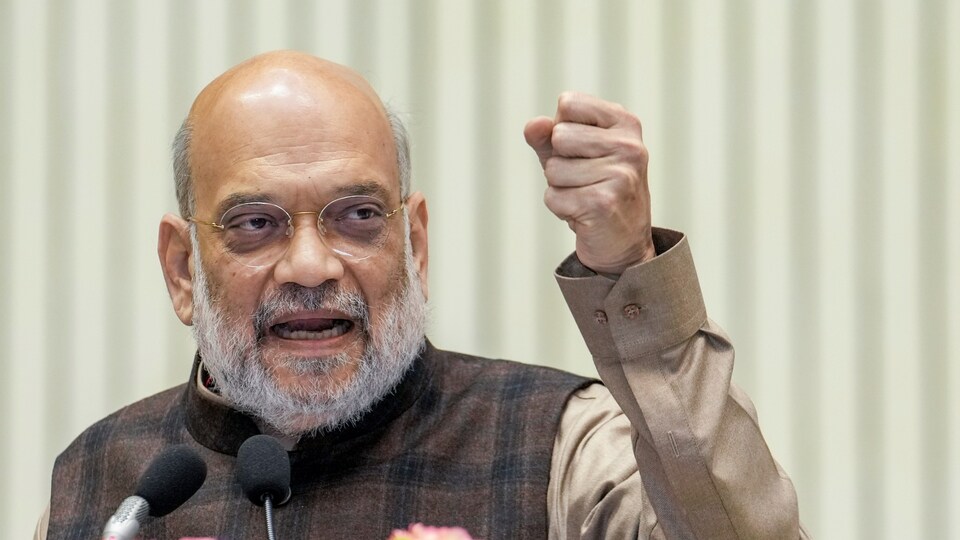
Shah reiterated that the Naxal menace will be completely eradicated from the country before March 31 this year.
“The double-engine government has been leaving no stone unturned to completely eradicate the menace of Naxalism from the country, and it has reached the verge of its end,” Shah said.
ALSO READ | Amit Shah visits forward areas along IB in Kathua, chairs security review meet in Jammu
In a post on X, Shah said: “The security-centric strategy, infrastructure development, targeting of the Naxal financial network and the surrender policy have yielded positive results, and Naxalism will be completely eradicated before March 31.”
The meeting was attended by Chhattisgarh chief minister Vishnu Deo Sai, deputy CM Vijay Sharma, Union home secretary, director of Intelligence Bureau (IB), and special secretary (Internal Security) in the ministry of home Affairs, officials said. Directors General of the Central Reserve Police Force, Border Security Force (BSF), Indo-Tibetan Border Police (ITBP) and National Investigation Agency (NIA) also attended the meeting, along with the police chiefs of Chhattisgarh, Odisha, Maharashtra, Jharkhand and Telangana, and other senior officers.
Later in the day, addressing a conclave of Organiser Weekly, Shah said the country must get rid of what he termed the “destructive” communist ideology at the earliest and appealed to Naxalites to lay down arms, assuring them that the government would welcome those who surrender “with a red carpet.”
ALSO READ | Anti-Naxal strategy yielding results, menace will be eradicated by March 31, says Shah
Shah asserted that the Maoist problem cannot be attributed to lack of development or viewed merely as a law-and-order issue. “Left-Wing Extremism is an ideology-driven challenge,” he said, adding that people should understand the “truth” of communist ideology. “Wherever communists remained in power, they could not bring development. Communist ideology is indicative of destruction, and the country needs to get rid of it immediately,” Shah said.
He claimed that communist ideology has largely disappeared from democratic politics. “It does not exist in Tripura and Bengal. In Kerala, it is surviving to an extent; however, people have started the change from Thiruvananthapuram,” he said, referring to recent electoral gains by the BJP in the Kerala capital.
ALSO READ | MHA, Panchayati Raj Ministry plan to jointly strengthen local self-governance in Naxal-hit areas
According to police data, since January 2024, more than 500 Naxalites, including senior leaders such as CPI (Maoist) general secretary Nambala Keshava Rao alias Basavaraju, have been killed in encounters in Chhattisgarh. During the same period, around 1,900 Naxalites were arrested and over 2,500 surrendered in the state.
-kW0H-U20214218012MgB-250x250%40HT-Web.jpg)


