
 E-Paper



1st S-400 unit to be ready by April, 4 others by 2023
All the five units of the S-400 system, which can take down a hostile aircraft or missile at a range between 40km and 400km, are expected to be operational by next year.

 Prefer HTon Google


India has begun work on deploying the S-400 Triumf advanced surface-to-air missile defence system, with the first unit to be made operational in April, HT learns.
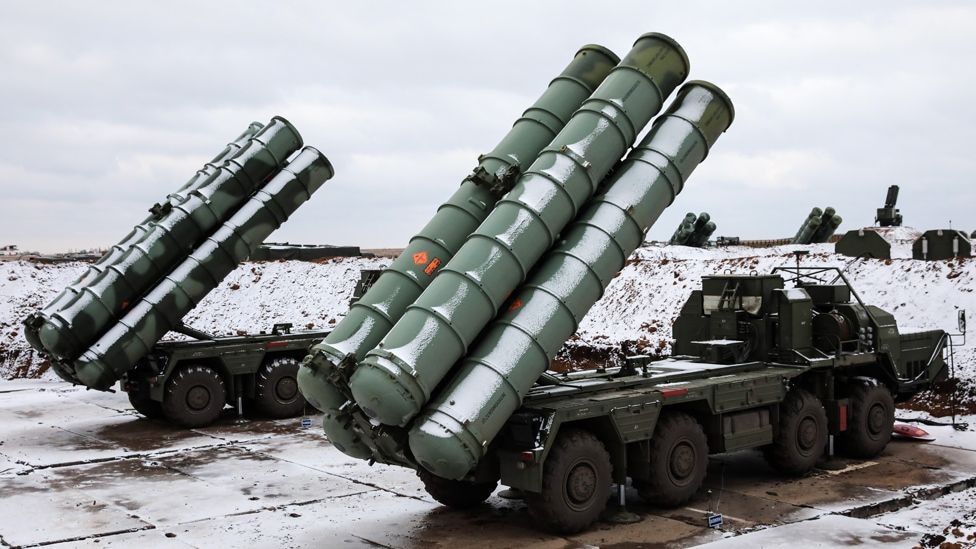
While the Narendra Modi government remains tight-lipped about the entire project, officials with direct knowledge of the matter have told Hindustan Times that all five units will be deployed in depth areas to tackle the threat from China.
All the five units of the S-400 system, which can take down a hostile aircraft or missile at a range between 40km and 400km, are expected to be operational by next year.
Also Read| US trying to undermine S-400 deal, India showed it’s a sovereign country: Lavrov
The S-400 system was purchased from Russia through a $5-billion deal signed in October 2018.
The Indian Army and the Chinese PLA are locked in a stand-off across the 597km-long Ladakh LAC since May 2020, with Beijing reluctant to restore the April 2020 status quo ante in Gogra-Hot Springs and restore India’s unhindered patrolling rights in Depsang Bulge in Daulet Beg Oldi (DBO) sector and Charding Nullah Junction (CNJ) in Demchok sector. PLA has already deployed two S-400 systems across LAC in Ngari Gar Gunsa (opposite Demchok) and Nyingchi (across Arunachal Pradesh) with the remaining three deployed to tackle the threat from the Indo-Pacific.
James O’ Brien, President Joe Biden’s nominee for the US State Department’s coordinator for sanctions policy, told the Senate Foreign Committee last Wednesday during his confirmation hearing that while the US has discouraged India from acquiring the S-400 systems from Russia, Washington’s decision on whether to sanction India under the Countering America’s Adversaries Through Sanctions Act (or CAATSA; a law that aims to penalise Russia, North Korea and Iran and countries dealing with them, by extension) or grant a waiver will be done only after weighing important geostrategic considerations in relations to China. He said that it was difficult to compare India with Turkey (which has been sanctioned by the US for buying the S-400 system from Russia) as the latter was a NATO ally that broke with legacy deals on defence procurement systems. In contrast, India is a partner of growing importance, and one with legacy defence relations with Russia.
HT learns that India has made clear to its close ally US through top diplomatic and security channels that the acquisition of Russian S-400 system was in its national interest as it is faced with a belligerent PLA all along the 3,488km-long LAC.
While India has offered technical solutions so that the S-400 system does not share details on US manufactured military aircraft and helicopters with Russia, it has also decided that all five systems would be deployed to protect India from the mounting military threat from Beijing.
Also Read| S-400 purchase is based on threat perception, government tells Parliament
Already, advance consignments of two S-400 systems have arrived in India from Moscow and work is on to assemble the systems and the radars by Indian teams trained in Russia.
Analysts say that the fact that the systems will be deployed against China may well weigh in on the US decision; China, at this point, is the US’s primary concern.
The S-400 system is one of a kind with a powerful radar at the heart of the offensive air defence system.
It can track multiple targets at multiple ranges and neutralise them before the adversary’s fighter, bomber or missile, pose a threat, using anti-missiles with varying range.
The S-400 system is so powerful that it is capable of tracking, engaging and addressing the threat of Chinese fighters the moment they take off from air bases near the Line of Actual Control.


