
 E-Paper



2026 is almost here: Where in the world is the New Year celebrated first and who does it last?
Across the hours of the day, different regions celebrate the new year at different times due to Earth's rotation, resulting in time zone differences.

 Prefer HTon Google


The year ends every year as the clock ticks midnight on December 31, with a celebration of the past 365 days and a hope for a better set of days ahead. But the moment doesn't come everywhere at once.
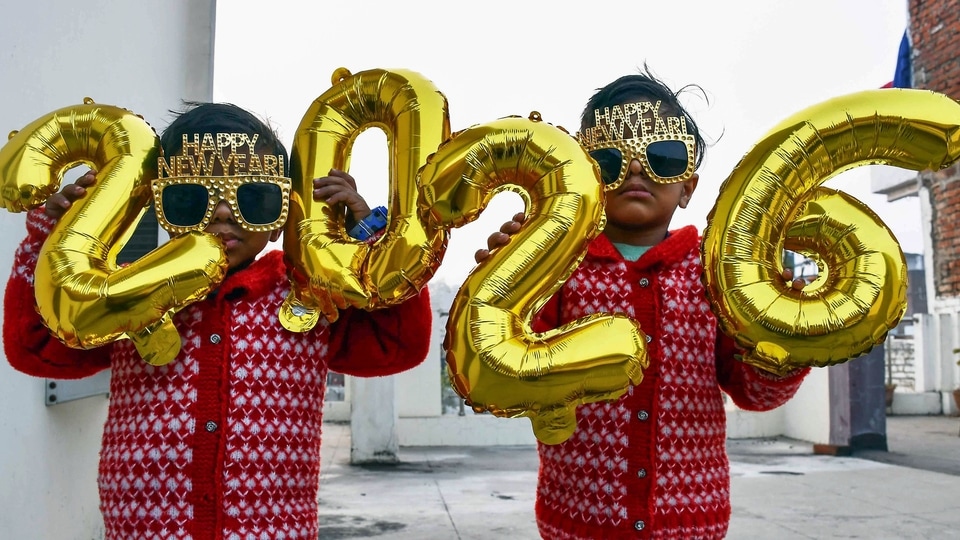
Across the hours of the day around the world, different regions celebrate the new year at different times due to Earth's rotation, resulting in time zone differences. It is more than a full day of celebrations, and the countdown to the calendar change is staggered.
From tiny Pacific islands to bustling metropolises, the time difference creates a wave of fireworks, cheers, and resolutions that rolls across the globe. So the question is, where does the new year arrive first, and which region gets to celebrate it last? And where is India in this rolling clock?
The first and last to celebrate the New Year
The first: Kiritimati Island in Kiribati is the first place in the world to welcome the New Year. The island is located in the UTC+14 time zone, just west of the International Date Line. This is the reason that it celebrates everything before anyone else. The remote Pacific Island is known as Christmas Island and is often symbolic of the world’s earliest countdown.
The next in line is New Zealand, where the Chatham Islands ring in the new year the earliest. It is followed by the mainland, with Auckland hosting the centrepiece of the celebration at the Sky Tower.
Australia follows soon after a couple of hours later. Sydney on the East Coast welcomes the new year first among the Australians, where the fireworks display at the Sydney Harbour Bridge continues to dazzle the world year after year. Other cities in the country join the celebrations later, according to their time zones.
After Australia, the new year arrives in East Asia, with Japan and South Korea joining the worldwide celebration. It is a mix of traditions and modernity here, with Buddhist traditions like ringing the bell 108 times gel well with modern fireworks, concerts and everything in between.
The calendar-changing event then comes to China and Southeast Asia. China has a bigger celebration during its lunar new year festivities day but December 31 still gets a big show in most urban spaces in the country. Hong Kong, Singapore and other countries in the region also hold spectacular fireworks, mostly at the harbours.
India and the rest of the world: After the Sino-southeastern Asian festivities, it's India that gets to celebrate the arrival of the New Year. Major cities like Delhi, Mumbai, Bengaluru host big New Year's bashes, with partygoers revelling till long after midnight. But the Indian New Year scenes also include traditional family gatherings. The timing places the country midway in the global countdown.
From India, the new year bell sounds then travels through Western Asia to Europe. The celebrations on the continent span multiple time zones, ranging from UTC+0 in London to UTC+2 in Eastern Europe. London’s Big Ben chimes at midnight, Paris lights up the Eiffel Tower, and Berlin hosts massive street parties at the Brandenburg Gate. Each city has its own flavour.
The Americas then get their turn, with each country and even each city within a country having its own distinctive style to mark the occasion. From Brazil’s Copacabana Beach in Rio de Janeiro to the Times Square Ball Drop in New York City, the diversity adds to the flavours of the celebration.
The last: The final places to celebrate the new year in the UTC -12 zone are American Samoa and the Baker and Howland Islands. Midnight here falls nearly a full day after Kiribati and marks the end of the global wave of celebrations.


