E-Paper



BJP sweeps all 3 Rajya Sabha seats in MP unopposed after Congress' Meenakshi Natarajan’s nomination rejected
Returning officer Arvind Sharma handed over certificates to BJP’s Rajneesh Agrawal, Tarun Chugh, and Mahesh Kevat after the deadline for withdrawals ended

 Prefer HTon Google


The ruling Bharatiya Janata Party (BJP) on Thursday won unopposed the three Rajya Sabha seats from Madhya Pradesh after the rejection of the nomination papers of the Congress party’s sole nominee two days ago.
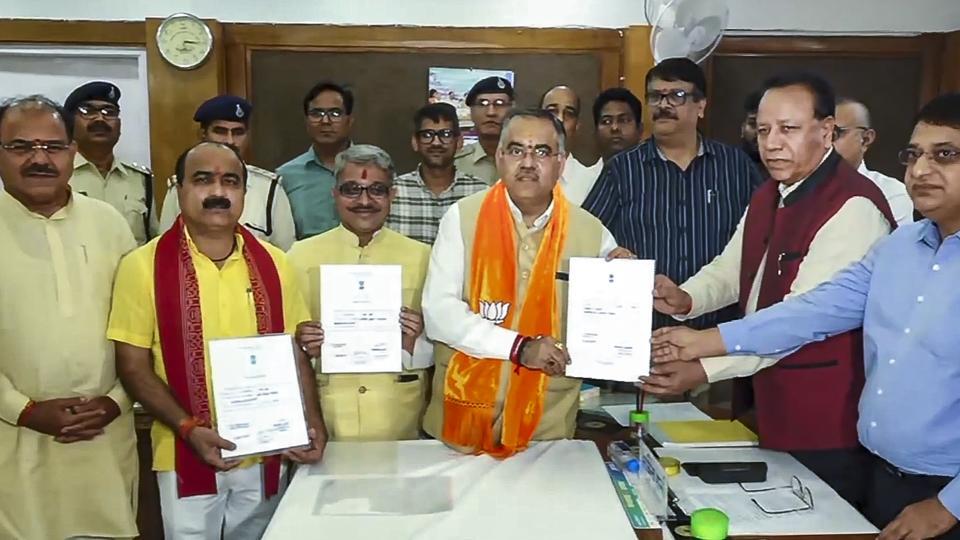
Returning officer Arvind Sharma handed over election certificates to BJP candidates Rajneesh Agrawal, Tarun Chugh, and Mahesh Kevat after the deadline for withdrawals ended with no other candidates in the fray.
ALSO READ | SC refuses to stall MP Rajya Sabha poll process, lists Meenakshi Natarajan’s plea for Friday
Congress nominee’s papers rejected
The walkover materialised after Congress candidate Meenakshi Natarajan’s nomination was rejected on Tuesday after BJP leaders, including Kevat filed an objection, alleging Natarajan had concealed details of a pending case in a Hyderabad court in her election affidavit.
The returning officer upheld the objection, ruling she had filed an incomplete form and failed to disclose a court summons issued in connection with a rape case filed against a Congress leader in Telangana in 2022.
Supreme Court agrees to hear challenge
The RO’s decision to declare the three BJP candidates elected came hours after the Supreme Court agreed to hear Natarajan’s petition challenging the rejection of her nomination papers but declined to halt the ongoing electoral process for the Rajya Sabha elections from Madhya Pradesh.
ALSO READ | Congress to challenge Meenakshi Natarajan’s RS nomination rejection in Supreme Court
“My nomination has been rejected even though there is no cognisance taken by the court. How can they do this?” senior lawyer Abhishek Singhvi told a bench of justices Prashant Kumar Mishra and Atul S Chandurkar, requesting for an interim order preventing the declaration of the election result.
The bench, however, observed that the law laid down by the Supreme Court in Election Commission of India Vs Ashok Kumar (2000) was clear that courts should ordinarily refrain from intervening once the electoral process has commenced.
Congress alleges bias
Leader of Opposition in the state assembly Umang Singhar accused Election Commission officers of acting as a “rubber stamp” for the BJP.
“If you can validate a BJP candidate in Jharkhand, why didn’t you make such a decision in Meenakshi Natarajan’s case? This makes it clear that the Election Commission is acting as a rubber stamp for the BJP. The returning officer blatantly flouted the rules, ignoring Supreme Court guidelines,” Singhar said.
Mahesh Kevat, the third BJP candidate who benefited due to the rejection of Natarajan’s nomination papers, credited the BJP’s grassroots focus for his elevation. “It can happen only in the BJP that a small worker from Bundelkhand like me becomes a Rajya Sabha MP,” Kevat said.