
Sign in

30 cities should have maximum restrictions in lockdown 4.0: Official

Complete list of 30 cities that may have the maximum restriction under Covid lockdown 4.0 to be announced on Sunday

Updated on: May 16, 2020, 23:33:20 IST
Hindustan Times, New Delhi | By
Share
Share via
  • facebook
  • twitter
  • linkedin
  • whatsapp
Copy link
  • copy link

Thirty municipal areas including Mumbai, Delhi and Kolkata that account for nearly 80% of India’s coronavirus cases should have the maximum restrictions under the Home Ministry’s lockdown 4.0 ground rules, the health ministry has told the government.
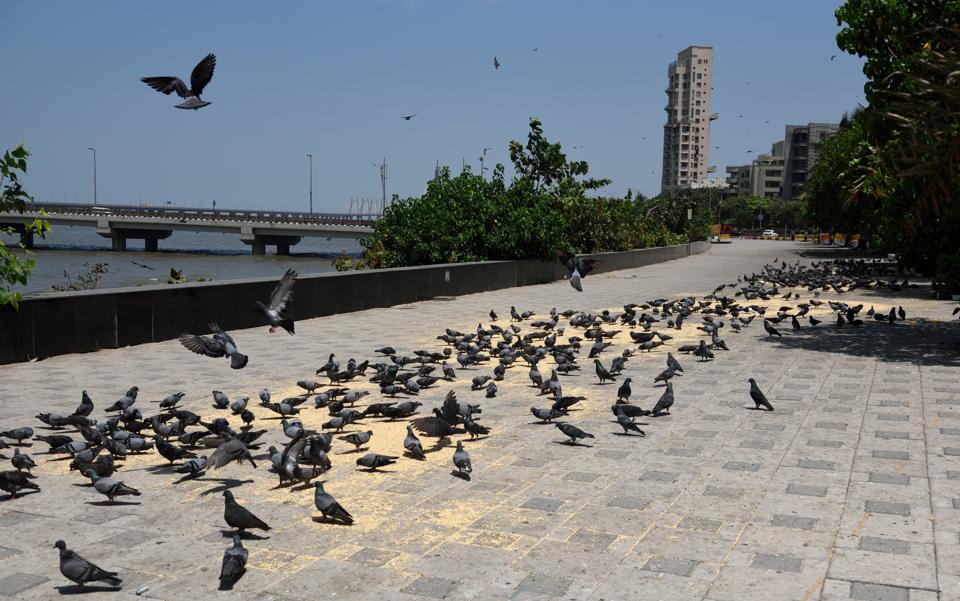
In Covid lockdown 4.0, 30 cities of India that have reported 80% cases may have the maximum restrictions. (Satish Bate/HT Photo)

The third round of the lockdown, first imposed on March 24 midnight, is due to end on Sunday night.

There is no word on the extent of the restrictions that would be imposed in lockdown 4.0. The ground rules for the next round would be made public on Sunday.

The last version of the lockdown that came into effect from 4 May had introduced considerable relaxations in districts that had not reported Covid-19 cases and eased restrictions elsewhere. The Centre’s objective, starting from the first round of relaxations from 21 April, has been to gradually resume economic activity.

Prime Minister Narendra Modi had this week told chief ministers that the Centre would opt for another spell of the national lockdown but made it clear that lockdown 4.0 would be very different from the earlier three versions. He had also indicated that this time, the Centre would give a long rope to the states to decide how to ease the restrictions.

The rules for lockdown 4.0 have been designed to give a hard push to resumption of economic activity but continue some of the restrictions in municipal areas that have reported a large proportion of the restrictions.

These 30 municipalities are spread across 12 states. Maharashtra and Tamil Nadu account for over one-third of these municipalities. Gujarat and Rajasthan have three cities each in this list and West Bengal, two.

Covid-19 hotspots: 30 municipal areas

Maharashtra : Brihanmumbai, Thane, Pune, Solapur, Nashik, Aurangabad and Palghar

Tamil Nadu : Greater Chennai, Tiruvallur, Cuddalore, Chengalpattu, Ariyalur and Villupuram

Gujarat : Ahmedabad, Surat, Vadodara

Rajasthan : Jaipur, Jodhpur and Udaipur

West Bengal : Kolkata and Howrah

Madhya Pradesh : Indore and Bhopal

Uttar Pradesh : Agra and Meerut

Telangana : Greater Hyderabad

Andhra Pradesh : Kurnool

Punjab : Amritsar

Odisha : Berhampur

Delhi

The government’s renewed focus on the urban areas comes in context of data that suggests these 30 cities are home to most of the country’s Covid-19 case.

On Saturday, Health Secretary Preeti Sudan held a special meeting with municipal and health officials from the 12 states where the 30 municipal corporations are located. The meeting discussed the high risk factors and reviewed indices such as confirmation rate, fatality rate, doubling rate, tests per million for these places. She also updated the states about the health ministry’s new guidelines aimed at such urban settlements, particularly informal settlements such as Mumbai’s Dharavi slums.

Maharashtra, Tamil Nadu, Gujarat and Delhi account for nearly 68 per cent of India’s 86,000 Covid cases.

On Saturday, Maharashtra reported 1,600 new cases, one of the highest single-day spikes, pushing the state’s total to 30,706.

  • Shishir Gupta
    ABOUT THE AUTHOR
    Shishir Gupta

    Shishir Gupta is Executive Editor at Hindustan Times and one of India's top journalists covering national security, strategic affairs, foreign policy and geopolitics. Over the past three decades, he has extensively reported on India's military, diplomatic and security landscape, covering every major conflict and national security challenge, from the 1999 Kargil War and the 2020 East Ladakh standoff to Operation Sindoor in 2025. He has also covered major terror attacks, including the IC-814 hijacking, the 26/11 Mumbai attacks and the 2025 Pahalgam terror strike, along with numerous Pakistan-backed terrorist incidents in the Kashmir Valley and across India. He has reported on national and state elections for more than three decades. A recognised authority on strategic affairs, Gupta has covered India's nuclear programme since the Pokhran-II (Shakti series) tests in May 1998 and has written extensively on global nuclear issues, Indian diplomacy and the country's expanding global outreach. He has also reported widely on international conflicts and terrorism, with a special focus on the Indian subcontinent. Gupta has interviewed Prime Minister Narendra Modi more than four times, including Modi's first interview with the print media after becoming Prime Minister in May 2014. His other interviews include three with the Dalai Lama, as well as conversations with Benjamin Netanyahu, Amit Shah, Yogi Adityanath, S. Jaishankar, Nirmala Sitharaman and Piyush Goyal. He is the author of Indian Mujahideen: The Enemy Within (Hachette, 2011) and Himalayan Face-off: Chinese Assertion and Indian Riposte (Hachette, 2014). He was awarded the Chevening-Wolfson Joint Scholarship at Wolfson College, University of Cambridge, UK, in 1998 and participated in the International Visitor Leadership Program (IVLP) of the US State Department in 2006. He received the Ben Gurion Prize from Israel in 2011 and the K. Subrahmanyam Prize for Strategic Studies in 2015 from the Manohar Parrikar Institute for Defence Studies and Analyses (MP-IDSA). Since 2024, he has hosted Point Blank, Hindustan Times' weekly YouTube show on global geopolitics.Read More

Get the latest India News, breaking headlines and real-time updates from across the country. Stay informed about politics, government policies, crime, weather and major national developments.