
 E-Paper



4 Indian Navy warships on high seas after strike
The Shia Houthi rebels in Yemen have been targeting merchant shipping in the region, causing concern for maritime security.

 Prefer HTon Google


The Indian Navy has gone on heightened surveillance-operational alert in the Arabian Sea after the drone attack on Mangalore-bound chemical tanker MV Chem Pluto, sending four guided missile destroyers out on the high seas to protect commercial shipping from missile-drone attacks in the West Asia region, people familiar with the matter said on Monday.
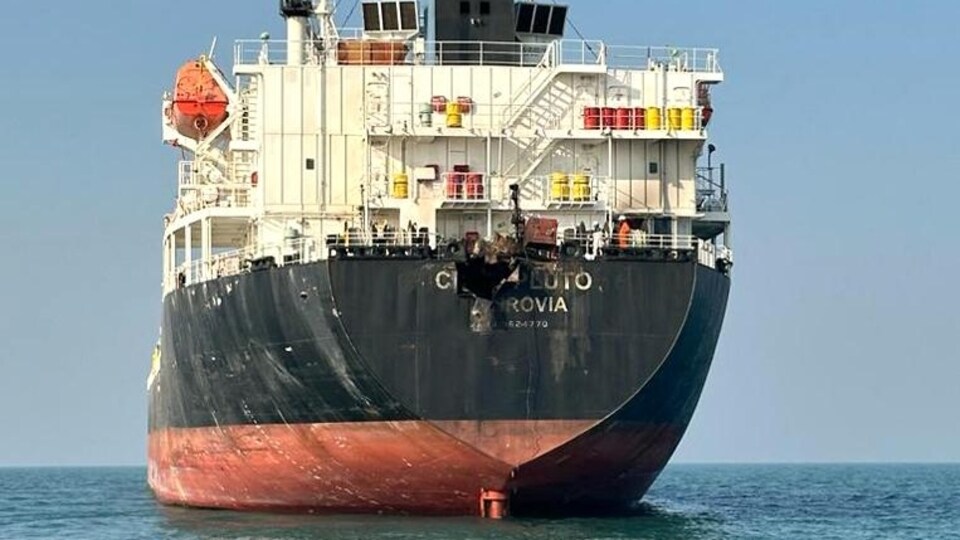
The navy has also launched P8I multi-mission aircraft as well as Sea Guardian drones for better maritime domain awareness even as the drone-hit MV Chem Pluto reached the Mumbai harbour in the early hours on Christmas day, the people added.
READ | Navy scrambles jets after suspected drone hit on merchant ship
An Indian defence team was on the ship to investigate the drone attack at the time of going to print. The chemical tanker was struck 210 nautical miles off Dwaraka in Gujarat, 500 nautical miles off the Iran coast, and 860 nautical miles off the coast of Yemen. At the time, it had two Iranian vessels in proximity — MV Saviz and MV Artenos — and the possibility of the drone being launched from a bulk carrier cannot be ruled out yet, said the people cited above, asking not to be named.
With Shia Houthi rebels, who control large parts of Yemen, targeting merchant shipping in the Red Sea and in the north Arabian Sea, Indian warship INS Kolkata is already on the mouth of the Red Sea awaiting instructions from New Delhi in case any further intervention is required. Destroyer INS Kochi is in north Arabian Sea and destroyers INS Visakhapatnam and INS Chennai are already operating on the high seas to ensure that sea lines are kept open and any military obstruction is countered immediately. All the four warships carry Brahmos land attack missiles as well as surface-to-air missiles with anti-submarine helicopters on board.
READ | Guided missile destroyer INS Imphal to be commissioned on Dec 26 | Top points
Navy tanker INS Deepak is also on the high seas for replenishment as well as an offshore patrol vessel (OPV), the people said.
While the Iranians have dismissed American claims that it was they who targeted MV Chem Pluto, the possibility of the Houthis using a 1,350-nautical mile range Iran-manufactured Shahed drone to target the chemical tanker cannot be ruled out, security experts examining the incident said. The intentions of the Houthis of targeting merchant tankers indiscriminately in the Arabian Sea and the Red Sea has become evident in recent days, and emerges as a cause of serious concern to maritime security in the region. The attacks appear to be in order to pressure the US-led coalition to ask Israel to cease military operations against the Hamas in Gaza war, these experts added.
While the US Navy has two carrier strike forces in the region, the Persian Gulf and Gulf of Oman are crowded with large tankers and bulk carriers carrying oil to various parts of the world. On average, 50 ships traverse the Suez Canal with 12% of global trade and 30% of global container traffic, worth around US$1 trillion per year. After the Houthi attacks, a significant percentage of shipping has been diverted via the Cape of Good Hope, resulting in an increase in cost and oil consumption.


