
 E-Paper



96% Indians breathe hazardous air: Study
At least 200 million in India live in extreme poverty and are exposed to dangerous levels of air pollution, a recent study by World Bank experts estimates, also projecting the country to account for close to 47% of the 2.8 billion people exposed to hazardous quality air.

 Prefer HTon Google


At least 200 million in India live in extreme poverty and are exposed to dangerous levels of air pollution, a recent study by World Bank experts estimates, also projecting the country to account for close to 47% of the 2.8 billion people exposed to hazardous quality air.
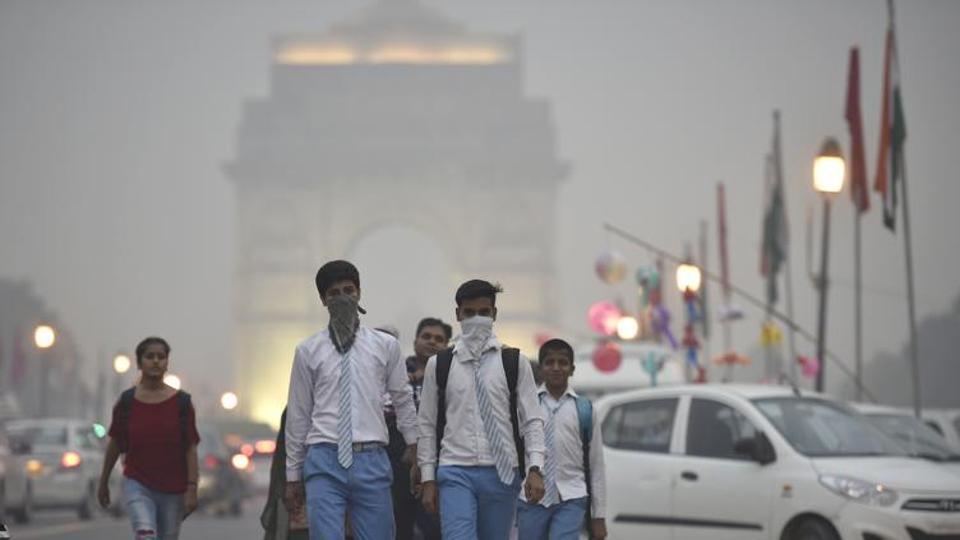
The report offers the first estimates of how many people are exposed to bad air based on the World Health Organization’s new thresholds released last year. The thresholds identify concentration of ultra-fine PM2.5 particles above 5microgram per cubic metre of air (ug/m3) as unsafe and 35ug/m3 as hazardous – exposure to hazardous air is linked with an over 24% increase in mortality rate.
In absolute terms, 1.33 billion (96%) of India’s estimated 1.39 billion people breathe hazardous air, the report said. Of these, “over 202 million” people were those that lived on a daily wage of less than $1.9 ( ₹145) -- or in extreme poverty.
Also read: 97.6% in Maharashtra exposed to unsafe levels of air pollution: Report
Most of the world does not meet the ‘safe’ standard of the WHO, with 96.4% of the global population exposed to air with a PM2.5 concentration above 5ug/m3.
But it is the hazardous level exposure, most of which is in people in middle income countries like India and China, that is more dangerous. And among these, the extreme poor are most at risk.
“For them, the same air pollution level is likely to imply more severe health risks than for higher income households. Among low-income population groups, high proportions of physical and outdoor labour mean that they are faced with heightened exposure and intake of pollutants. Constraints in terms of the accessibility, availability and quality of health care provision further increase air pollution-related mortality among poor people,” said the report, a policy research working paper -- separate from official reports of the World Bank.
Also read: Sustained awareness drives on air pollution can help bring in behavioural changes: Survey
Experts in India concurred. “This is the double burden for public health. The poorer population is more vulnerable due to lower level of nutrition and health. They have a range of underlying diseases that enhances their risk. They also have a higher exposure to toxic air pollution because they reside in areas where air pollution control is very weak. So, a combination of factors increases their exposure and makes them more vulnerable to health impacts,” said Anumita Roy Chowdhury, executive director, Centre for Science and Environment.
Therefore, Roy Chowdhury added, “an environmental justice framework is being discussed for air pollution control to reduce the disproportionately high risk for the poor”.
Also read: Air pollution linked with more severe Covid-19: Study
While the report did not go into indoor air pollution, a second expert flagged it as another significant risk. “Not having access to cleaner fuels increases the exposure of poor people to hazardous air pollution. The Ujjwala scheme is there but we know that a majority of rural families are not able to afford refuelling cost and are continuing to depend on freely available solid biomass fuels,” said Sunil Dahiya, an analyst with the Centre for Research on Energy and Clean Air.


