
 E-Paper



A year after HC ruling, Jagan govt’s capital focus shifts to Visakhapatnam
State finance minister Buggana Rajendranath Reddy said Visakhapatnam was chosen for the capital because it had infrastructure like ports, industries, ideal climate, cosmopolitan culture and had the scope for development with little investment


Hyderabad : A year after the Andhra Pradesh high court delivered its judgement declaring Amaravati as the only capital of the state, the focus has now shifted to Visakhapatnam, which the Y S Jagan Mohan Reddy government has proposed to develop as the executive capital of the state.
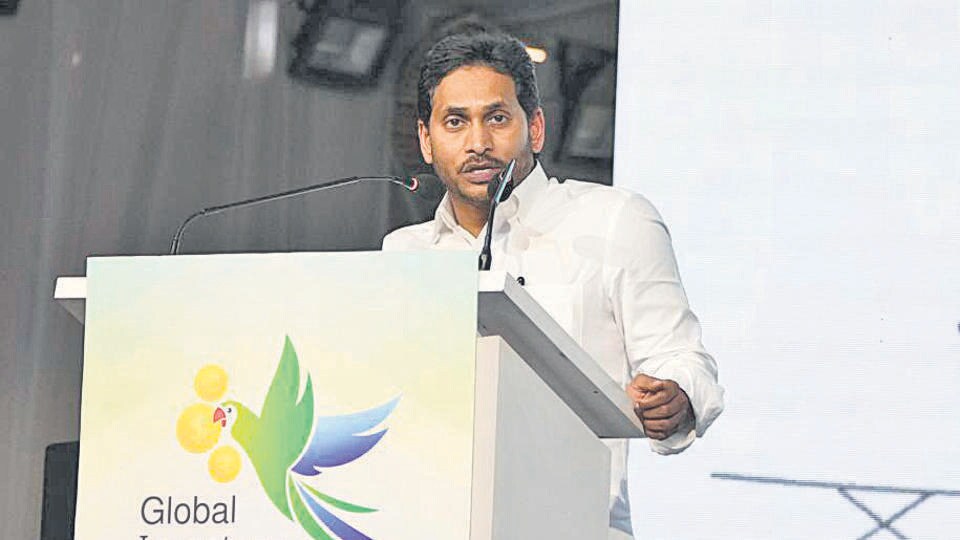
The state government projected Visakhapatnam, which was spruced up for the Global Investors Summit held on March 2-3, as the future capital of Andhra Pradesh and showcased it as a potential investment destination.
At the inaugural of the GIS, Jagan reiterated that Visakhapatnam is going to be the executive capital of Andhra Pradesh. “Very soon, I will also be moving to this beautiful city,” he declared.
State industries minister Gudivada Amarnath said by projecting Visakhapatnam as the state capital, the state government would be instilling a confidence among the investors and remove uncertainty about the capital issue.
Capital in legal wrangle
It was on March 3 last year that the state high court, after hearing for nearly two years, declared Amaravati as the only capital of the state and ruled that the state legislative assembly has no legal competence to make any laws on shifting of the capital.
The high court also directed that the state government complete all the pending infrastructure works in Amaravati, including abandoned government buildings as per the master plan, within six months.
It was a setback for the Jagan government, which had proposed to create three capitals for the state – executive capital at Visakhapatnam, judicial capital at Kurnool and legislative capital at Amaravati.
A year down the line, nothing has moved in Amaravati – the works on the capital infrastructure continued to be standstill. The abandoned buildings continue to lie in a state of neglect, the road network completely shattered and thick bushes and jungles have come up all around the capital area.
As many as 28,526 farmers of 29 villages, who had given away 34,385 acres of their fertile land under Land Pooling System (LPS) for the construction of the capital city at Amaravati in 2015, continue to agitate for restoring the works.
In September last, the Jagan government filed a special leave petition in the Supreme Court challenging the high court judgement on continuing Amaravati as the capital. In November, the Supreme Court granted partial relief to the state government by removing the time limit on the completion of pending works in Amaravati but refused to stay the high court judgement.
A day before the commencement of the GIobal Investors Summit at Visakhapatnam, the state government made a special mention before the Supreme Court comprising Justice K M Joseph, Justice B V Nagarathna and Justice Ahsanuddin Amanullah, seeking early hearing of its special leave petition on the capital issue.
The bench, however, posted the case to March 28 for hearing in the wake of multiple petitions pending before it – both in favour of and against Amaravati as the capital city.
Visakhapatnam via-a-vis Amaravati
The previous Telugu Desam Party government led by former chief minister N Chandrababu Naidu had chosen Amaravati, located between Vijayawada and Guntur, as the greenfield capital city, despite the concerns raised by the Sivaramakrishnan Commission appointed by the Centre in 2014 about its location, which is a fertile agricultural land.
Naidu had his own reasons for selecting Amaravati as the capital city – it is centrally located and is equidistant from all parts of the state; it has plenty of water availability in the form of Krishna river; it has an airport within 30 km range, besides rail and road connectivity, among others.
Since Amaravati would be a greenfield capital city, it can be planned according to international standards – Naidu had in mind cities like Putrajaya near Malaysian capital of Kuala Lumpur and Singapore city.
However, soon after Jagan came to power, he dumped Amaravati capital city project as he felt it was too expensive. “It would require, as per the estimates made by the previous TDP regime, at least ₹1 lakh crore, which the state cannot afford to spend,” he said in the last assembly session in December.
On the other hand, the chief minister said, Visakhapatnam has ready-made capital infrastructure and there won’t be any major burden on the government. “By spending another ₹10,000 crore on creating additional infrastructure, Visakhapatnam could be developed as a world-class capital city,” Jagan said.
State finance minister Buggana Rajendranath Reddy said Visakhapatnam was chosen for the capital because it had infrastructure like ports, industries, ideal climate, cosmopolitan culture and had the scope for development with little investment.
According to O Naresh Kumar, director of AP Chambers of Commerce and Industry (APCCI) and president of Vizag Development Council, Visakhapatnam is the second largest port city in south India after Chennai and one of the largest commercial hubs of the country.
“It has a huge land bank on the outskirts for the development of new industries, special economic zones and Information Technology companies. It already has several public sector undertakings. It also has rail, road and air connectivity to different parts of the country, besides having two major ports that are advantageous for export-oriented industries,” Kumar said.
Even the healthcare and pharma sector is also expanding rapidly in Visakhapatnam. All major corporate groups in the healthcare sector have established their hospitals in the city.
Senior journalist and analyst from Visakhapatnam Mallu Rajesh said the city also offers everything for all sections of people. “It has star hotels, malls, multiplexes, restaurants and recreational facilities available for a cosmopolitan lifestyle. Even the night life entertainment is gradually picking up, catering to the Gen-X,” Rajesh said.
Ever since it projected Visakhapatnam as the administrative capital, the Jagan government has been trying to bring in metro rail to the city. In 2020, the government established Andhra Pradesh Metro Rail Corporation, which submitted a Detailed Project Report (DPR) for creating a 74-km long metro rail network with 54 stations. The project is awaiting clearance from the Centre.
Kumar said Visakhapatnam also has a huge tourism potential attracting people from different parts of the country. “It has vast beautiful beaches, explored and yet to be explored, like Bheemili and Yarada. It has one of the largest zoos in the country, besides Kambalakonda eco-tourism park. There are also hill-stations around the city like Araku Valley, Paderu and Lambasinghi, which provide much-needed relief from the busy urban life,” he said.
Disadvantages of Visakhapatnam
However, the port city also has a lot of disadvantages. Retired IAS officer and former Union secretary E A S Sarma, who is also an environmental activist residing in Visakhapatnam, said it is already one of the highly polluted cities in the country. “If it becomes a capital of the state, it will result in an increase of automobile pollution multi-fold,” he said.
The city is already densely populated and once it becomes the capital city, there will be a massive floating population, besides migration of people from all parts of the state. “Since the city roads are narrow, it will result in traffic congestion and immense pressure on the urban infrastructure like drinking water, power supply and drainage,” Sarma said.
He also warned that the cost of living would also go up substantially due to increasing rents, land value and property tax. “The life of a middle class and lower middle class man becomes miserable,” he said.
The APCCI director said the existing Visakhapatnam airport would not be sufficient to handle the air traffic once the city becomes capital. “It is not a civilian airport, but is managed by the Indian Navy; so, there are restricted domestic and international flights at present,” he pointed out.
The government claims that once the Bhogapuram International Airport being built by the GMR group comes into operation, it would bring down the burden on the present airport. “But Bhogapuram is more than 50 kilometres away from Visakhapatnam on the northern side, whereas most of the development, including that of industries, and SEZs is on the southern side. It would take two hours to reach the new airport, even if flyovers and ring roads are built,” he said.
He suggested that it would be better to have an exclusive airstrip for the Navy authorities at Rambilli on the southern side, where largest Naval base INS Varsha is coming up. “The Navy authorities also have plans to have reactivate their airstrip at Badangi near Bobbili, about 50 km from Vizag. If they do it and hand over the present airport to the civilian authorities, it would ease the problem to a large extent,” he said.


