E-Paper



Advisory urges domestic help in urban slums to stay home for now
The NCDC advisory said neighbourhoods should identify volunteers in order to ensure people follow home quarantine for the time specified.


India’s National Centre for Disease Control (NCDC), which functions under the health ministry, has issued an advisory for urban slums in view of the coronavirus disease (Covid-19) outbreak, asking house helps in these areas to take a short break from work in order to ensure that neither they nor their employers catch the infection.
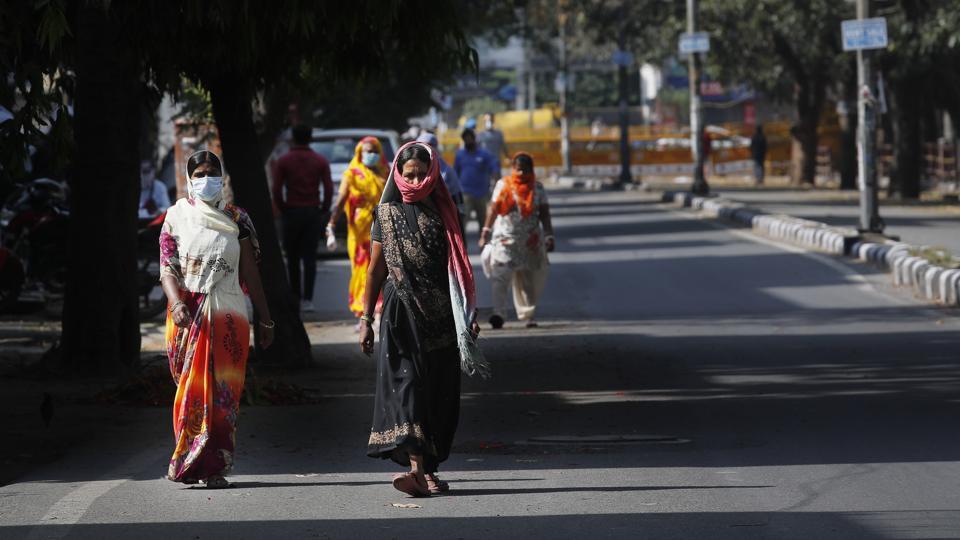
“Any family member working as domestic help in neighbourhood should request exemption from service for a short period of two weeks so as to ensure that neither the employer nor employee acquires and spreads COVID-19. If they are required to go to work, they should practice proper hand washing with soap and water at and after work,” the advisory said.
Urban areas in India, particularly slums, have been found to be most vulnerable in various surveys.
The NCDC advisory said neighbourhoods should identify volunteers in order to ensure people follow home quarantine for the time specified.
Health authorities will share the list of those advised to go in home quarantine with local representatives/ward members, who should be informed by the volunteers if there is any breach, according to the advisory.
It said all residents should have access to soap and water for frequent hand-washing for at least 20 seconds, and local leaders need to check the spread of rumours and misinformation related to the disease. If an infection is detected in a locality, the Centre’s containment plan will be put in place, according to the document, which asked residents to cooperate with health authorities.
“For communities, inadequate shelter and overcrowding are risk factors in the transmission of diseases with epidemic potential such as Covid-19. Unauthorized colonies and Jhuggi-Jhopri clusters pose a serious human problem as a huge population is living in these colonies,” the government document said.
In a recent serological survey by the Indian Council of Medical Research (ICMR), about 1.89% of the population in urban slums surveyed — as opposed to the 1.09% in urban areas surveyed and 0.73% in overall population surveyed in over 20 states — showed past exposure to the Sars-CoV-2 virus, which causes the infection. A sero survey is conducted by testing blood samples to determine the presence of antibodies against Sars-Cov-2.
According to the 2011 Census, there were 2,613 towns/cities with such settlements having a total population of 65.4 million in 13.9 million households.
The government’s focus is now on containing the disease’s spread in urban areas, and to ensure the virus did not affect rural areas or green zones, which are largely unaffected at the moment.
“Urban areas are densely populated that puts the population at a higher risk of contracting infection. However, we must realise that no two urban settlements are the same; so there is a need to draft a micro plan for prevention and containment keeping in mind the local conditions of the area. In Delhi, if you see, there are several types of residential colonies and each would require a specific containment plan, especially those that are more populated,” said Dr Jugal Kishore, community medicine faculty, Safdarjung Hospital.