
 E-Paper



After decades of bloodshed, two Chhattisgarh districts to shed LWE tag
The chief minister told Union home minister Amit Shah that two out of the seven districts in Bastar are finally free from left-wing extremism

 Prefer HTon Google


When Chhattisgarh chief minister Vishnu Deo Sai met Union home minister Amit Shah last week, he had more than an invitation for the closing ceremony of Bastar Olympics. Sai told the home minister, according to top government officials, that two out of the seven districts in the Maoist-infested Bastar division — the Bastar district that houses the district headquarters of Jagdalpur, and Kondagaon, which houses headquarters of the Kondagaon district — are finally free from the scourge of Left-wing extremism, roughly five decades after they were first put on the infamous list.
Also Read: 2 Maoists killed in gunfight with security forces in Chhattisgarh’s Bijapur: Police
The chief minister told Shah that all underground and overground workers have either surrendered, been killed over the years, or fled from their hideouts in the two districts, the officials quoted above said.
At least two senior government officials further said that the Centre would remove Bastar and Kondagaon from the LWE-affected districts list this month. Once an area is declared Maoist free, it is only a matter of time that it is removed from LWE list, the officials said.
Also Read: Chhattisgarh civil groups question ban on Moolvasi Bachao Manch
The Bastar division is often considered the nerve centre of the Maoist insurgency in India. It comprises seven districts — Bastar, Dantewada, Bijapur, Kanker, Narayanpur, Kondagaon, and Sukma — of which Narayanpur houses the Abujhmaad, a vast expanse of uncharted forest that serves as a hideout and training centre for the extremists.
Also Read: 5 Maoists killed in encounter in Abujhmad forest: Chhattisgarh Police
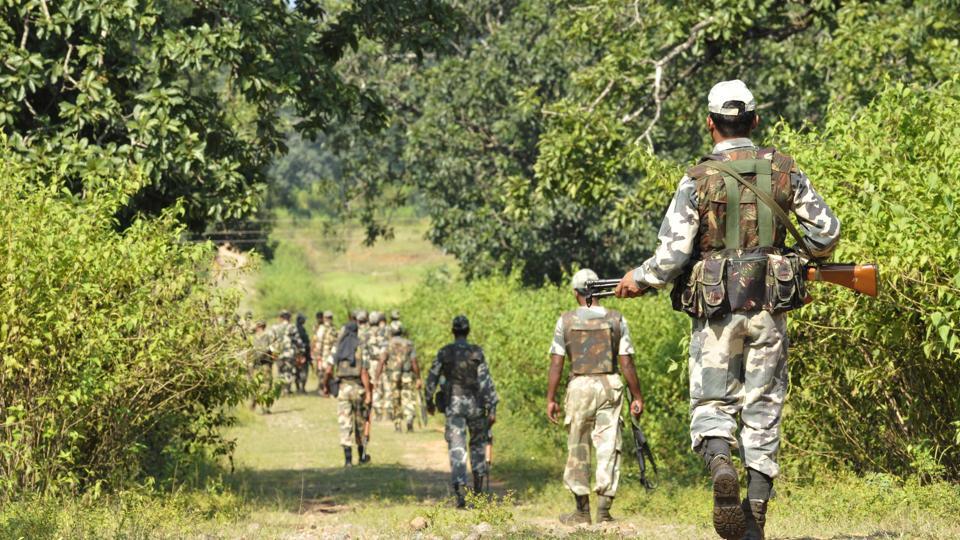
But over the last 12 months, the government embarked on a fierce offensive against the Maoists, constructing roads and setting up camps in districts and areas that were once plagued by LWE, and gunning down at least 217 insurgents in encounters — as part of the government’s goal to eliminate Maoism by March 2026.
Sai’s comment to Shah marks the first time that authorities have made inroads in a region that has long been considered synonymous with Maoist violence and lent its title to books and movies on Left-wing extremism.
“Naxal activities are spread over seven districts under the Bastar range. But Bastar became infamous as a Naxal hub for two reasons. First, all these seven districts have been carved from undivided Bastar. The second is that Bastar district has witnessed the most infamous Naxals attacks in Chhattisgarh’s history,” a senior government official said.
The most infamous of these was the Darbha Ghati attack on May 25, 2013 when Maoists ambushed a convoy of the Congress, killing 27 people that included 10 security personnel and nearly the entire frontline leadership of the party. Former state minister Mahendra Karma and then state Congress chief Nand Kumar Patel were among the victims.
The extermination of Maoists from Bastar district is also a symbolic boost for security forces because Jagdalpur and nearby areas act as the nerve centre of the anti-Maoist operations.
Former CRPF DG Sujoy Thaosen said the recent developments are a significant decision. “I see this as a huge success and this paves the way for poor tribals to join the mainstream of development. The relentless anti-Maoist campaign launched jointly by the state police and CAPF, have made this possible,” he said.
Officials said no attack was reported in the last two years.
Another official, citing government’s data in the state, said that between January 1 and December 11, 2024, there was only one first information report related to Maoist activity in the Bastar district.
According to police records, on the evening of June 11, 2024, the East Bastar Division wing of the Communist Party of India (Maoist) threw pages of Maoist literature inside the Mardum police station area of Bastar district.
“This is the only case that has happened this year. This too must be a case of mischief. Not a single case of violence involving Naxals has been reported in 2024. Two Maoist cadres were arrested, while 13 active key members in Bastar district surrendered before the forces. If you compare this to other districts, then there is a big difference in the numbers. In Bijapur, 465 Naxals were arrested. There were 253 arrests in Sukma too. While Bastar district has not reported any gunfight in the last two years, in other districts such as Bijapur and Narayanpur, over 100 Naxals were killed,” a senior police officer, aware of the anti-Maoist operations in the state, said.
Shivraj Singh, who served as chief secretary between 2007 and 2008 and was later adviser to former chief minister Raman Singh for 10 years, concurred.
“In the 80s when I was first transferred to Chhattisgarh, I remember my friends asking me if working in Bastar was safe. Bastar’s name has got tagged with Naxals because of what has happened. If one key district is freed from Naxals then this is the start of the final operations. Keeping this momentum is important. Naxals also know the Centre means business,” he said.
Surrender policy and aggression
The next year is critical for forces engaged in countering Maoism because the Centre has vowed to get rid of LWE by March 2026. Based on this goal, forces have launched an aggressive campaign and shot dead at least 208 extremists in encounters this year, the highest in at least 15 years. The government is also drafting a new surrender policy for Maoists, said a senior government official.
P Sundarraj, inspector general of Bastar range who is overseeing the anti-Maoist operations in the state, said a three-pronged approach to the LWE problem — infrastructure, surrenders and operations — resulted in Bastar finally being free of insurgents.
“The native people no longer support the Naxals and they are not joining them. If you compare the road connectivity specifically in Bastar as compared to other places, this too has helped. The supply chain and hideouts of the Naxals have been hit because of the development in Bastar district. This is what has led them to flee the district. Some who had fled Bastar and moved to other districts too have surrendered,” he said.
To ensure more Maoist cadre give up arms, the government has introduced a rehabilitation scheme as part of its industrial policy — apart from giving houses under the Pradhan Mantri Awas Yojana and providing stipend for skill training, authorities will subsidise industries that employ rehabilitated surrendered cadres.
According to police data, at least 802 Maoists have surrendered this year. The number in 2023 was 398 and in 2022 was 415.
“The Centre has given us a target and our officers are on the ground. Camps are being built inside interior areas. The government is providing us all the support we require . Slowly but gradually other districts too will be free from Naxal influence,” Sunderraj added.
What next
A second senior government official said the government was planning to develop Bastar as a hub for tourists. The district, which was believed to unsafe, will soon be opened with better infrastructure.
The officer added that the government approved two helipads with night landing facility within the district. “The government has already started work on developing one of the villages in Bastar district, Dhudmaras, as a top tourist destination. The government is improving its infrastructure, such as roads, water, and electricity. Villagers are being trained in tourism and hospitality management. There is enough security for tourists as well as locals,” he said.
“While work is on to eliminate Naxal influence from the state, Bastar is being opened for tourists like never before,” the senior officer added. Separately, the government is also set to create a new industrial area near the Nagarnar Steel Plant in Bastar, which will support small businesses and create job opportunities.
Bastar Olympics and Shah’s visit
This weekend, Shah will visit Chhattisgarh to review development work, the current anti-Maoist operations underway and be the chief guest at the first Bastar Olympics, an event being organised by the Centre.
In November, the state government said that over 165,000 men and women from Maoist-affected areas took part in the month-long games that began on November 1 and are scheduled to end on December 14. The event comprised 11 disciplines such as archery, kabaddi, athletics, and kho-kho.
This will be Shah’s first visit to the state since the Chattisgarh CM told him that Bastar district has been declared free from Maoists.
The home minister is also likely to spend the night at a camp that the security forces took charge of after pushing back Maoists.
Security officials say winning Bastar and Kondagaon districts back from Maoists may be a victory but the battle is far from over. On Tuesday too, one Maoist was killed in a gunfight in the nearby Bijapur district. The forces will continue to be on high alert.
Officials also point to another odd coincidence. Even though only one FIR was registered in Bastar district this year, it bears a chilling resemblance to how Maoists first made forays in the region.
On the afternoon of November 13, 1968, the police found posters of Maoist literature in Hindi, Telegu and the Halbi language pasted outside a house in the Bastar district. The Bastar police registered its first FIR against Maoists that day. The next six decades, officials said, saw a story written in blood across the red corridor.


