E-Paper



Ahead of assembly polls, a look at how elections are conducted: EVMs, VVPAT, and counting process explained
An EVM has three parts working together, including the Ballot Unit where voters press a button next to their chosen candidate to cast their vote.

 Prefer HTon Google


The counting for the state assembly polls for West Bengal, Tamil Nadu, Kerala, Assam, and the Union Territory of Puducherry will take place on May 4. Ahead of the high-voltage election results, questions emerge about how the system works behind the scenes. How do Electronic Voting Machines (EVMs) record votes? What role do VVPAT slips play in verification? And what exactly happens on counting day?
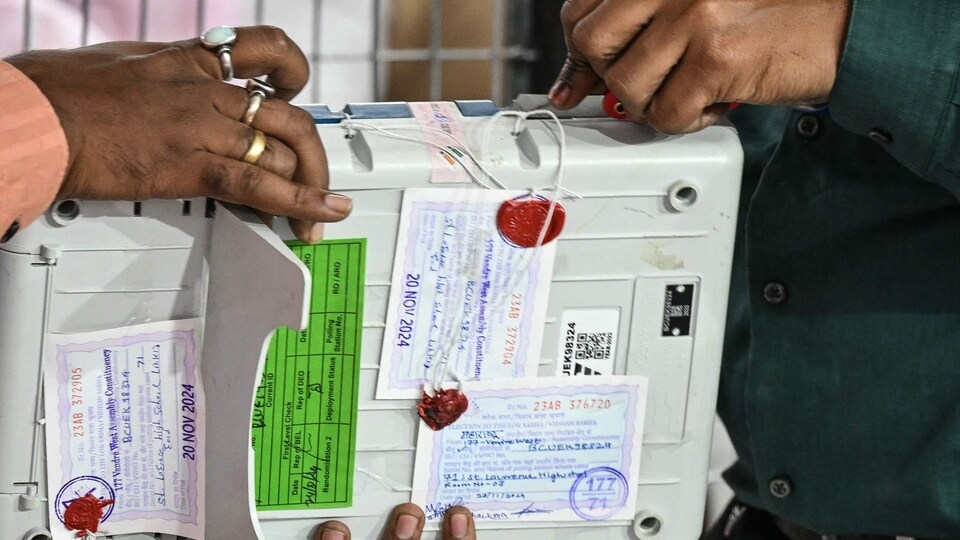
As anticipation builds, here’s a closer look at the process that powers India’s electoral machinery from casting a vote to the final results.
In India, the voting machines are referred to as ECI-EVMs — a term used to distinguish them from similar systems used elsewhere. These are specifically designed, manufactured, and deployed under the rules set by the Election Commission of India, with detailed procedures laid out in official manuals, as per official website of Election Commission of India.
What makes up an EVM system
An EVM is not a single unit but a combination of three parts working together. There is the ‘Ballot Unit’, where voters press a button against the candidate of their choice. This is connected to the ‘Control Unit’, which stores and manages the voting data.
Also read | In Bengal elections, Trinamool Congress leads parties in women candidates
Alongside these, a third component was added later — the ‘Voter Verifiable Paper Audit Trail’, or VVPAT. This system provides an added layer of transparency by allowing voters to verify that their vote has been recorded correctly.
These machines fall under a broader category known as Direct Recording Electronic (DRE) systems, a method of voting used in different forms across the world.
Why EVMs replaced paper ballots
The shift from paper ballots to EVMs was driven by efficiency and accuracy. Unlike paper voting, where unclear or incorrectly stamped ballots could be rejected, EVMs ensure that each vote is recorded clearly for a single candidate.
Also read | A battle for female voters is changing India’s elections
They also significantly reduce the time taken to count votes, making the entire process faster and more streamlined.
When VVPAT entered the system
The VVPAT system was introduced later to strengthen voter confidence. It was first used in India during a by-election in 2013, in the Noksen Assembly Constituency of Nagaland.
India currently uses the M3 model of EVMs along with VVPAT systems. Like earlier versions, these machines are standalone and not connected to any network. They operate on their own power sources, typically batteries or power packs, ensuring they function independently.
How votes are counted
Once voting ends, attention shifts to counting — one of the most crucial stages of an election. This process is managed through a system called ENCORE.
The counting module within ENCORE handles vote tallying and result declaration for both parliamentary and assembly constituencies. Depending on the election type, officials such as the ARO, RO, or ROPC oversee the process.
The system works in two stages. The first begins a day before counting, preparing the setup. The second stage takes place on counting day, when votes from EVMs and postal ballots are entered and processed.
Together, these steps ensure that the final results are compiled and declared in an organised and systematic manner.