
 E-Paper



AI 1980s photo trend: From privacy to climate impact, 3 things to consider before joining in
Data centres for AI storage significantly impact local climates and require vast amounts of water, exacerbating shortages in already stressed areas.

 Prefer HTon Google


Whether you're an internet native or a digital immigrant, it's highly improbable that you've not stumbled upon the grainy 1980s pictures on your WhatsApp and Instagram feeds. Some of you may have even participated in the trend out of FOMO, curiosity or just to have fun.
While that's fair, how safe are these AI trends for us, and the environment that sustains us? Read on to find out.
Read More | 1980s AI photo trend: What is the environmental cost of your latest AI avatar?
Privacy concerns
In the age of Meta AI glasses, it has become increasingly impossible to avoid surveillance and protect your facial identity.
The ordinary people who upload their pictures to recreate a 1980s retro look for a moment of joy might not be aware that ChatGPT and Gemini can save their pictures. AI itself claims that "on personal ChatGPT accounts, content may be used to improve/train models unless you opt out." Unless turned off, data control options allow OpenAI and Google to save user data for training purposes.
Read More | Making AI 1980s photos? ChatGPT has a warning about your pictures
The climate crisis of rising temperatures
Most large-scale AI systems run in data centres, including those managed by cloud service providers. However, these facilities can have a significant environmental impact. As reported by Al Jazeera, a study by Cambridge researchers found that land surface temperatures around AI data centres increase by an average of 2°C (3.6°F), with some areas experiencing rises of up to 9°C (16.2°F). This is called the “data heat island effect”.
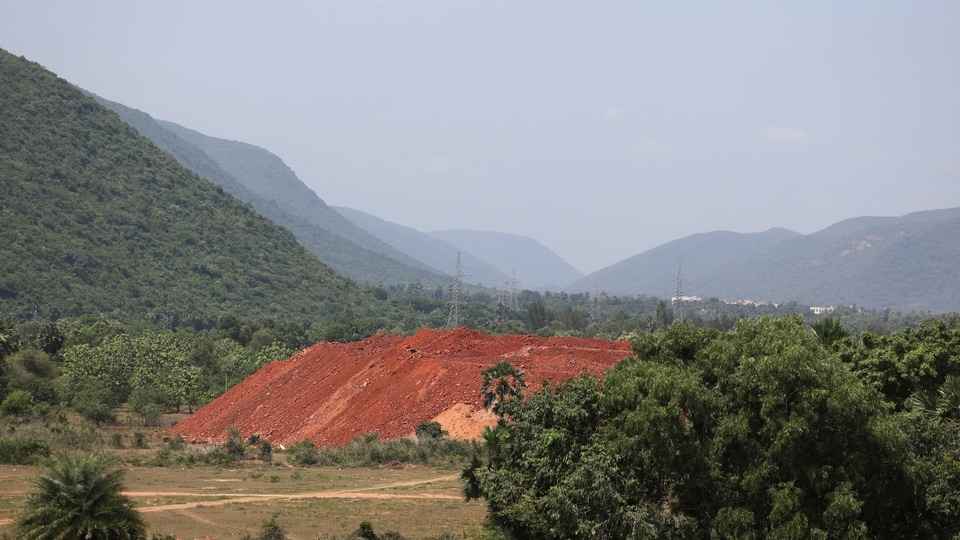
In fact, in Thane and Visakhapatnam, residents have staged some of India’s first organised protests against large data centres, raising concerns that these projects could further strain local land, power and water resources.
Shortage of resources
A case-study by University of Oxford labelled data centres as “water guzzling” and “energy eaters”. According to the International Energy Agency (IEA), data centres consumed around 415 terawatt hours (TWh) of electricity in 2024, accounting for roughly 1.5% of global electricity consumption, as per Al Jazeera. This demand has grown by about 15% annually over the past five years and is expected to nearly double to 945 TWh by 2030.
Read More | Want an AI-made 1980s makeover? Think twice before uploading your photo
Data centres require larger amounts of water to cool them down and generate electricity. A study published in Water Research estimated that AI’s global water footprint could rise to 4.2–6.6 billion cubic metres a year by 2027, while noting that around two-thirds of data centres built after 2022 are located in water-stressed regions.
On the other hand, a huge chunk of world's population doesn't have easy access to water. According to the United Nations World Water Development Report 2024, around half of the world’s population experiences severe water scarcity for at least part of the year.
Generating a single AI image isn't the issue, the main problem lies in large-scale usage and viral trends. As AI becomes increasingly woven into everyday digital life, being mindful of what we upload and how often we use these tools is a small but worthwhile step.


