E-Paper



Air quality in Delhi this year is so far worst since 2018
With the first eight days of the month also in the very poor range, the average AQI for the month climbed to 343, the second worst for this part of the month.

 Prefer HTon Google


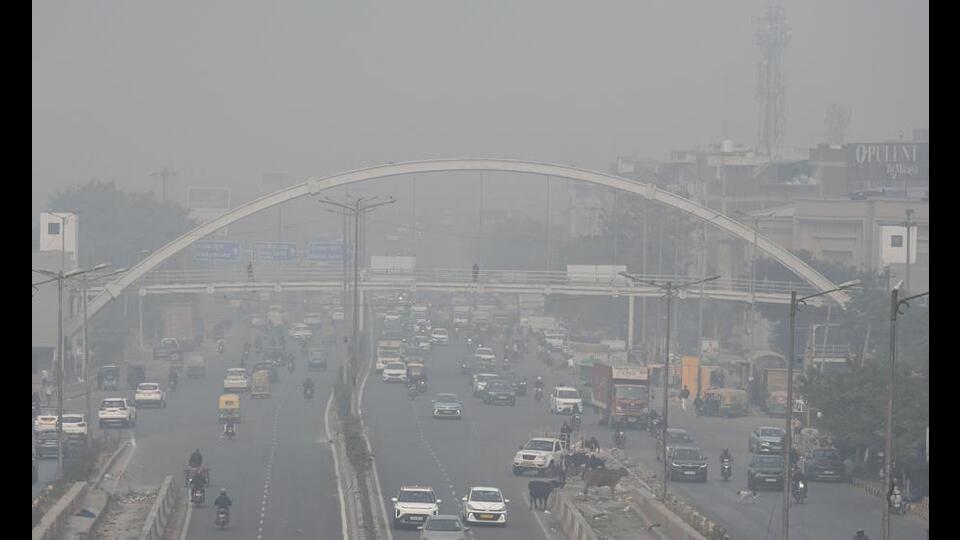
Delhi recorded an air quality index (AQI) of 373 on December 18, according to the 4pm bulletin of the Central Pollution Control Board (CPCB) that gives the 24-hour average of AQI, making it the eighth straight day when the air in the national capital has been in the very poor (301-400) or severe (401 and above) range.
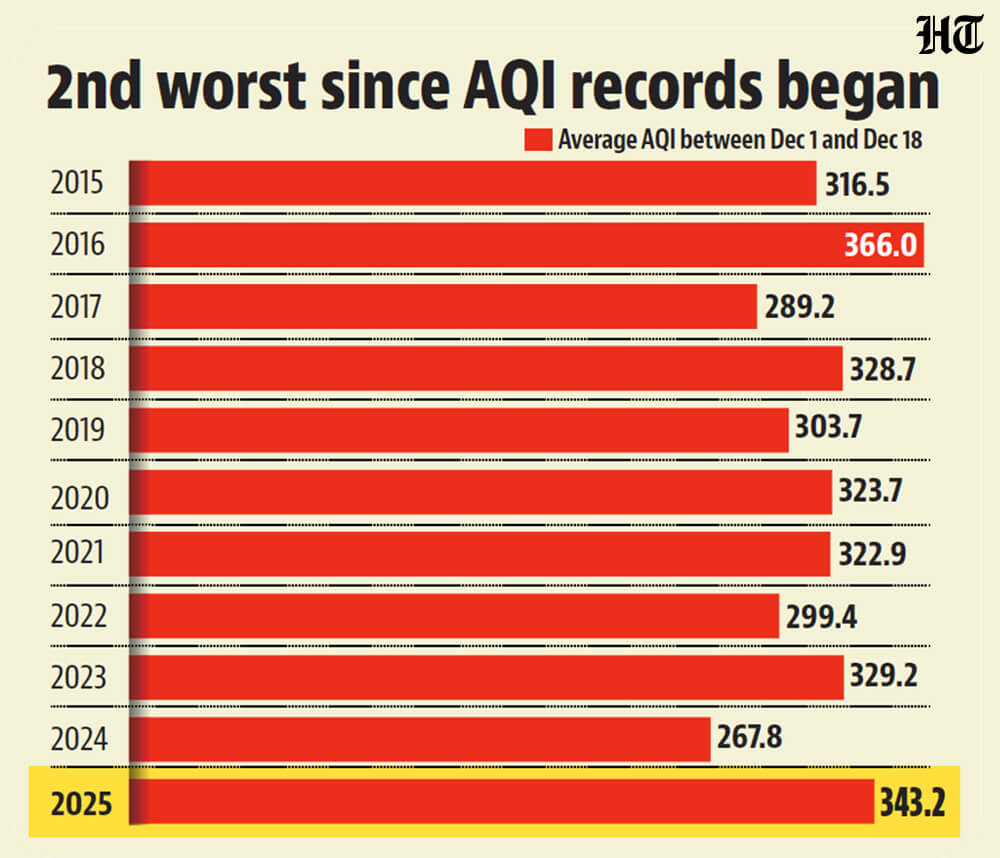
With the first eight days of the month also in the very poor range, the average AQI for the month has climbed to 343, the second worst for this part of the month 2015 onward, when CPCB started publishing these bulletins. A higher average was recorded only in 2016, when this number was 366.
Also Read | Chaos, confusion as car curbs begin; AQI spikes
To be sure, it is only from 2018 that the average number of functioning air quality stations in Delhi went up to over 30 as they are right now, giving a geographically more representative picture of the city’s air. If comparisons are made from 2018 onward, the air in the first 18 days of December this year is the most polluted on record.
While adverse weather had some role in this, weather data shows that this alone cannot be blamed for the record-breaking pollution. In other words, this is the level of pollution Delhi can expect to have every year from now if the sources of pollution aren’t tackled and fast winds or rain do not do their bit.
That high pollution this December cannot be blamed on the weather alone is evident from a review of weather conditions across years. For example, one adverse condition affecting this December’s air quality is dry weather. Delhi’s Safdarjung weather station has not recorded even trace amounts of rain (rain up to 0.04 mm in a day) so far this December.
This means that pollutants have not been washed from the air by rain at all this month. This restart button of sorts for air quality was not available only in 2022 in this part of December in the period since 2018. However, this cannot be blamed because 2022 averaged an AQI of 299 in the same period that 2025 has averaged 343.
Also Read | Fog fallout continues for second day at Delhi airport; over 500 flights delayed
Similarly, low temperatures, which lead to pollutants being trapped close to the ground, are responsible for the generally high levels of pollution in this part of the year. However, Delhi has experienced relatively warmer temperatures thus far this December. The average maximum temperature at the Safdarjung station this year is 24.64°C – the fourth highest in the eight years from 2018. The average minimum on the other hand is 8.12°C, only the third lowest in the eight years.
To be sure, wind speed and humidity also affect air quality. While India Meteorological Department (IMD) does not publish time series data on these parameters, HT’s past reporting suggests this. For example, 2022, the only other year that did not get rain, not only experienced warm days in December like 2025, but also three days of strong north-westerly winds, fast enough to flush pollutants, HT reported at the time. While winds have helped clean up air this year too – the reason Delhi’s AQI climbed down from the severe range after Monday – they have not been fast enough for moderate air quality (an AQI in the 101-200 range) like in 2022. Of the 18 days so far, three have been in the severe range (an AQI in the 401-500 range), 13 in the very poor range (an AQI of 301-400 range), and two in the poor range (an AQI in the 201-300 range).
Any correlation of weather with air quality, however, must also take into account the fact that weather is a short-term factor. Delhi’s climate – which is weather aggregated over long periods – in the cooler months helps in the accumulation of pollutants close to the ground. This means that it is the sources of pollution that must be tackled to make Delhi’s air cleaner long-term.
Else, Delhi will set another record for pollution next December.