
 E-Paper



Alarming loss of habitat makes it difficult for wildlife to adapt
The reason for such alarming habitat loss is because international conservation policies have neglected considering niche habitats of species when setting targets for the expansion of protected areas, the study pointed out.

 Prefer HTon Google


A new study has found that the capacity of a majority of wild species to adapt to environmental changes is threatened because of their habitat loss. The findings are crucial because scientists are trying to unravel how the SARS-CoV-2 pathogen that causes the Covid-19 disease may have jumped from bats to humans. The bats are considered to be the most likely reservoir of the virus, according to the latest research. Several scientists have flagged the role of the wild species’ habitat loss behind zoonotic (illnesses that arise from human contact with animals) outbreaks.
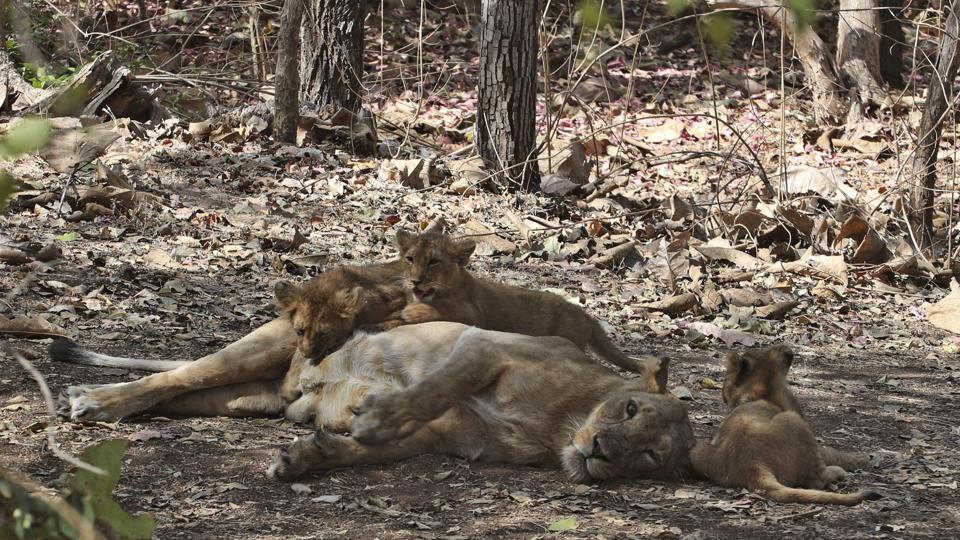
The study published in “Nature”, the world’s leading multidisciplinary science journal, on Wednesday has stated that many wild species need to adapt to survive. But because of the loss of their “niche” habitat, their capacity to evolve is gravely threatened. The global protected area network, which implies forests or other ecosystems protected under law, don’t cover the environmental or climatic conditions required by a majority of 19,937 vertebrate species assessed in the study.
For example, the representation of niche habitat in the protected areas globally is inadequate for 93.1% of amphibian; 89.5% of bird and 90.9% of terrestrial mammal species, the study said. An ecological niche is a role a certain species plays in its environment. The climatic conditions of that place determine how well the species can survive but their capacity to adapt diminishes when they are not connected with their niche.
Inger Anderson, executive director, United Nations Environment Programme (UNEP), tweeted on Wednesday, connecting the linkage between pandemics and habitat loss. “Our immediate priority is to prevent spread of Covid-19. In the long term its important to tackle habitat and biodiversity loss. Never before have so many opportunities existed for pathogens to pass from animals to people,” he tweeted.
The reason for such alarming habitat loss is because international conservation policies have neglected considering niche habitats of species when setting targets for the expansion of protected areas, the study pointed out.
The authors from the School of Biological Sciences at the University of Brisbane; RSPB Centre for Conservation Science in the United Kingdom and Global Mammal Assessment Programme at the University of Rome among others have assessed the representation or coverage of various climatic niches of around 2,000 species by protected areas globally by overlaying maps.
“In summary, we found that existing protected areas are not adequate for conserving habitats that promote evolutionary processes. Later this year, signatories of the Convention on Biodiversity are meeting again to shape conservation policies for the coming decade—providing a golden opportunity to improve protection of such habitats,” Jeffrey Hanson, co-author of the study, wrote in “Nature”. The study also flagged that immune response of many species are affected due to loss of habitat but didn’t link it explicitly with disease outbreaks.
The team identified priority areas for expanding the protected area network globally to include niches of species. These priority areas stretch over 33.8% of earth’s land and inland water area compared to 17% which is the present target under the Convention of Biological Diversity.
Some of the priority areas for conservation include the tropical Andes—where steep environmental gradients and complex topographies have driven evolutionary processes; Cape floristic region and Madagascar; the Himalayas, an evolutionary epicentre for bird species among others.
The UNEP had recently also said on their website that “Habitat destruction can increase the exposure of humans to zoonotic diseases. Scientists suggest that degraded habitats may even encourage more rapid evolutionary processes and diversification of diseases.”
“In a previous study on six different populations of the Giant Panda in China, variations in genes related to the immune system, unique to each population, were found. The destruction of habitat that supports any of these populations will result in the loss of those adaptive genes and, consequently, can be detrimental to the survival of the species. For example, think of all individuals of human population cramped into one region. If a pathogen, such as Covid-19, infects that population, then the game would be over for the human species. However, certain remote human populations, which are exposed to the less pathogenic forms of this virus, may carry protective genes against them, and could survive even if the virus wipes out the rest of us,” explained Kartik Sunagar, assistant professor at Evolutionary Venomics Lab, which is part of the Centre for Ecological Sciences at the Indian Institute of Science (IISc) in Bengaluru.


