
 E-Paper





Follow the latest breaking news, major developments and agenda-setting stories from India and around the world with the newsdesk at Hindustan Times. Operating round the clock, the desk brings together experienced editors, reporters and correspondents to deliver fast, accurate and contextual reporting across subjects that influence public policy, governance, business, society and international affairs. The HT News Desk covers politics, elections, government policies, the economy, business and markets, science and technology, the environment, law and order, infrastructure, education, climate issues and geopolitics, while closely tracking developments across states, institutions and global capitals. The team also leads coverage of major breaking news events, policy announcements, court proceedings, natural disasters, public emergencies and significant international developments. Reports published by the newsdesk are based on information gathered from reporters on the ground, official statements, government agencies, court records, regulatory filings, recognised institutions and other authoritative sources. Stories undergo editorial scrutiny and verification processes to ensure accuracy, fairness and relevance, and are updated as events evolve and additional information becomes available. Whether covering a key political decision in New Delhi, an economic policy shift affecting millions, a landmark court ruling or a major global event, the HT News Desk aims to provide readers with reliable, fact-based journalism that delivers not only the latest developments but also the context and analysis needed to understand their wider implications.
Army chief asks commanders to keep guard up in eastern, central sectors
While the contested Line of Actual Control (LAC) in eastern Ladakh is the focus of the current border tensions, Indian forces are in a heightened state of alert all along the border with China stretching from Himachal Pradesh, Uttarakhand, Sikkim to Arunachal Pradesh.


Army chief General Manoj Mukund Naravane asked his top commanders to stay prepared for any eventuality while carrying out a security review of the eastern and central sectors during a two-day visit at a time when India and China are locked in a tense border dispute in Ladakh, people familiar with the developments said on Friday.
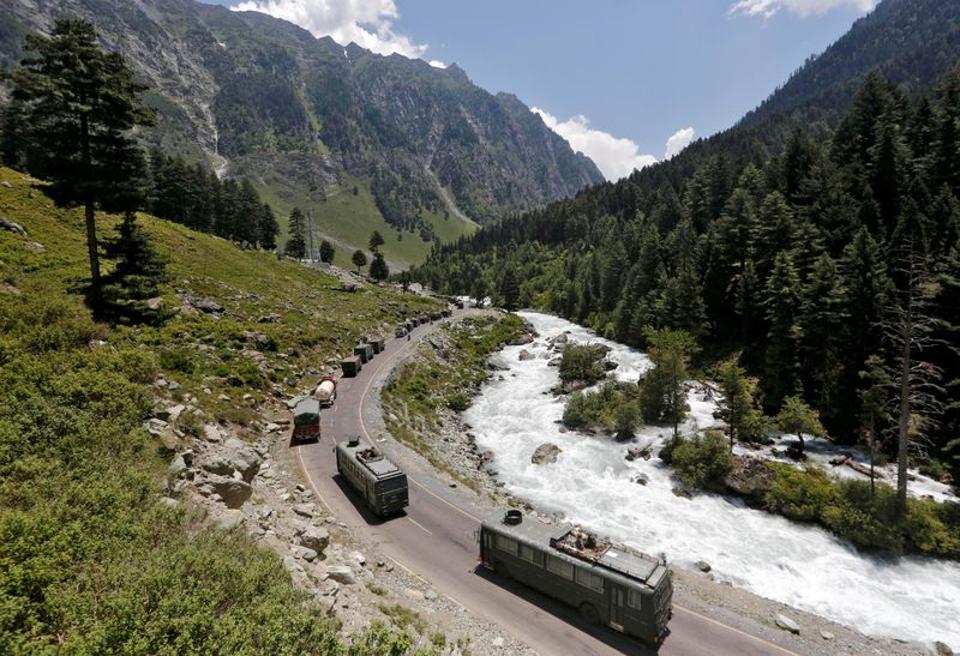
While the contested Line of Actual Control (LAC) in eastern Ladakh is the focus of the current border tensions, Indian forces are in a heightened state of alert all along the border with China stretching from Himachal Pradesh, Uttarakhand, Sikkim to Arunachal Pradesh.
Top commanders briefed Naravane on the prevailing security situation, deployments and the army’s operational preparedness in the eastern and central sectors at Tezpur on Thursday and Lucknow a day later, the people said. The Tezpur-based Gajraj Corps is responsible for a border frontage of 1,563 km with China.
Also read: China offers a new normal to end Ladakh border standoff. India shoots it down
While the border row with China erupted in early May after a violent face-off in the Finger Area near Pangong Tso as well as Chinese aggression in the remote Galwan Valley, the Indian Army and the People’s Liberation Army were involved in a tense face-off at Naku La in Sikkim on May 9.
Four Indian and seven Chinese soldiers were injured during the confrontation that involved about 150 soldiers.
The visit was in continuation of attempts to ensure highest operational readiness of the Indian military in the eastern sector where China’s provocations have been on the rise, said former army vice chief Lieutenant General AS Lamba (retd).
“China’s objections last year to the army exercise ‘Him Vijay’ in Arunachal Pradesh and claims on Bhutan’s territory are extremely sensitive and significant issues. Also, the deployment of new weapon systems would have been overseen for their operational enhancement,” Lamba added.
Also read | Keep off: India’s terse counter to China after its Kashmir barb
The army chief’s tour came at a time when military talks on disengagement have hit a roadblock because of serious differences between the two armies in the Finger Area and the PLA’s reluctance to vacate positions held by it in what New Delhi claims to be Indian territory.


