
 E-Paper



As local Covid-19 clusters emerge in Tamil Nadu, focus on temples, hospitals
After consulting experts last week, Tamil Nadu ordered religious places to be shut from Friday to Sunday to avoid large gatherings. A particular zone number 9 (Teynampet) in Chennai in which a major private hospital is located has been reporting new Covid-19 cases continuously.

 Prefer HTon Google


With Covid-19 cases nearing the 2000-mark in Tamil Nadu, it is gatherings at temples, hospitals and markets that are of concern now for health officials. A new Covid-19 cluster was detected in Chennai following a temple festival gathering where 300 people were tested and 24 people reported positive in the last three days. One of the infected, a 47-year-old woman, who was diabetic and unvaccinated, succumbed to the virus on Wednesday, officials said.
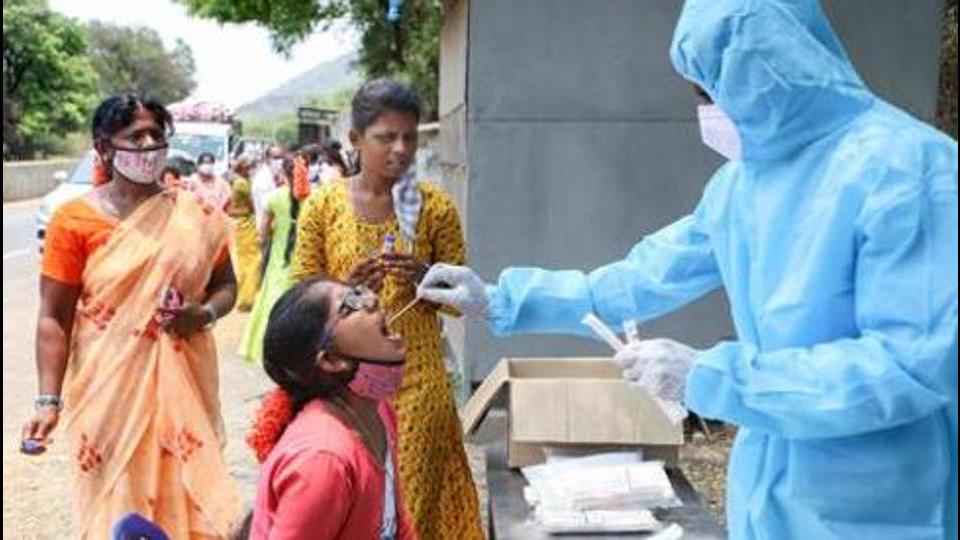
“Strategy-wise we are analysing the causes of spread and we find that sources of infections are streets adjacent to main marketplaces, people visiting hospitals without following protocols like mask compliance and mass gatherings at religious places,” said health secretary J Radhakrishnan.
After consulting experts last week, Tamil Nadu ordered religious places to be shut from Friday to Sunday to avoid large gatherings. A particular zone number 9 (Teynampet) in Chennai in which a major private hospital is located has been reporting new Covid-19 cases continuously.
“People rent places near hospitals to stay for their treatment and that is leading to a spread,” a civic official said. Until August 10, Coimbatore district in the western region was reporting the highest number of daily cases and Chennai overtook that marginally on August 11. “In the western region we found that organisation of marriages, funerals and functions flouting the restrictions has led to the increase,” the health secretary said.
In the past two weeks, Covid-19 cases in Tamil Nadu have marginally increased but fresh cases have ranged between 1800 and 1900 every day. “We have alerted all districts that these increases can’t be taken lightly and they are taking it seriously because of which the increase in cases has not been geometric. In the next 100 days, we need to vaccinate more people to prevent a wave,” Radhakrishnan said.
On Wednesday, he told reporters that several people who had gathered in the temple leading to the cluster were not vaccinated. “Every day we are identifying 10-20 clusters in various places and stopping the spread,” he said.
Beginning August 5, Tamil Nadu imposed restrictions on those entering from Kerala as the two states share 13 points of entry just in Coimbatore. Kerala constitutes a major caseload in India and those arriving from there have to produce either a negative RT-PCR test report or evidence of double vaccination. “We are obviously having cases in border areas as people are frequently moving from Kerala,” said an official not wishing to be named. “We are focussing on frequent interstate travellers and encouraging them to get fully vaccinated.”
At least 19 districts such as Chennai and its adjoining districts Thiruvallur, Chengalpattu and Kancheepuram, and western and central districts including Coimbatore, Erode, Thanjavur, Trichy and Cuddalore are of concern in the state. “For now localised clusters are emerging and there is no general upward trend,” said Dr Prabhdeep Kaur, deputy director, National Institute of Epidemiology. But these small clusters have the potential to cause general transmission if they are not contained, she warned.


