
 E-Paper



At NSA Ajit Doval’s mega Kashmir meet, a stinker for Pak and a piece of advice
NSA Ajit Doval has advised security forces in Kashmir to focus on developing actionable intelligence and improve operational synergy among forces fronting the counter-terror operations

 Prefer HTon Google


At his five-hour long meeting to review the operational strategies and tactics of security forces in Jammu and Kashmir, National Security Adviser Ajit Doval showered praises on security forces for the successful elimination of Kashmir’s Hizbul Mujahideen chief Riyaz Naikoo over the week. In that praise, Doval also slipped in a message: the importance of developing actionable human intelligence and operational synergy among forces fronting the counter-terror operations.
The Special Operations Group of the Jammu and Kashmir Police had been working on people in the Kupwara district who had had access to Riyaz Naikoo. As J&K police chief Dilbag Singh told this newspaper later, one of them was a man who had played a role in building the secret bunker in his native village in south Kashmir’s Pulwama. The intelligence was pinpointed. The security forces didn’t give up when they couldn’t locate him in the first round and kept up the search.
Riyaz Naikoo’s elimination, a serious setback to terror group Hizbul Mujahideen in south Kashmir, is considered one of the most successful security operations in recent months in Jammu and Kashmir.
In a video of Naikoo’s boss mourning his death, the Hizbul founder who also leads the Pakistan’s ISI-backed alliance of terror groups United Jihad Council, Syed Salahuddin said the mujahideen (terrorists) had broken the back of the enemy (India) in Handwara Rajwar recently “but the enemy (India) has the edge”.
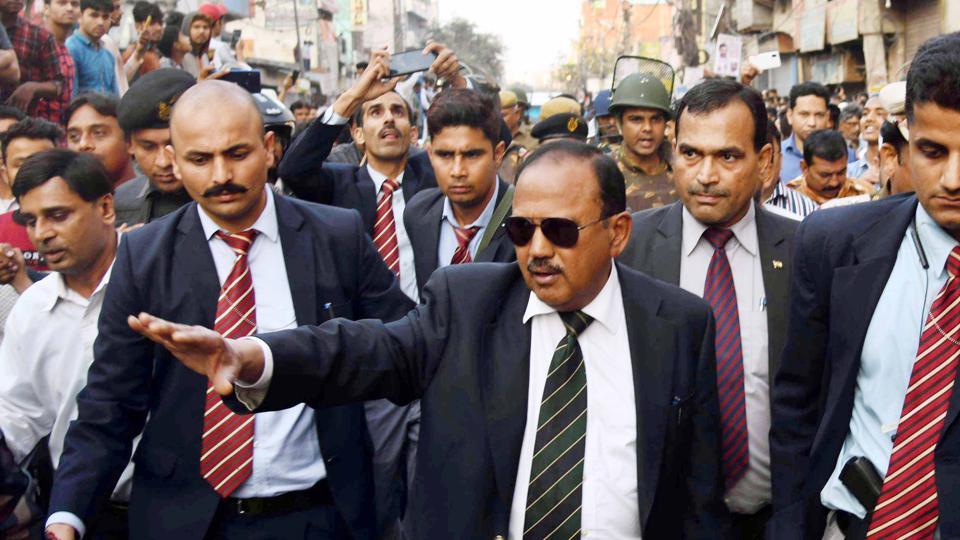
Ajit Doval’s meeting with top army commanders and chiefs of all intelligence and paramilitary forces deployed in Jammu and Kashmir was convened to sharpen this edge.
Pak’s deep state is incharge
Pakistan, by all accounts, is determined to bear down on India. This is the first summer after India scrapped Jammu and Kashmir’s special status in August last year and Islamabad has been prepping ever since.
It had floated The Resistance Front late last year, a name stripped of the religious label designed to message to the world that they are India-bred. Lashkar-e-Taiba, the terror group notorious for brutal killings in Kashmir, had been tasked to handhold this newly-minted terror group and let them take the credit for all terrorist action to ward-off international pressure.
Doval’s meeting felt that it was clear that the deep state was clearly incharge of Pakistan’s Kashmir policy. And Imran Khan, quite like India had anticipated right in the beginning, was letting the army run the show.
Also Read: Pak launches terror’s new face in Kashmir, Imran Khan follows up on Twitter
Imran Khan’s recent tweet on Kashmir that attributed violence in Kashmir to an “indigenous resistance movement” and accused India of finding a pretext to launch a “false flag operation” also found a reference at the meeting.
This remark has been interpreted in New Delhi to imply that the TRF model of funding terror and denying a role in terrorism in Kashmir was the template. As long as it works.
What it means for Kashmir
A senior government official who was present at Doval’s marathon meeting - he let the officers do most of the talking - told Hindustan Times that Pakistan’s determination to have a stab at pushing terror this year coincided with his simultaneous effort to try to internationalise developments in Kashmir. The decision to place the Pakistan Air Force on alert this week pointed in this direction.
For security forces in Kashmir, this implied that they would have to scale up the counter-infiltration grid along the Line of Control and the counter-insurgency grid in the Kashmir valley. Doval told security forces deployed along the line of control to ensure that terrorists from Pakistan don’t slip past them, day or night. Last month, about 25-30 of them did.
There will be more attempts this month.
Intelligence agencies have had to update their estimate of about 230 terrorists at the terror launch pads in Pakistan-occupied Kashmir within just about three weeks when their number shot up to 450.
The biggest contingent is aligned to the Lashkar-e-Taiba (244) and the Jaish-e-Mohammed (129), which plans to carryy out simultaneous attacks on 11 May. The Hizbul Mujahideen, which has a depleted strength in South Kashmir, had about 60.
The army and Border Security Force shared their plans how they intended to minimise the possibility of terrorists slipping in, plans that officials said did require some tweaks.
And a word of advice
NSA Ajit Doval underscored that the blueprint put on the table at the meeting would require absolute synergy between different security forces. There cannot be a mismatch, he told them. The advice was given in context of reports that he had received about lack of coordination between ground commanders from different forces.
Some of this lack of mutual respect is reflected in the controversy around “unpleasant” comments made about the Central Reserve Police Force by Jammu and Kashmir Inspector General of Police (Kashmir) Vijay Kumar.
Kumar, according to a leaked report filed by a CRPF officer to his seniors, said at a meeting that the CRPF wasn’t contributing enough to the counter-terror effort but only taking credit when it was the army and the J&K police that did most of the work.


