
 E-Paper



Athletes, NCC cadets to get edge in Agnipath recruitment
New Delhi Sportspersons and cadets of the National Cadet Corps (NCC) are among those who will have an edge over others in selection into the Indian Army under the Agnipath model for short-term induction of soldiers, officials familiar with the matter said on Tuesday.

 Prefer HTon Google


New Delhi: Sportspersons and cadets of the National Cadet Corps (NCC) are among those who will have an edge over others in selection into the Indian Army under the Agnipath model for short-term induction of soldiers, officials familiar with the matter said on Tuesday, as the army prepares to launch the second phase of the recruitment for personnel below officer rank (PBOR) under the new scheme introduced last year.
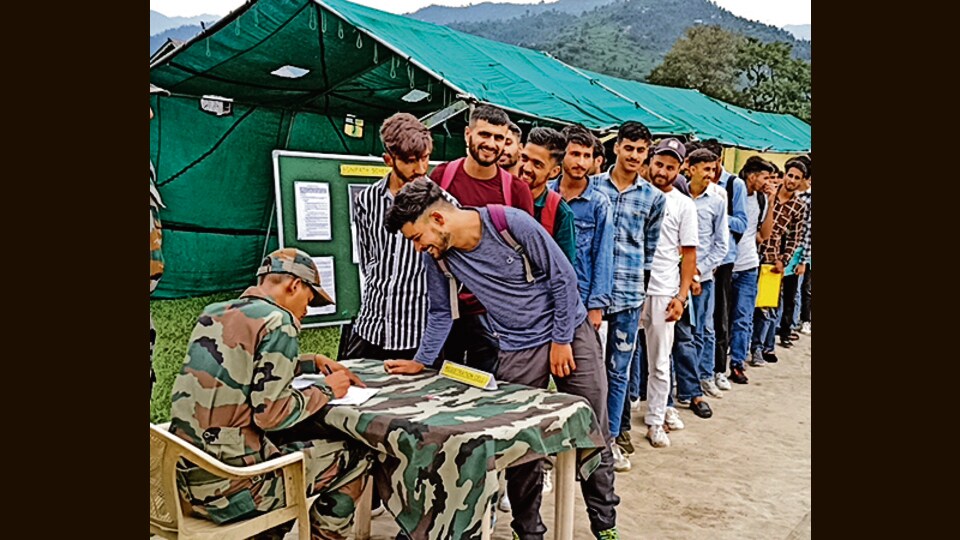
Industrial Training Institute (ITI) students and diploma holders, who come with specific technical skills, fall under the third category of candidates who will be given weightage in recruitment, the officials said. The army kicked off the second phase of recruitment of Agniveers under the new model in mid-February, and online registrations will remain open till March 15.
Candidates aged between 17-and-a-half and 21, as on October 1, 2023, are eligible to apply.
Also read: Eknath Shinde named new Shiv Sena chief amid SC battle with Thackerays
“While the army has always encouraged sportspersons to join the force, the move will encourage future aspirants to opt for NCC and ITIs for a head start over others,” said one of the officials cited above.
The second phase of recruitment will see a change in the selection procedure as the online common entrance exam (CEE) will be held before the recruitment rallies. In the first phase of recruitment last year, and even in the legacy system, the written exam was held after the physical tests and medical exams. The changed methodology will ensure increased focus on the cognitive aspect during selection, and will reduce the large crowds seen during recruitment rallies to make them more manageable and easier to conduct, the officials said.
The first CEE will be held in April at 200 locations across the country.
“Bonus points for sportspersons, NCC cadets and those from an ITI background in the recruitment process is a desirable step. The army is giving preference to the kind of people it needs to recruit. Those from ITIs will come with specific skills. Creating a technically skilled force is one of the goals of the new scheme,” said military affairs expert Lieutenant General DS Hooda (retd).
The Agnipath model is a major departure from the military’s decades-old recruitment system that was discontinued when the government announced the new scheme in June 2022. It seeks to recruit soldiers for only four years, with a provision to retain 25% of them in regular service.
India, on June 14, 2022, announced the Agnipath scheme as a replacement for the legacy system to lower the age profile of the armed forces, ensure a fitter military, and create a technically skilled fighting force capable of meeting future challenges. The scheme is expected to bring down the average age of a soldier in the armed forces from the current 32 years to 24-26 years over the next six years.
The army launched the first recruitment of Agniveers last year, after which around 19,000 Agniveers began their training at various regimental centres in early January, and another 21,000 will report for training in March.
In January, the army came out with a detailed criteria to rate the performance of its Agniveers, with their assessment to be based on parameters including operational aptitude, weapon proficiency, physical fitness, and tests to evaluate other soldierly skills. The performance evaluation will determine who is released after four years and who gets to serve in the regular cadre for an additional 15 years.
On January 16, Prime Minister Narendra Modi described the Agnipath scheme as a “transformative policy” that would be a “game-changer” in strengthening the military and making it ready for future challenges, while stressing that Agniveers will make the armed forces “more youthful and tech-savvy”. His comments came while he was addressing the first batch of Agniveers of the three services.
More than 5.4 million candidates registered for the 46,000 jobs in the three services in the first phase (40,000 in the army and 3,000 each in the Indian Air Force and the Indian Navy), according to defence ministry data. The Agniveers of the air force and the navy are also currently undergoing training.


