
 E-Paper



Attacks on crops: Himachal hires experts to study changing eating habits of monkeys
There are nearly 2,300 villages that have been affected by monkey attacks, besides deers, wild boars and blue bulls causing crop losses.


Struggling to contain burgeoning monkey population in Himachal, the state government has now roped in experts from the Indian Institute of Sciences, Bengaluru, to study changed eating habits of monkeys raiding crops in fields.
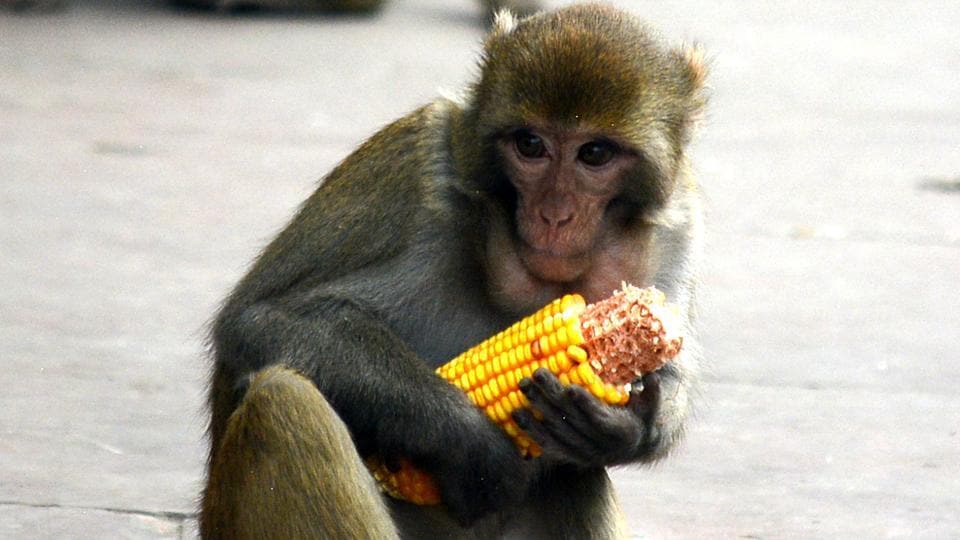
As per the official data released by the state agriculture department, annually monkeys cause a crop loss of ₹235 crores in the state. The marauding monkeys and birds cause an annual loss of ₹150 crore to horticultural crops.
“The wildlife experts from Bengaluru will study the eating habits of monkeys and further suggest measures to reduce their attacks on farmlands in Himachal,” said RC Kang, chief wildlife warden and principal conservator of forest (wildlife).
There are nearly 2,300 villages that have been affected by monkey attacks, besides deers, wild boars and blue bulls causing crop losses.
Himachal Pradesh government had asked the Central government to declare monkeys as vermin in 57 most affected tehsils in the state. However, the environment ministry, had declared them vermin in only 38 tehsils. Tehsils where monkeys have been declared vermin, includes Chamba, Dalhousie, Bhatiyat and Sihunta of Chamba district, Nurpur, Indora, Fatehpur, Jawali, Kangra, Palampur and Baroh of Kangra district, Bharwain, Amb, Una, Haroli and Bangana of Una district, Ghumarwein, Nainadevi, Bilaspur Sadar and Namhol of Bilaspur district, Shimla Rural, Rampur and Nerwa of Shimla district, Pachhad, Rajgarh, Renuka, Shillai and Kamrau of Sirmaur district, Manali, Kullu and Sainj in Kullu district, Badsar and Bihari in Hamirpur district, Nalagarh, Kasauli, Solan and Darlaghat in Solan district and Sundernagar tehsil of Mandi district.
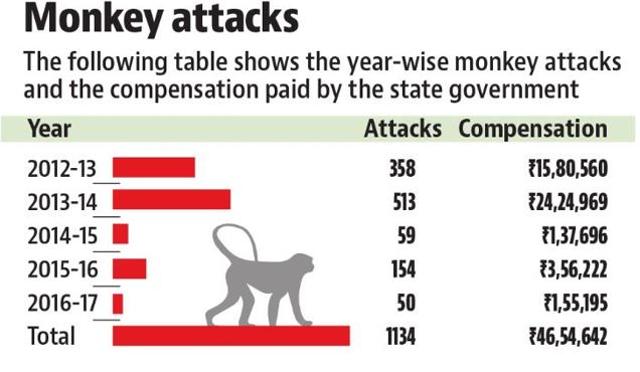
The notification issued by the Union ministry of environment and forest last year allowed for culling of monkeys and incentives to people who kill them. Interestingly, not even a single monkey has been killed in the state so far. Government had also announced an incentive of ₹700 for killing a monkey. People are reluctant to harm animal, due to the religious sentiments associated with it, believing it to be a descendant of Lord Hanuman.
The team of experts have chosen to the study monkey food habits in Una district that borders Punjab.
“There are complaints that monkeys from the bordering states and areas are being abandoned in peripheral districts bordering Punjab. The team will study all the factors and later they would make their recommendations on different measures,” a forest official requesting anonymity said.
Over the years, the monkeys both in rural and urban areas have turned aggressive not only in fields but they engage in attacking humans too. The forest department pegs the monkey population at 3 lakhs, while it has also initiated a program to sterilise the male monkeys. Man and monkey conflict is reported most in the state capital.


