
 E-Paper



‘Bail is rule and jail is exception’: Supreme Court says the principle applies to UAPA cases also
A bench of Justices Abhay S Oka and Augustine George Masih said that once a case is made for granting bail, the court cannot deny the relief.

 Prefer HTon Google


The Supreme Court on Tuesday, while granting bail to a man accused of harbouring suspected terrorists said that the legal principle “bail is the rule and jail is an exception” applies even to offences under special statutes like the Unlawful Activities (Prevention) Act.
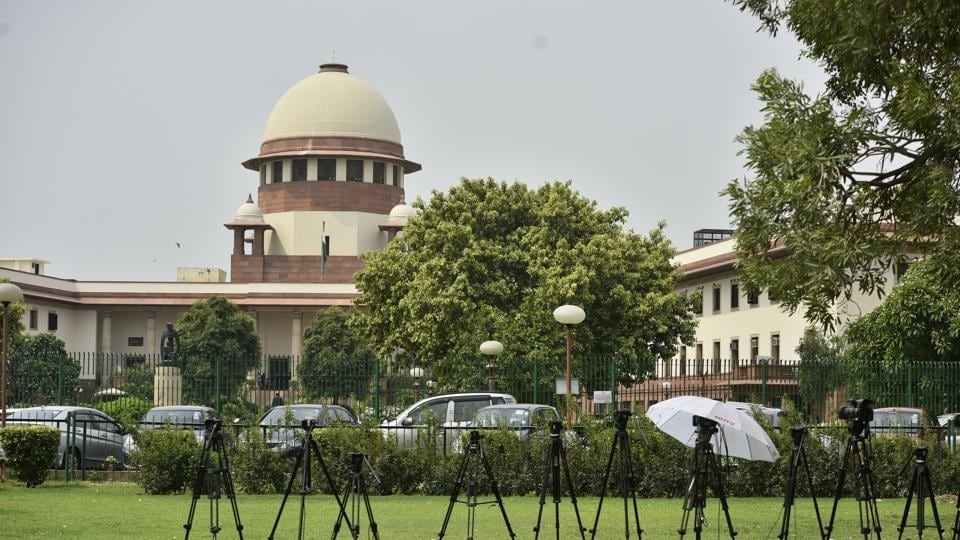
A bench of Justices Abhay S Oka and Augustine George Masih mentioned that once a case is made for granting bail, the court cannot deny the relief.
“When a case is made out for a grant of bail, the courts should not have any hesitation in granting bail. The allegations of the prosecution may be very serious. But, the duty of the courts is to consider the case for grant of bail in accordance with the law. Bail is the rule and jail is an exception is a settled law,” PTI quoted the bench as saying.
The Supreme Court said that even in cases with stringent bail conditions, the principle remains the same that bail can be granted if the conditions specified in the statute are met.
"The rule also means that once a case is made out for the grant of bail, the court cannot decline to grant bail. If the Courts start denying bail in deserving cases, it will be a violation of the rights guaranteed under Article 21 (right to life and personal liberty) of our Constitution," the bench added.
The verdict came while ordering the release of retired police constable Jalaluddin Khan, who had been charged under the stringent provisions of the anti-terror law and the now-defunct Indian Penal Code for renting out the upper floor of his house to alleged members of the banned Popular Front of India (PFI).
According to the National Investigation Agency (NIA), its investigation uncovered a criminal conspiracy intended to carry out acts of terror and violence, creating an atmosphere of fear and threatening national unity and integrity.
As part of the alleged conspiracy, the accused arranged rental accommodation at Ahmad Palace in Phulwarisharif (Patna) and used it to train individuals in violent acts.
The NIA claimed that Bihar Police had been informed about plans to disrupt Prime Minister Narendra Modi's visit in 2022.
Acting on this information, Phulwarisharif Police raided Khan's house on July 11, 2022. The Supreme Court observed that the charge sheet did not provide evidence of Khan's involvement in unlawful activities as defined under the UAPA.
The apex court said that even if co-accused were engaged in terrorist activities, there was no evidence linking Khan to the conspiracy.
It also obesrved there was no evidence to suggest that Khan had advocated, abetted, advised or incited terrorist acts or any related preparatory activities.
“Taking the charge sheet as correct, it is not possible to record a prima facie finding that the appellant knowingly facilitated the commission or preparation of terrorist acts by letting out the first floor premises. Again, there is no allegation in the charge sheet against the appellant that he organised any camps to impart training in terrorism,” said the bench.
“There is not even an allegation in the charge sheet that the appellant was a member of any terrorist gang,” it said and ordered Khan's release on bail.
With PTI inputs


