
 E-Paper



Battle against disinformation continues
The Indian government and Army have repeatedly warned that Pakistan’s strategy extends beyond diplomatic channels, deploying misinformation as a tactical weapon

 Prefer HTon Google


Despite an understanding between India and Pakistan to ease hostilities – which appeared to be fragile hours after Indian, Pakistani and American officials announced on Saturday evening, fact-checkers at the frontlines of an unprecedented wave of misinformation that accompanied recent tensions said they will remain vigilant.
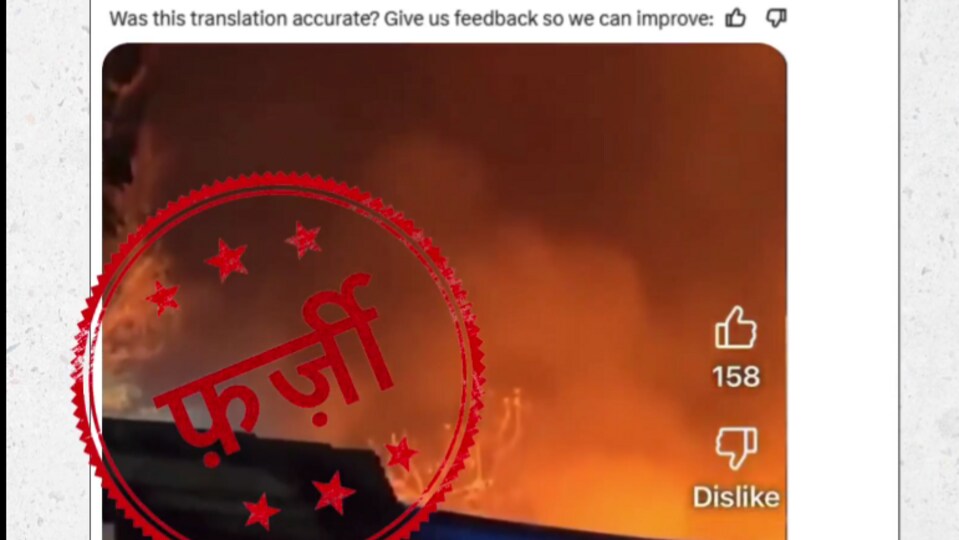
The Indian government and Army have repeatedly warned that Pakistan’s strategy extends beyond diplomatic channels, deploying misinformation as a tactical weapon throughout the four-day conflict, officials confirmed in multiple briefings.
Track live updates of India-Pakistan ceasefire here.
The normally modest operation of the Press Information Bureau’s Fact-Check Unit (FCU), which typically processes just one or two questionable items daily, has dramatically expanded its operations since the Pahalgam terror attack on April 22 that claimed 26 lives, including 25 Indians and one Nepali national. Following the launch of Operation Sindoor on May 7, the unit has issued at least 50 fact-checks on its X platform alone.
Also read: In 4 days, India's ‘Operation Sindoor’ caused massive damage in Pakistan
HT has learnt that the ministry of information and broadcasting (MIB) established a specialised command centre—informally dubbed the “war room”—at Delhi’s National Media Centre on May 7. This operation integrates multiple agencies including the FCU, new media wing, electronic media monitoring centre, Doordarshan and Akashvani to coordinate the government’s response to disinformation, according to two government officials.
“Additional officers from MIB and PIB have been temporarily deployed to support the expanded fact-checking operations,” one official told Hindustan Times.
Also read: Donald Trump on India-Pakistan ceasefire: 'Will work with both nations on Kashmir solution'
Independent verification organisations have faced similar pressures. Jency Jacob, managing editor at Boom Fact Check, told Hindustan Times, “We’ve seen non-stop misinformation since the Pahalgam attack, but it escalated dramatically after May 8 when social media accounts, amplified by irresponsible reporting, began claiming attacks on Pakistani cities that were never confirmed by the government.”
The challenge intensified with the emergence of artificial intelligence-generated content. “Technology-facilitated misinformation added more confusion to an already tensed situation,” said Kritika Goel, an independent fact-checker and former India head of editorial operations at Logically Facts.
A particularly concerning example involved a crude AI-generated video depicting External Affairs Minister S Jaishankar apologising, which circulated widely before FCU officially declared it fraudulent.
While government officials note that fact-checkers’ workload has marginally decreased since the ceasefire announcement, vigilance remains essential. “There is definitely a sense of relief,” Jacob said. “Hopefully, the ceasefire will hold and we’ll get some time to breathe. But as it always happens, fact-checkers are never short of any crisis.”


