
 E-Paper



Beijing’s allegiance to Pakistan key roadblock in India-China ties | Opinion
The success of this summit lies in whether President Xi can exorcise the ghost of Pakistan from Chinese perception of its bilateral engagement with India.


When then US secretary of state Hillary Clinton visited India in July 2011, she wanted to travel to Amritsar, but ended up in Chennai after she was told that the waters from the ancient port city of south India touched the western shores of the US, defining Indo-Pacific in a true sense.
The presence of the Arakkonam naval air base near Chennai also defined the QUAD security grouping, with the Boeing P-8I Neptune anti-submarine, ship interdictor and anti-surface warfare platform stationed at the base and in touch with US and Australia counterparts under COMCASA, or Communications Compatibility and Security Agreement.
While Chennai’s linkages with QUAD are still in a nascent stage, the Pallava capital of Kanchipuram was visited by Chinese traveller Huien Tsang or Xuanzang 2,000 years ago.
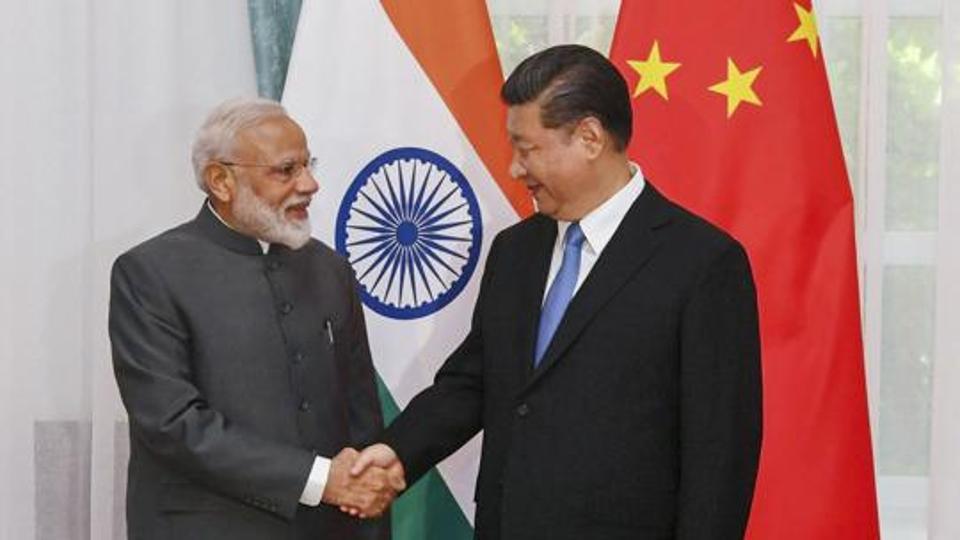
The heritage city of Mahabalipuram, now Mamallapuram, was also the showcase of the Pallavas and will see Prime Minister Narendra Modi host Chinese President Xi Jinping from October 11-13 at the second informal summit between the two leaders.
The success of this summit lies in whether President Xi can exorcise the ghost of Pakistan from Chinese perception of its bilateral engagement with India.
If Xi can get over the Pakistan hangover and focus directly on improving bilateral ties with India, the summit will take the relationship forward; or else this will be just another milestone.
Fact is that at the heart of India-China mistrust lies Beijing’s all-weather ally, Islamabad, with the middle kingdom backing Pakistan entirely on issues like cross-border terrorism, nuclear suppliers group, UN expansion, the Financial Action Task Force (FATF) and Jammu and Kashmir.
The other source of mistrust is China’s unwillingness to give India space on the global high table and its efforts to confine New Delhi to a regional power locked in death combat with Pakistan.
Although India and China have had a border dispute for the past 50 years, the two sides have managed occasional flare-ups very astutely with not a single bullet being fired since the Nathu La skirmish in 1967.
The two sides have convergence on global issues like climate change and are focused on greening their countries.
At the informal summit, President Xi will have the option of either reading the laundry list of Pakistan’s concerns with India or explore new areas of cooperation with PM Modi.
After hosting Pakistan Prime Minister Imran Khan in Beijing on October 8-10 and hearing out his litany of complaints against India, President Xi will have to make a superhuman effort to not let Islamabad overshadow the summit.
Xi’s test on Pakistan will start from October 13-18, when FATF holds a plenary meeting under the presidentship of China in Paris to consider blacklisting Islamabad for its failure to comply with over 20 out of 27 key parameters laid down in an action plan to deal with money laundering and terrorist financing As the FATF acts on consensus, it is quite evident that Pakistan will remain on a grey list with China, Malaysia and Turkey responding to PM Imran Khan’s call for support.
While India has conveyed its stand on the revocation of Article 370, which did away with special status for Jammu and on Kashmir, directly to China at the foreign ministers’ level, President Xi may see the August 5 move as a precursor to a possible flare-up between India and Pakistan on the Line of Control (LoC), leading to instability in the region.
This is the line PM Khan has been promoting with the ubiquitous Pakistani threat of a nuclear war.
Rather than derailing the entire exercise over Pakistan, President Xi, already facing flak over Hong Kong protests, may like to take the informal summit towards a positive direction where both countries expand bilateral trade beyond $100 billion while balancing India’s bilateral deficit.
The other option for a successful summit is that both sides decide to resolve the boundary dispute on a sectoral basis and narrow their differences. The only beneficiary of a China at loggerheads with India is Pakistan.


