
 E-Paper



Cabinet approves Paris climate deal, to formally ratify it on October 2
The ratification would slow down investment in thermal power plants and provide push to cleaner fuels.


The Cabinet on Wednesday approved ratification of the Paris climate deal --- aimed at zero emission world by the turn of the century --- that will eventually reduce dependence on fossil fuel-based energy sources.
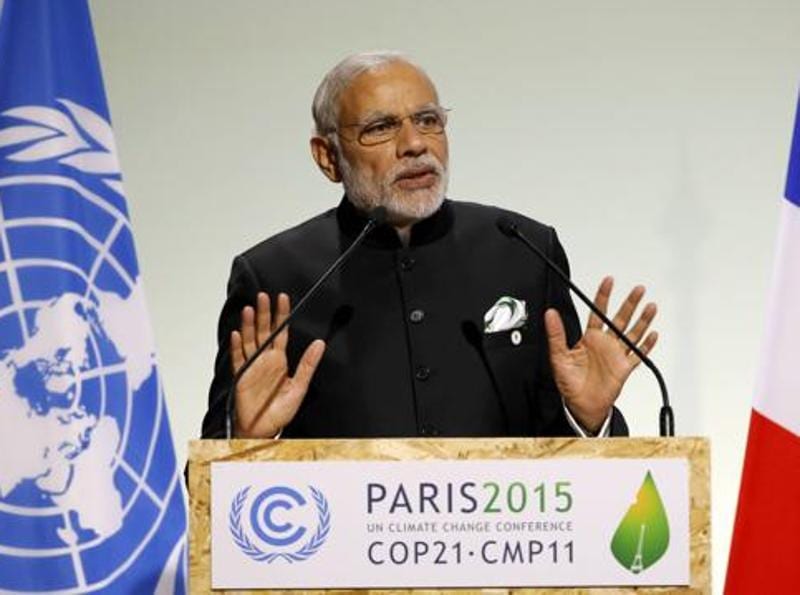
The deal would be formally ratified on October 2, the birthday of Mahatma Gandhi and Swachhata Diwas, the government said in a statement.
Over 190 countries had signed the deal in April this year of which 61, accounting for 47.9% of the global emissions, have ratified it.
But with India, having 4.5% share of the global emissions, ratifying it, the possibility of the deal coming into force has brightened. As per the United Nations Climate Convention, the deal will be effective once 55 countries accounting for 55% of the global emissions ratify the agreement.
Read | Here’s why India is ratifying the Paris climate treaty
Once the deal comes into force, the countries will negotiate different protocols under the agreement for the next three years. The deal will be effective from January 1, 2021.
“India’s decision to ratify the agreement will take the number of cumulative level of emission of countries that have ratified the agreement so far to 51.89%. With the gathering momentum and willingness expressed by several other countries to ratify it before the end of this year, it is expected that the agreement will enter into force soon,” the statement read.
Diplomatic posturing
United States was the first to react to India’s decision, saying it was another example of “courageous” leadership of Prime Minister Narendra Modi. Other world leaders, including UN Secretary General Ban Ki-moon also congratulated Modi for ratifying the deal, which is being considered as Obama-Ban Ki-moon global legacy.
India’s decision to ratify the deal came after the Modi-Obama meeting clearly showing that linking of Nuclear Supplier’s Group membership with the Paris deal was diplomatic posturing aimed at seeking support of the top global leaders.
Whether India has been able to garner the support will be known only in December when NSG membership issue will be discussed, but the decision has shown some functionaries in the bad light.
Arvind Panagariya, G-20 sherpa, had gone on record to say ratification will take time hinting that it may not happen by the end of the year. He had said India would not be able to complete the “domestic procedures” leading up to the ratification. Within a month of his statement the government announced ratification.
Implications for India
On last year’s Gandhi Jayanthi, India submitted the most comprehensive clean energy plan to UN climate convention called Intended Nationally Determined Contributions (INDCs) to participate in the global fight against climate change.
India has committed that its greenhouse gas emissions for every unit of its economy will be reduced by one-third by 2030 to the 2005 level. This is, however, different from emission reduction as it means slowing down of emission growth.
India has also promised to produce about 40% of its electricity from “non fossil-based sources” like solar energy, wind or hydropower by 2030 and launched global Solar Alliance in Paris having close to 100 members. In addition, India said it will increase its forest cover to create additional carbon sink of about 2.5 to three billion tonnes by 2030.
To achieve the targets, the environment ministry had constituted six task forces earlier this year to suggest requisite policy and legislative interventions. Some clean energy reforms in works include a law to make mandatory use of renewable in the overall energy mix, tax rebates for vehicles running on cleaner fuels and new targets for improving green cover. The committee would be submitted its recommendations by the end of this year.
“India will need up to one percentage point of the GDP for achieving the targets and lot will have to come from the private sector which will be the biggest gainer from the transition,” said Kirit Parekh, former member of the Planning Commission and chairperson of the Expert Group on Low Carbon Strategies for Inclusive Growth.
Another implication for India would be when the INDCs will be reviewed in 2024 as countries would seek a roadmap to phase out coal usage for power plants. China has already declared phasing out plan in its INDCs. Around 60% of India’s emissions are from thermal power plants.


