
 E-Paper



Cabinet clears ordinance on teachers’ reservation
The Union Cabinet on Thursday rolled back a controversial faculty hiring system for universities and colleges that had angered SC, ST and OBC communities — the second time in seven months the Centre has reversed a court order following protests.


The Union Cabinet on Thursday rolled back a controversial faculty hiring system for universities and colleges that had angered Scheduled Caste (SC), Scheduled Tribe (ST) and Other Backward Class (OBC) communities — the second time in seven months the Centre has reversed a court order following protests.
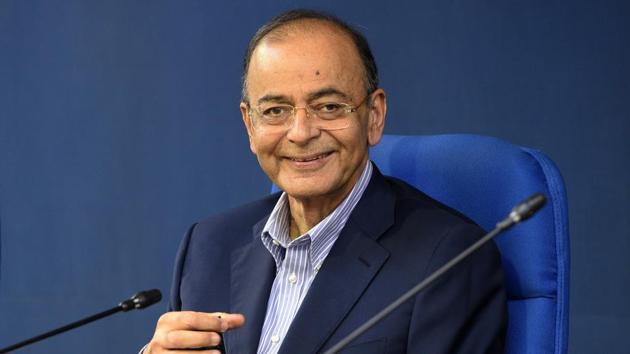
In a briefing, Union finance minister Arun Jaitley announced that the Cabinet cleared the ‘Central Educational Institutions (Reservation in Teachers’ Cadre) Ordinance, 2019’ that replaced the 13-point roster in which reservation is determined at the departmental level.
The old system — the 200-point roster that the government has gone back to — takes the entire institution as a single unit for hiring purposes, providing 27% quota to OBCs, 15% to SCs and 7.5% to STs.
The 13-point roster was introduced by the University Grants Commission (UGC) last year after an Allahabad high court order in 2017 said the whole institution couldn’t be taken as a single unit to determine reservation. The court’s order was challenged by the Centre, which also stopped faculty recruitment in universities, in the Supreme Court (SC) but its petition was rejected.
Thursday’s meeting, apparently the last of this government, was chaired by Prime Minister Narendra Modi.
According to people with direct knowledge of the developments, he said that the next meeting of the Cabinet would be in June — a date after the upcoming general elections.
With the Lok Sabha elections weeks away, the ordinance is the latest in a slew of attempts by the government to reach out to the SC/ST groups, which together make up around a fourth of the country’s population. A number of ministers and top National Democratic Alliance (NDA) leaders, including minister Ram Vilas Paswan and Bharatiya Janata Party (BJP) president Amit Shah, promised to safeguard reservations.
Last August, the government passed a bill effectively reversing changes in the SC/ST (Prevention of Atrocities) Act by the Supreme Court after violent protests rocked the country. The court’s order had removed some of the stringent provisions in the act for crimes against people from the communities.
“This [the ordinance] has been necessitated because earlier this field was governed by UGC [University Grants Commission] circulars. And interpreting those UGC circulars, the Allahabad high court had delivered a judgment, which was upheld by the SC that every department should be independently taken as a unit. And the roster which was formulated resulted in either under-representation or negligible representation of SCs, STs and also OBCs,” Jaitley said.
His Cabinet colleague and Union human resource development minister Prakash Javadekar called the decision historic. “We had stopped recruitments in universities after the court verdict. Following the issuance of this ordinance, we are immediately starting the process of recruitment,” Javadekar said.
“I thank Prime Minister Narendra Modi for this decision. The rights of SCs and STs are restored. This reflects the commitment of the government towards SC/ST,” Union minister Paswan said. “It is obviously to not alienate the SC, ST and OBC sections. This was something which was seen as anti-reservation and they [the government] must have been under pressure from their own constituency also. Elections are around the corner and there is hardly any opposition that such a move would face,” said Surinder Singh Jodhka, a professor at Delhi’s Jawaharlal Nehru University.
This decision will allow filling up of more than 5,000 vacancies by direct recruitment in Teachers’ Cadre duly ensuring that the Constitutional Provisions of Articles 14, 16 and 21 shall be complied with and stipulated reservation criteria for the Scheduled Castes, Scheduled Tribes and Socially and Educationally Backward Classes are met with, a government statement said.
Under the 13-point roster, every fourth vacancy was reserved for OBC ( 27% corresponds roughly to 1/4), every seventh for SC (15% roughly corresponds to 1/7) and every 14th for ST (7.5% roughly corresponds to 1/14). SC/ST groups argued that many departments didn’t have 14 positions, and are much smaller, so the full quantum of reservation would never be reached. For example, if a department had six positions, it will have no reservations for SC and ST candidates, and if it has just three, there will be no reservation at all.
According to an HRD ministry official, a study of 20 central universities had revealed that after this ordinance, the number of vacancies for the aforementioned sections would rise to 2,663 from 1,241 positions. He said that the 10% quota for the economically backward sections (EWS), which was passed by the government in the budget session of Parliament, was not included in the ordinance. A notification for the EWS will be issued later, he added.
“This is a welcome step for social justice... The Allahabad high court judgement upholding the 13-point department-based roster and invalidating the earlier institution/university-based 200-point one was twice upheld by the Supreme Court, and had drastically reduced reserved seats,” said former UGC member Inder Mohan Kapahy. Hours after the ordinance was issued, the UGC issued a letter asking the varsities to start recruitments immediately.


