
 E-Paper



Centre asks states to keep 48-hour buffer stock of oxygen in all hospitals
In a letter to all states and UTs, Union health secretary Rajesh Bhushan said oxygen concentrators supplied by the Centre should remain fully functional at all times


The Centre has asked all states and Union territories to keep at least a 48-hour buffer stock of medical oxygen in hospitals to meet any surge in demand due to the current wave of Covid-19 cases.
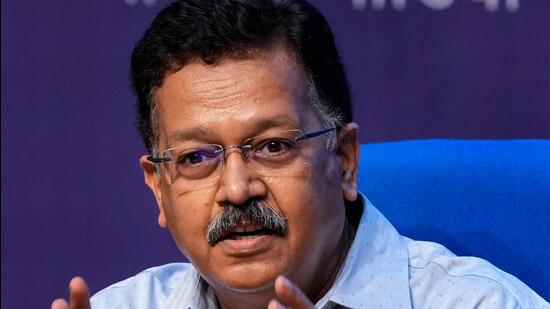
In a letter to states and UTs, Union health secretary Rajesh Bhushan on Tuesday said, “… all health facilities providing in-patient care and oxygen therapy should have a buffer stock of medical oxygen sufficient for at least 48 hours. The liquid medical oxygen tanks at the health facilities should be sufficiently filled and an uninterrupted supply chain for their refilling should be ensured…”
Hospitals across the country have been strengthened with pressure swing adsorption plants, which generate oxygen from ambient air. “It is important to ensure that these PSA plants are kept fully functional. All steps should be taken for the proper upkeep and maintenance of such plants,” said Bhushan. He added that oxygen concentrators supplied by the Centre should remain fully functional at all times.
He also directed states to ensure all the health facilities have adequate inventory of oxygen cylinders along with back-up stocks and robust refilling systems. “These cylinders must be filled and kept ready,” Bhushan said.
On Wednesday, the Delhi government said the national Capital now has an installed capacity of 900 metric tonnes (MT) of liquid medical oxygen (LMO) compared to about 730 MT that was available in May 2021, when the second wave hit the city. As mandated by the Centre in its letter, the Delhi government also has created a buffer reserve of 442 MT.
During the April-May wave of cases, many parts of the country saw an acute crisis of medical oxygen after a surge of patients in critical condition overwhelmed hospitals and stocks.
Besides, a total of 90 PSA plants have been commissioned so far and another eight will be commissioned by the end of this month, the Delhi government informed. Cylinders with a total oxygen capacity of about 227 MT are with different hospitals, nursing homes and Covid Care Centres in the city. As for keeping cylinders in reserve, the administration has 6,000 ‘D type’ cylinders at its disposal and another 9,115 cylinders are with the Delhi Transport Corporation (DTC).
When asked about the status of the 15 cryogenic tankers that were to be procured by the Delhi government, a senior health official said work orders have been awarded for its procurement. “The delivery of three tankers is expected by January 24. The next will be a batch of six tankers which will be delivered by February 24 and then the next six will be delivered on March 24,” the official said on condition of anonymity.
All tertiary care hospitals, or higher-level health facilities, have been asked to have life support equipment, including ventilators, BiPAP, SpO2 systems, and associated consumables, in sufficient numbers to respond to the emerging needs.
The health secretary also directed hospitals to adopt all infection prevention protocols while using the oxygen delivery devices and equipment. For that, he said adequately trained people should be deployed at all hospitals. “As advised, training of facility-wise Oxygen Stewards should be completed within the next few days.”
The Union ministries of health and skill development and entrepreneurship have already organised 10 hours training for operators of PSA plants for day-to-day operation, 40 hours training of master trainers and 180 hours training of trouble shooting of PSA to a significant number of persons in all states.
The states need to co-ordinate with private health facilities that provide oxygen therapy to explore the option of utilisng their services after assessing them, especially when the demand is at its peak.
The Centre also asked states to again make functional oxygen control rooms so that any issue related to supplies of the life-saving gas is resolved without wasting time. “…with timely preparations and responsiveness, I am confident that we will be able to meet the challenges ahead of us…,” said Bhushan.


