
 E-Paper



Only Centre can carry out census: Govt to Supreme Court
Centre maintained that census is enumerated as a subject under Entry 69 in the Union List of the Seventh Schedule of the Constitution.

 Prefer HTon Google


The Union government on Monday submitted in the Supreme Court that only the Centre is empowered under the Constitution to carry out a census, seeking intervention in a host of petitions that have questioned the validity of the Bihar government’s caste survey.
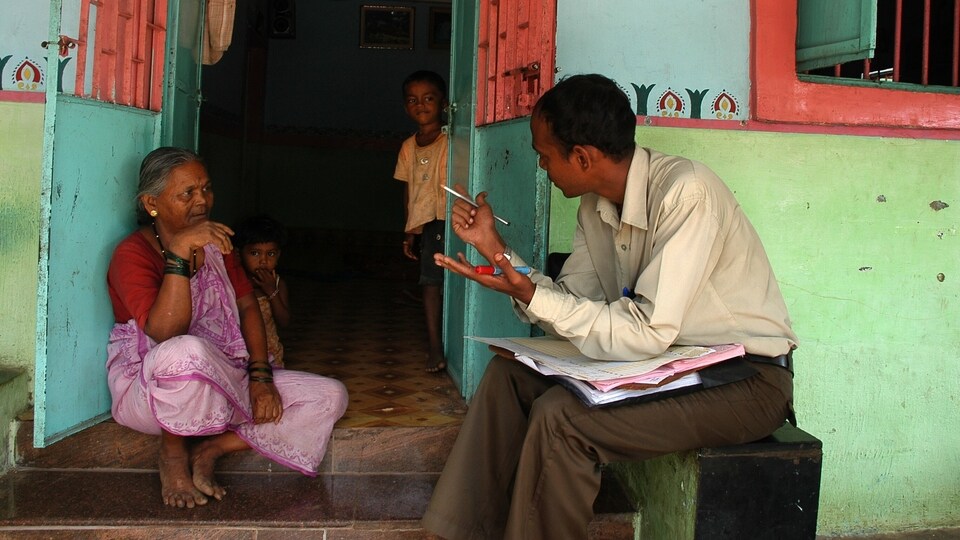
In a short affidavit filed through the ministry of home affairs, the Centre maintained that census is enumerated as a subject under Entry 69 in the Union List of the Seventh Schedule of the Constitution.
Also Read | Can’t direct Bihar government to implement central scheme: Patna high court
“In the exercise of the powers under the said Entry, the central government has made the Census Act, 1948. The said Act empowers only the central government to conduct the census under Section 3 of the Census Act,” stated the two-page affidavit, filed on Monday evening.
There were two affidavits filed by the Centre on Monday. The first affidavit was a more direct opposition, asserting that it is only the Union government that is entitled not only to carry out a census but also “any action akin to census”.
Hours later, another affidavit was filed to do away with the paragraph that disputed the authority of states to conduct “any action akin to census”.
Also Read | Grand Alliance lashes out at BJP over Centre’s opposition to Bihar caste census
The second affidavit filed in the evening read: “The central government has filed an affidavit in the morning today. In the said affidavit, inadvertently, para 5 has crept in. The said affidavit, therefore, stands withdrawn and this present affidavit will be the affidavit on behalf of the central government.”
The Centre’s emphasis on its exclusive authority to conduct a census has come a week after solicitor general (SG) Tushar Mehta told the Supreme Court that the Nitish Kumar-government’s ambitious exercise has some “ramifications” that necessitated an intervention by the Union government in the matter.
On August 21, a bench of justices Sanjiv Khanna and SVN Bhatti gave Mehta some time to bring on record the Centre’s stand in the matter while clarifying that it does not intend to stay the publication of the Bihar survey unless a prima facie case is made out by the petitioners against the ongoing exercise.
A bunch of petitions in the top court have challenged the August 1 judgment of the Patna high court that allowed the Bihar government to carry out the exercise which the state chief minister Nitish Kumar has pitched as essential and imperative to further the cause of social justice.
The petitioners claim that the survey conducted by the Bihar government was in the nature of a “census”, which can be undertaken only by the central government. The petitioners, comprising individuals and organisations such as Youth for Equality and Ek Sock Ek Prayas, have contended that the door-to-door exercise conducted by the Bihar government makes it amply clear that a census-like activity was carried out, making it illegal.
These pleas further argued that seeking details about caste, religion, and profession of citizens is a violation of their right to privacy and that there is no mechanism to protect this data. It has also been contended that the Bihar government’s survey was conducted in breach of the Supreme Court’s nine-judge bench verdict in the Puttaswamy case, which has held that it is only through a law that a state can carry out an exercise which can impact a person’s privacy.
The Bihar government, however, has maintained that the Collection of Statistics Act, 2008, empowers it to conduct such an enumeration exercise in the interest of social justice.
On August 18, the bench observed that it cannot restrain the Bihar government from publishing the cumulative data or findings of the caste survey unless there is a prima facie case to show violation of any constitutional right or lack of competence on the part of the state government. “We are not going to stay anything unless there is a prima facie case to show some violation... some legal issues that are debatable. The exercise has already been completed and the judgment of the high court has been in their favour. We will not stay anything without there being a prima facie case now,” it had said on the day.
Earlier this month, affirming the state’s June 6, 2022, notification announcing the survey, the Patna high court judgment said: “We find the action of the state to be perfectly valid, initiated with due competence, with the legitimate aim of providing ‘Development with Justice’... and the actual survey to have neither exercised nor contemplated any coercion to divulge the details and having passed the test of proportionality, thus not having violated the rights of privacy of the individual especially since it is in furtherance of a ‘compelling public interest’ which in effect is the ‘legitimate state interest’.”
The high court held that the word “census” falls under Entry 69 of List I, which is solely within prerogative of Centre, but this does not prohibit any state government from collecting data for implementing welfare schemes and carrying out affirmative action. The state had relied on the 2008 Act to justify its survey although the June 6 notification made no mention of it.
The survey aimed at pushing for more reservation for backward classes on the grounds that current quotas are not proportionate with the share of these communities in the population.
In Bihar, the call for a caste survey erupted last year and was supported by all parties, though the ruling Janata Dal (United) and Rashtriya Janata Dal led the demand. Over the past few months, a number of opposition parties, including the Congress, have picked up the appeal across India, hoping that an enumeration of castes will be a game-changer in reversing the BJP’s deep inroads into the backward groups and countering religious polarisation.
Speaking to the media on August 25, the Bihar CM said that the caste-based survey in the state has been completed and the they government would soon make the data public. He added that the survey would be beneficial for all sections of the society.
Reacting to Centre’s affidavit on Monday, JD(U) chief spokesperson Neeraj Kumar said the state government initiated the exercise after the central government turned down the demands for the same in August 2021.
“The PM had said that the state government might conduct at its own. But, the way the Central government is opposing the caste census clearly demonstrates the BJP’s desperation to keep the actual status of the scheduled castes, backward classes and other deprived sections under wraps,” said Kumar.
The RJD, meanwhile, said that the BJP was against the caste-based enumeration because it would expose the Centre’s lopsided development policies.
“Socially and economically backward sections in the society have been completely marginalised in the government scheme of things and only the industrialists and rich people are making the most of the government policies,” party spokesperson Shakti Singh Yadav said.
BJP leader and Rajay Sabha MP Sushil Modi, however, denied the allegations.
“In the affidavit, the Centre clarified that there was no confrontation between the Centre and the state government on the constitutional point of view. Stating the constitutional position in the apex court, the Centre clarified that the state was free to conduct the social and economic census,” he said.
(With inputs from Subhash Pathak)



