
 E-Paper



Centre began looking for virus variants only after rapid surge: Dr T Jacob John
Government surveillance did not catch the wind as the virus was mutating and new variants were emerging until the rapid rise of the pandemic curve, says Dr T Jacob John


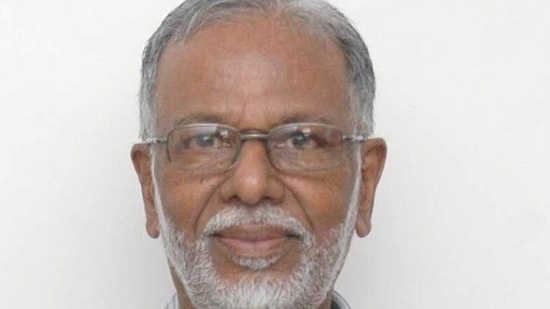
Dr T Jacob John, who was former director at ICMR’s Centre of Advanced Research in Virology, in an interview with says that the government surveillance did not catch wind as the virus was mutating and new variants were emerging until rapid rise of the pandemic curve. He says it is unethical that despite being the ‘pharmacy of the world’ we don’t have enough vaccines to save lives and our policy isn’t informed by adequate scientific evidence. He projects that the second wave would reach its end stage by the end of June.
Edited excerpts:
What factors do you think led to the magnitude of the second wave?
Broadly two: One, letting our guard down too soon; trivialising masks and physical distancing for the sake of allowing Kumbh Mela from April 1 to April 22. Pilgrims from all states carried variant viruses and seeded epidemics; therefore, election or no election, all states had fire. Elections and rallies added to this. Two, we let our guard down on “spying on the enemy (SARS-CoV-2)” -- variants were getting together for an onslaught but our intelligence failed to get a wind. It was mutating and new variants were emerging, but the Indian government apparently did not know anything about “enemy tactics” until after the second wave was spreading fast due to the variants. Only after the rapid rise of the epidemic curve the assigned virologists began looking for variants and they were all over. These variants (about 5 different ones) have far higher transmission efficiency than the “founder’’ variant of Wu.Hu.1 and the variant that caused India’s first wave, D614G. Another factor -- the sin of omission or of lack of planning due to lack of vision or of understanding the value of vaccines. Very tardy vaccinations.
As compared to the first wave, we have more people dying unable to either find oxygen or ventilator support. Doctors are saying that more people are coming in a critical condition. Is it the nature of the variant that is more severe?
The first wave started early March 2020 and peaked by September 16, 2020 (total reported cases just over 5 million) and fell to endemicity by Dec 28, 2020 (second half also with just over 5 million), totalling more than 10 million in 10 months. The second wave started about March 9 and peaked on May 6, with 10 million cases in 8 weeks, a little over a million a week. The sheer speed and huge volume overwhelmed the healthcare infrastructure, crematoria, and so on. This speed and volume resulted in more sick people and more deaths, but the rates were not much changed. So disease severity was not the problem -- many died without even oxygen -- what a country! For normal healthcare we need 300 hospital beds per 100,000 population. But we have only 50 beds per 100,000 population. Therefore even during normal times we were stretching our bed capacity, so no surprise at failure to cope with the surge. No evidence of more “virus virulence”.
You have for long been demanding data collection and for policy and responses to be driven by data. We still do not have reliable data with under-reporting of cases as well as deaths. How different would our response have been to Covid-19 if we had verified data on, for instance, TB?
That is because I am an Indian who believes in science. Others do not want data or at least reliable data. Our governments are happy to make policies on the advice of people who may know very little about their field of responsibility. I have watched health secretaries who advise the government without basic understanding or commitment to “health and science of health and disease.”
Look at prediction of vaccine demand in 2020 third quarter, in 2021 first quarter and making sure we get the projected volumes. No projection was made because no one knew on what basis to make projections. Respect for numbers will change the attitudes of administrators.
We guess our TB burden to be 200 cases/100,000 people while Western countries brought it down (they also had at one time the same burden) through public health interventions to 5/100,000. We don’t even have a method of counting every case of TB to get reliable numbers. Reliable numbers are needed only if you want to control TB. Since we do not have even a policy to control TB, valid numbers are not needed. We have a slogan for TB elimination by 2025, but we do not have a policy to control TB. We are good at saying A and mean B because they are so close to each other.
Do you think our policy interventions, particularly early this year as well as last year, were adequately based on scientific evidence?
Brief answer: No. But then policy interventions of a pandemic require “projection” without “evidence” but “extrapolation”. That skill is fundamental to public health. Since we have no public health, we have no experts in 3 areas of public health -- (1) Epidemiology of Communicable Disease; (2) Economics of Health -- of disease prevention versus non-prevention, loss due to uncontrolled communicable diseases including TB; we are losing money by not spending enough; (3) Ethics of health interventions. For example is it not unethical for the “Pharmacy of the World” not having enough vaccines to save citizens’ lives? There are ethical issues in not doing something you ought to have done -- not merely in things you do.
What is your view on the genome sequencing done in India so far. Tamil Nadu is one of the lowest for sending samples.
Are only the media interested in gene sequencing? India probably saved some few crores of rupees avoiding 5% positive samples used for full genome sequencing. Does anyone realise that those few crores would have saved countless lives in April-May? In general our culture does not value the “cause-and-effect” tenet of science and so hardly any one will attribute our discomfiture to past errors.
Where do we stand in terms of herd immunity? Is that still a goal?
Do those who talk about herd immunity understand it at all? Who is in charge of monitoring it? Who has predicted what herd immunity level must be achieved with vaccines? Herd immunity as a goal applies exclusively for vaccination. If experts had understood that they would have calculated the vaccine requirement last April-May (2020).
Vaccines are the only tool we have to control the spread but we have a shortage. At current rates, India is projected to take till at least the end of 2022 to be able to vaccinate a proportion of population that will help to reduce the severity of waves. What other steps must India take till availability and delivery improves?
India is the pioneer leader of “social vaccine” -- that is what should have been used as soon as the second wave was detected but then, that demanded seriousness of purpose to curtail the spread. Did you ever see any “desire” to reduce the onslaught of the second wave except for blaming each other?
What is your concern about vaccine effectiveness against the different variants?
As of now, not much worry. Let us get the maximum out of vaccines first. My hunch is that “hyper-immunisation” with inactivated virus vaccine (Covaxin) by a third dose will heighten immunity that will also broaden the cover. This needs testing.
What is the course of the pandemic in India now?
India has 718 districts and there is 718 variations on epidemic profiles. Or 30 states with 30 epidemics. National total data is an artifact of statistics but that gives us the pulse. Nationally, the second wave peaked on May 6 (414,433 cases) and is fast declining. May 7th --401,326; 8th -- 409,300; and 9th to 16th every day less than 370,000. Lockdown on downslope is useless and harmful.
When would it reach the stage of an endemic?
If the second wave took 8 weeks to reach peak it will fall to an endemic state in a bit less than 8 weeks -- probably 6-7 weeks. Seven weeks from May 6 to June 24. By end June, I expect numbers to stabilise at 20,000 per day. That should last longer than 10 weeks and further waves can be prevented by vaccination.


