
 E-Paper



Centre clears eight High Court chief justices’ after SC intervention
The Union government‘s move follows the Supreme Court’s firm stance on the constitutional weight of the collegium’s recommendations.


The Union government on Saturday processed the appointment of eight new high court chief justices, a move that follows the Supreme Court’s firm stance on the constitutional weight of the collegium’s recommendations. The notification came just a day after the top court reminded the attorney general that the collegium’s recommendations are not merely suggestions but carry binding authority under the Constitution.
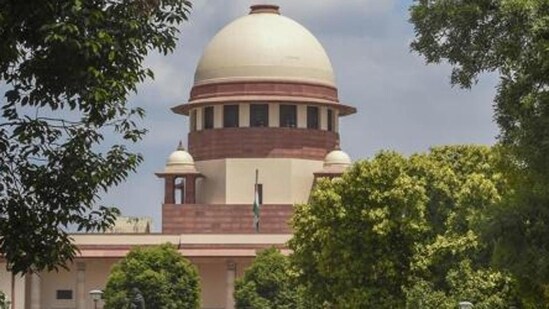
The appointments, which have now been notified by the Centre, underscore a crucial moment in the ongoing tensions between the judiciary and the executive over judicial appointments.
Among those appointed, justice Manmohan, who is currently the acting chief justice of the Delhi high court, has been promoted to the chief justice of the same court. Justice Rajiv Shakdher, a judge of the Delhi high court, has been appointed as the chief justice of the Himachal Pradesh high court, while justice Suresh Kumar Kait, another judge from the Delhi high court, will now lead the Madhya Pradesh high court as its chief justice. Justice Indra Prasanna Mukerji from the Calcutta high court has been appointed as the chief justice of the Meghalaya high court, and justice Nitin Madhukar Jamdar of the Bombay high court has been elevated to the chief justice of the Kerala high court.
ALSO READ- Modi gets a warm welcome in US, holds talks with Biden
Justice Tashi Rabstan, a judge of the Jammu & Kashmir and Ladakh high court will now serve as the chief justice of the same court. Justice KR Shriram from the Bombay high court has been appointed as the chief justice of the Madras high court, and justice MS Ramachandra Rao, currently the chief justice of the Himachal Pradesh high court, will take charge as the chief justice of the Jharkhand high court.
Union law minister Arjun Ram Meghwal took to social media platform “X” (formerly Twitter) to announce the appointments, which come against the backdrop of growing concerns over delays in judicial appointments and the judiciary’s increasing scrutiny of the executive’s handling of the process.
The Supreme Court collegium had on September 17 recommended the appointment of justices Mukerji, Kait, Sandhawalia and Rabstan as chief justices of the high courts of Meghalaya, Madhya Pradesh, Himachal Pradesh and Jammu & Kashmir and Ladakh, respectively.
ALSO READ- EY employee death: Rahul Gandhi speaks with Anna's parents, says ‘I promised…’
The fresh set of recommendations superseded the collegium’s earlier proposals from July 11. The earlier recommendations had been pending with the central government for over two months, prompting the collegium, led by Chief Justice of India Dhananjaya Y Chandrachud, to revisit its choices and make new suggestions for several appointments. The other members of the collegium are justices Sanjiv Khanna and Bhushan R Gavai.
On Friday, a bench led by CJI Chandrachud addressed the attorney general, R Venkataramani, directing him to present a detailed chart of candidates whose names have been reiterated by the collegium for appointment but have not yet been cleared by the Union government. The bench underscored the constitutional importance of the collegium’s recommendations, differentiating them from mere suggestions made by search committees. “The collegium is not a search committee. It has a certain status in terms of the Constitution... In the case of a search committee, you have absolute discretion to make or not make an appointment. But the collegium is not a search committee,” the bench emphasised.
Among the names awaiting clearance are those of senior counsel Saurabh Kirpal and R John Sathyan, nominated for the high courts of Delhi and Madras, respectively. Both appointments have been in limbo for over a year, despite the collegium’s repeated reiterations. The court’s latest intervention was prompted by a public interest litigation (PIL) seeking time-bound clearances of collegium resolutions, as well as a contempt petition filed by the Jharkhand government against the Centre for delays in appointing its chief justice.
ALSO READ- ‘Every day was a nightmare’: Bengal man returns home from Russia-Ukraine war
During the Friday hearing, attorney general Venkataramani expressed concerns over the extent of judicial intervention in what he termed a “sensitive process” with multiple layers of consideration. He highlighted that each case of delayed appointment comes with its complexities, cautioning that the court’s involvement in such matters could be limited. However, the bench maintained that the issue of governance, especially concerning constitutional appointments, must move forward without undue delays.
The Supreme Court’s decision to scrutinise the Union government’s handling of reiterated recommendations represents a significant step in enforcing the principles established in landmark judgments, including the Second Judges Case of 1993. According to this ruling, once a recommendation is reiterated by the collegium, it becomes binding on the government, leaving no room for further delays. This dynamic has historically caused friction between the judiciary and the executive, most notably during 2022-2023 when a bench led by justice Sanjay Kishan Kaul addressed similar delays, pushing the Centre to expedite pending appointments.
The issue of judicial appointments has been a point of contention since the National Judicial Appointments Commission (NJAC) Act was struck down by the Supreme Court in 2015 for undermining judicial independence. Despite the judiciary’s repeated calls for a transparent and expedited appointment process, disagreements over the Memorandum of Procedure (MoP) have persisted, contributing to frequent deadlocks. The executive has voiced concerns about the lack of transparency within the collegium system, while the judiciary remains wary of any encroachments on its autonomy.


