
 E-Paper



Chhattisgarh: New road on which 12 CRPF men were killed completed, opens road to Maoist heartland
The 20-kilometre road will give forces swift access to remote locations and aid combing operations to stave off guerilla tactics of the Maoists.


Workers have completed building a crucial road through Maoist heartland that is expected to break the back of rebels in Chhattisgarh, the government said on Saturday.
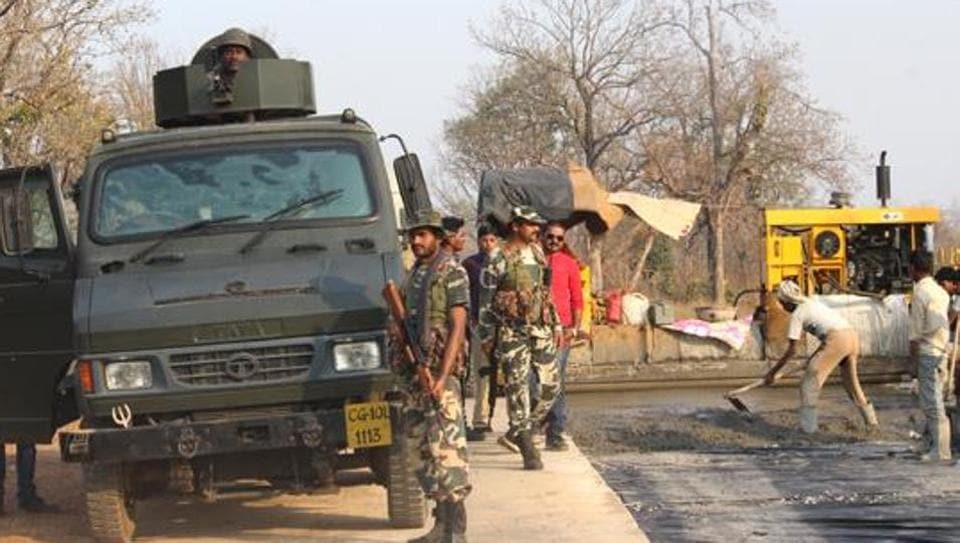
Twelve Central Reserve Police Force (CRPF) personnel were killed while guarding the Injiram-Bheji road in a Maoist ambush in March this year.
Police said the road, which was completed on Friday, would provide connectivity to Bastar’s heavily forested Sukma region, where government forces often find impregnable because of poor infrastructure. Around 1,000 paramilitary soldiers are guarding the road currently, spread over four camps.
“We have completed the first step of penetrating inside the Maoist stronghold. This road has taken many lives. In only two years 13 jawans died,” said DM Awasthi, special director general (anti-Naxal operations) and chairman of the Chhattisgarh Police Housing Corporation Limited (CPHCL) that was tasked with building the road.
Police said the road would be crucial in bringing development to a region where rebels thrive on sparse government presence and lack of development. The 20-kilometre road will give forces swift access to remote locations and aid combing operations to stave off guerilla tactics of the Maoists.
Officials said the next focus would be completing the Dornapal –Jagdagonda road, where 25 CRPF personnel died in April in a Maoist ambush. “Now our focus is only Dornapal –Jagdagonda road which will help us to dominate their territory,” Awasthi added.
Work on the Injiram-Bheji road began four years ago but the state’s public works department abandoned the project after building seven kilometers because no contractor was willing to take up the project. After that the CPHCL, an unit of the state police, took the charge of the work and finished the work – braving 72 improvised explosive devices that were planted by Maoists.
“After the attack, we worked very hard to complete this road. The CPHCL made the stretch a concrete cement (CC) one instead of a damur (tar) one to prevent digging by the Maoists. A CC road is costlier than a damur road but it is more difficult to dig. We know that Maoists will want to plant bombs,” said an engineer who worked on the project and didn’t want to be named.
Contractor Pramod Rathore, who oversaw the road work, told HT, “After the attack, we decided to speed-up the work and even worked in rainy seasons. The security personnel have helped us every day in completing the work. The road is made because of the dedication of the forces and we humbly dedicate this road to the jawan who lost their life in this process.”
-kW0H-U20214218012MgB-250x250%40HT-Web.jpg)


