
 E-Paper



Artificial rain likely in Delhi today: How will cloud seeding be conducted?
Delhi CM Rekha Gupta has described the process as a necessity for the region and a crucial step towards addressing its environmental challenges.

 Prefer HTon Google


A cloud seeding experiment to induce artificial rainfall is likely to take place in Delhi on Tuesday if weather conditions are favourable in Kanpur, the capital's environment minister Manjinder Singh Sirsa said. According to the minister, visibility in Kanpur is currently 2,000 metres, and once it reaches 5,000 metres, the process for the cloud seeding trial can begin.
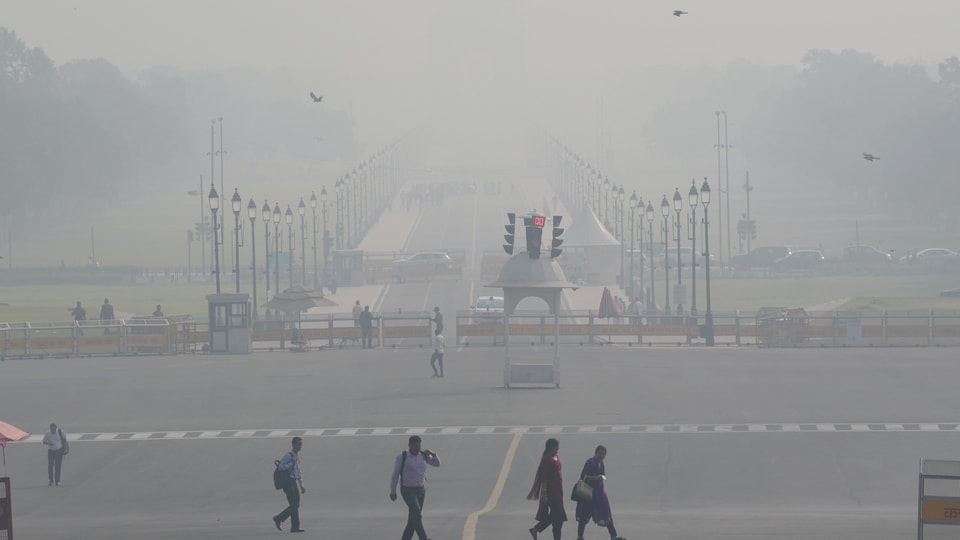
Notably, according to the daily bulletin issued by the Central Pollution Control Board (CPCB), Delhi's air quality remained “very poor” on Monday. Meanwhile, on Tuesday, Delhi's Anand Vihar recorded an AQI of 321.
ALSO READ | Eyes burning, heads spinning: How Delhi-NCR is reacting to toxic air, what govt plans
What is cloud seeding? How will it help?
Cloud seeding is the process of generating artificial rainfall by introducing specific particles, such as iodide crystals or salt-based compounds, into moisture-laden clouds. The trial in Delhi will be conducted to tackle the crisis of air pollution.
Delhi chief minister Rekha Gupta last week described the process as a necessity for the region and a crucial step towards addressing the national capital’s environmental challenges.
How will cloud seeding be conducted?
Particles introduced into the clouds are dispersed through aircraft, causing smaller cloud droplets to condense into larger raindrops, which can potentially lead to precipitation.
Preparations for the experiment are complete, and the government conducted a test flight over Burari last week. During that time, small quantities of silver iodide and sodium chloride compounds, which usually lead to artificial rain, were released from the aircraft.
However, due to low atmospheric moisture of less than 20 per cent, compared to the 50 per cent required for cloud seeding, rainfall could not be induced.
ALSO READ | Open defecation, waste dumping at Delhi canal, threat to drinking water: Study
Why weather conditions need to be favourable in Kanpur
The operation depends on favourable weather conditions in Kanpur since the aircraft designed for the experiment is stationed there.
“Regarding cloud seeding, as soon as the weather clears up in Kanpur, our aircraft will take off from there today. If it succeeds in taking off from there, cloud seeding will be done in Delhi today. Through that cloud seeding, there will be rainfall in Delhi,” Sirsa told ANI.
A memorandum of understanding was signed between the Delhi government and IIT Kanpur on September 25 to carry out five cloud seeding trials.
With inputs from agencies


