
 E-Paper



Collegium’s proposals can’t remain in limbo: SC to govt
Of 26 cases of transfer of judges from one high court to another, 14 files had been processed while the remaining were still being examined, the court added in its order

 Prefer HTon Google


The Collegium’s recommendations to appoint judges cannot remain in limbo, the Supreme Court told the Union government on Monday, emphasising that instead of sitting on them indefinitely, the government must either notify those appointments or send them back citing specific objections.
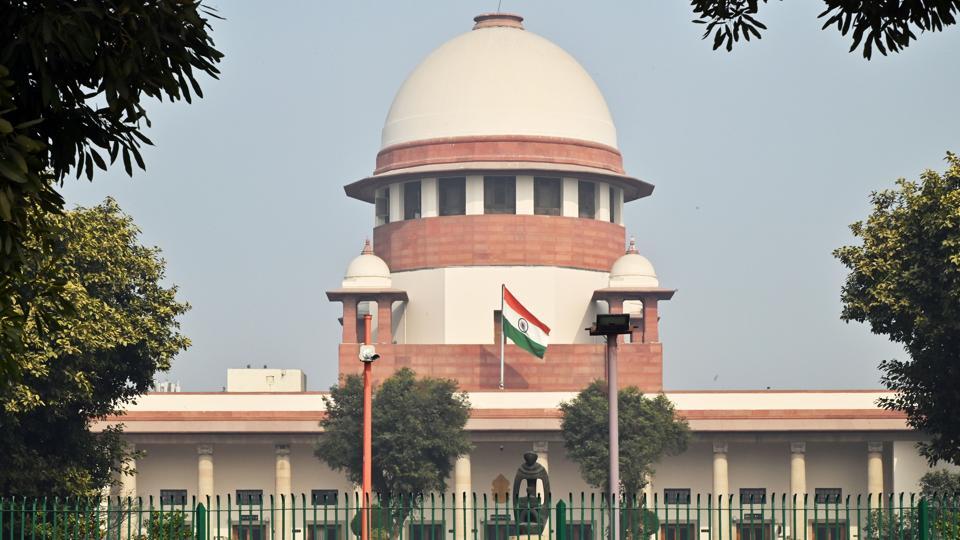
“There are nine names for appointments in high courts that were sent afresh in the last few months. Either they should be appointed or if the government has to say anything, they should be sent back with objections...It cannot be a limbo...why should the names lie with you indefinitely,” a bench led by justice Sanjay Kishan Kaul told attorney general R Venkataramani, adding that it should not come to such a pass that the apex court has to issue directions in this regard.
“The processes delineated in the judgment of this court and the timeline laid down in it should work out by themselves. It should not require any monitoring by this court,” the bench, also comprising justice Sudhanshu Dhulia, recorded in its order while referring to the April 2021 judgment that prescribed a three-month deadline for the government to process the names.
As the bench highlighted that nine recommendations of the Supreme Court collegium for high court judges have been pending with the Union law ministry for several months without any input as to whether they were to be appointed or that the government had any objection to the proposals, the A-G assured the court that he would look into the issue and come back with a solution on October 20 when the matter will be heard next.
The bench was hearing a contempt plea complaining against inordinate delay by the Centre in clearing names when it was also informed by the A-G that the notification to appoint the new full-time chief justice of Manipur high court will be issued soon. HT on October 5 reported first that there was progress on the appointment of Delhi high court judge Siddharth Mridul as the chief justice of Manipur high court with the N Biren Singh-government replying to the Centre’s correspondence after withholding its opinion for three months. The recommendation to appoint justice Mridul as the Manipur high court chief justice was made on July 5.
The memorandum of procedure (MoP), which guides the appointment of judges and chief justices in constitutional courts, lays down that it is only after the view of the concerned state government is received that the law ministry can submit proposals to the Prime Minister, who will then advise the President as to the appointment.
Even as the bench recorded Venkataramani’s statement that the appointment process for the chief justice of Manipur high court is almost complete, justice Kaul observed: “I am very clear that I want this done before the next hearing. I have been very polite so far but if this is not done, I won’t be.”
In its order, the court further recorded that of the 82 names that were proposed by the high court collegium for appointments, 72 have been sent to the Supreme Court collegium for taking a final call and making suitable recommendations. At the same time, the bench clarified in its order that these names cannot be called by the government as “pending” with the Supreme Court collegium because they were submitted by the ministry in the last three days.
Of 26 cases of transfer of judges from one high court to another, 14 files had been processed while the remaining were still being examined, the court added in its order. “We want a substantial part of pendency to be cleared by the next date of hearing. You can be rest assured that collegium will not keep anything pending and will decide as soon as possible. But once this is over, the issue of 10 names, which were reiterated by the collegium but are yet to be appointed, will have to be taken up,” the bench told the A-G.
On September 26, the Supreme Court decided to monitor the steps taken by the Centre in processing the collegium’s recommendations for appointing and transferring judges, expressing its anguish at the delays. It pointed out that there are nine names of lawyers recommended for appointment as judges in various high courts pending with the government for over seven months. The appointment of a chief justice in a sensitive high court (Manipur) is also pending, the court further flagged.
The contempt plea in the matter has been filed by Advocate Association, Bengaluru, through advocate Amit Pai, highlighting several instances of pending appointments and unexplained holdover by the government.
During the brief hearing, senior counsel Arvind Datar and advocate Prashant Bhushan raised the issues of some pending recommendations for appointment of high court chief justices, transfer of judges as well as a few names which the government was yet to appoint despite the collegium’s reiteration.
Bhushan, at one point, requested the bench to consider issuing a directive that there should be a deemed appointment if the government fails to clear a name that has already been reiterated by the collegium. Under the MoP, the government can object only once, and it must process the appointment in cases of reiteration by the collegium.
The bench, however, retorted that there cannot a concept of a “deemed” appointment in these matters since a constitutional court judge is appointed after the President issues a warrant. “How can there be deemed warrant of appointment? The issue will then arise -- should there be direction that the President should sign the warrant within a particular time frame? There are many complications. We cannot get into that. The idea at present is to keep pushing it so that a few things move,” it added.
There have been 10 reiterated names yet to be cleared by the Centre. These included appointments of advocates Saurabh Kirpal, R John Sathyan and Somasekhar Sundaresan as judges in the high courts of Delhi, Madras and Bombay, respectively, which have also been in limbo for more than 10 months each despite reiterations by the collegium.
The delay in notifying the transfers of judges was viewed seriously by the Supreme Court during its proceedings in January and February, when it took up the contempt plea. At the time, the bench took strong exception to the government sitting on almost a dozen recommendations pertaining to the transfer of high court judges, making it clear that “any delay in transfers may result in administrative and judicial actions which may not be palatable”. It added that lack of consistency in the time taken by the Centre to notify the recommendations was creating “issues of faith” between the judiciary and the executive.
The top court’s comments came at a time when the judiciary and the executive were locked in a tussle over judicial appointments. Then law minister Kiren Rijiju issued a series of statements criticising the manner in which the collegium functioned and questioning the division of powers between the two organs.
Between December and February, the top court, in a series of judicial proceedings, responded with reminders to the government that the collegium system is the law of the land that must be followed by the government “to a T”, while saying that the Centre had delayed a number of decisions without giving adequate reasons.
The hearing on Monday was the second occasion when the Supreme Court took stock of the pending recommendations after Arjun Ram Meghwal took over as the Union minister of law and justice on May 18.



