E-Paper



Comorbid kids to be first to get vaccine: Panel chief
Two vaccine candidates were tested among children in India: Covaxin and ZyCoV-D.

 Prefer HTon Google


Children with comorbidities will be given priority in the vaccination drive for those below the age of 18, the chairman of the National Technical Advisory Group on Immunization (NTAGI), NK Arora, said on Monday. Zydus Cadila’s Covid-19 vaccine, ZyCoV-D, which received emergency use approval last week, is the first vaccine in India to be cleared for children aged above 12.
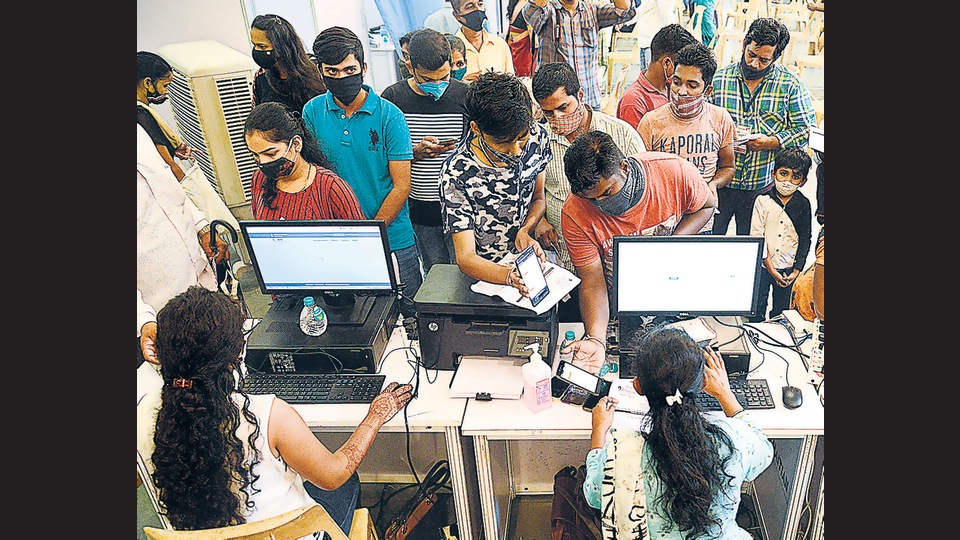
Arora added that Bharat Biotech’s Covaxin is also likely to be available for use in children by the year-end, and the regulatory approval process for this could start anywhere between September and October.
“Children with comorbidities will be given preference when paediatric vaccines are introduced in the system, be it Zydus Cadila’s ZyCoV-D or Bharat Biotech’s Covaxin or the other one that Serum Institute of India is testing in children,” said Arora.
Two vaccine candidates were tested among children in India: Covaxin and ZyCoV-D. The two are also the only ones of the six now approved in India to be developed indigenously. Public health experts say children should get vaccinated against the disease when they become eligible in order to reduce their vulnerability in a possible third wave of infections as they remain the only group that is completely unvaccinated.
Government experts will be holding discussions on how to introduce Zydus’s vaccine as it is a three-dose intradermal vaccine to be administered in 28-day gaps. “We also need to see how to introduce ZyCoV-D in the immunisation drive,” said Arora.
Zydus said that it also planned to seek approval for a two-dose regimen of its vaccine.
Last week, Bharat Biotech’s chairman and managing director, Krishna Ella, and director of Indian Council of Medical Research-National Institute of Virology (Pune), Dr Priya Abraham, said that Covaxin was likely to be approved for children by September.
“The final phase of our clinical trials is over. We are hoping that by the month-end or by next month, we should get the licence for vaccine use in children. This is the only vaccine in the world that can be given to children between 2 and 18 years,” Ella said in an interview to Doordarshan news on Wednesday.
As Bharat Biotech has collaborated with ICMR to develop Covaxin, Abraham also confirmed that the Covaxin trial results in children were expected soon.
“Hopefully, the results (of the trials) are going to be available very soon. These will be presented to the regulators. So, by September or just after it, we may have Covid-19 vaccines for children,” she added.
The Covaxin trial had 525 children volunteers while ZyCov-D’s trials — as part of the phase II/III clinical studies — included 1,000 volunteers in the 12-18 age group.
Arora said that another area that is getting more and more attention is the need for booster doses and studies have been initiated in the country to determine that.
“We will rely strictly on our own data that is generated locally on the need for booster doses,” he added.
However, experts said that the first the priority should be to vaccinate all eligible people.
“Booster may be required but that will happen later; first we need to think about covering all our high-risk population groups and adults,” said Dr GC Khilnani, former head, pulmonary and sleep medicine department, All India Institute of Medical Sciences, Delhi.