
Sign in

Concerned over tar balls sullying beaches, Goa writes to Centre

State environment minister Nilesh Cabral said that he has sent a copy of a study on the sources of tar balls in Goa to the Union minister and that “discussions are in progress”.

Updated on: Sep 23, 2020, 18:02:14 IST
Hindustan Times, Panaji | By
Share
Share via
  • facebook
  • twitter
  • linkedin
Copy link
  • copy link

The Goa government has written to Union environment minister Prakash Javadekar seeking a solution to the recurring problem of tar balls that wash ashore before as well as after the monsoon.
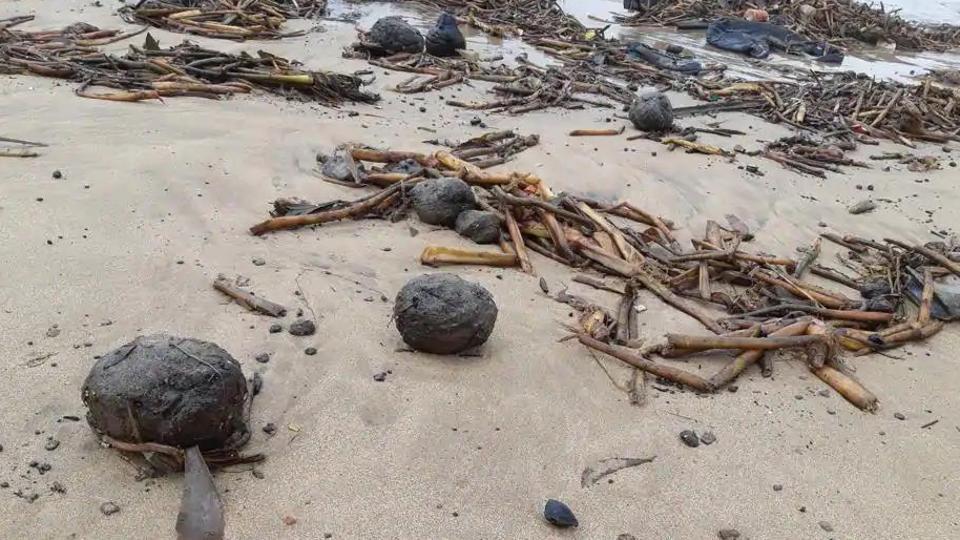
The soft and sticky tar balls are a huge deterrent to tourists visiting the beach and threaten the footfalls at beachside businesses. (File Photo)

State environment minister Nilesh Cabral said that he has sent a copy of a study on the sources of tar balls in Goa to the Union minister and that “discussions are in progress”.

“We have tracked down the source of these tar balls after studying the phenomenon. We have written to the MoEF about the matter. The Central ministry will now study our findings before taking measures to address the issue which we have raised,” Cabral said.

In 2013, a study by the National Institute of Oceanography had conducted a study on the source of the tar balls that wash ashore on beaches of Goa, sullying the water and the sand and coating it with a slimy coating that makes it unsafe to bathe in the sea.

The studies had said that the source of the tar balls was from passing tankers that wash their tanks en route between the Middle East and Southeast Asia or from accidental oil spills.

A subsequent study in 2016 found that the tar balls that washed ashore in late May were from Bombay High, but the ones seen in August-September after the monsoon were from the tankers on the high seas.

The soft and sticky tar balls are a huge deterrent to tourists visiting the beach and threaten the footfalls at beachside businesses.

Tar ball deposition along the West Coast of India (WCI) is a common phenomenon during the southwest monsoon season, particularly along the coast of Goa and Gujarat, and it is a major concern to the stakeholders especially tourism stakeholders.

  • HT News Desk
    ABOUT THE AUTHOR
    HT News Desk

    Follow the latest breaking news, major developments and agenda-setting stories from India and around the world with the newsdesk at Hindustan Times. Operating round the clock, the desk brings together experienced editors, reporters and correspondents to deliver fast, accurate and contextual reporting across subjects that influence public policy, governance, business, society and international affairs. The HT News Desk covers politics, elections, government policies, the economy, business and markets, science and technology, the environment, law and order, infrastructure, education, climate issues and geopolitics, while closely tracking developments across states, institutions and global capitals. The team also leads coverage of major breaking news events, policy announcements, court proceedings, natural disasters, public emergencies and significant international developments. Reports published by the newsdesk are based on information gathered from reporters on the ground, official statements, government agencies, court records, regulatory filings, recognised institutions and other authoritative sources. Stories undergo editorial scrutiny and verification processes to ensure accuracy, fairness and relevance, and are updated as events evolve and additional information becomes available. Whether covering a key political decision in New Delhi, an economic policy shift affecting millions, a landmark court ruling or a major global event, the HT News Desk aims to provide readers with reliable, fact-based journalism that delivers not only the latest developments but also the context and analysis needed to understand their wider implications.Read More