
 E-Paper



Covid-19 outbreak: SC holds hearing through video conference
The hearing held on Friday was through the Vidyo app which can be downloaded on mobile phones and desktop. While the two judges on the bench joined the call from the residence of one of the judges, the lawyers joined from their respective residences.


The Supreme Court on Friday held hearings in urgent cases through video conferencing. The top court which is under complete shutdown due to the Covid-19 pandemic decided earlier this week that it would hear extremely urgent cases via video conferencing without the personal presence of lawyers.
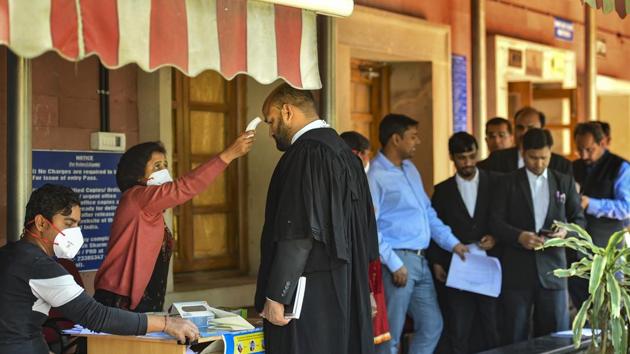
The hearing held on Friday was through the Vidyo app which can be downloaded on mobile phones and desktop. While the two judges on the bench joined the call from the residence of one of the judges, the lawyers joined from their respective residences.
“The Supreme Court Registry sends a link to the lawyers involved in a case listed for hearing. The lawyer can join the video conference by clicking the link. After all the lawyers join, the judges will join”, advocate Raghenth Basant, who appeared in one of the cases on Friday, explained.
The lawyers who appeared through video conferencing did not face any technical glitches during the hearing.
“There were no technical glitches”, said senior advocate Sanjay Hegde who appeared in a case relating to evacuation of Indian pilgrims from Iran.
“It was very smooth. There were no glitches whatsoever. Audio and video quality were extremely good”, said advocate Basant.
Were the lawyers able to cope with the virtual courtroom?
“Even I was apprehensive initially, but it went off very well. In my case, the lawyers argued one by one. The judges then asked for the Centre’s response and the additional solicitor general replied. In fact, it was much more organized than normal court hearings. The judges also looked completely at ease. The Supreme court has done a brilliant job to get this ready in such a short time”, said Basant.
However, Hegde flagged some concerns.
“Arguing ex-parte was easy, but at a later stage if there are multi-party hearings there will have to be protocols set, so that no one talks over the other. There will also have to be mechanisms to produce last minute research since no papers or books can be handed over the bar as we are used to (doing)”, he said.
“There must be some agreement on the dress code to be followed by lawyers arguing from their house or office. There should also be a protocol for ending the hearing, as it might be disrespectful for lawyers to just switch off (the app)”, Hegde added.
He also raised privacy concerns about the Vidyo app.
However, the use of video conferencing might be the push that was required for the top court to go digital when it comes to filing and hearing of cases. It might also be the first step towards recording and live streaming of court proceedings.
“This adversity has thrown us an opportunity which might be the way forward in future”, said advocate Basant.


