
 E-Paper



Before and after satellite images of Balakot camp trigger debate over extent of damage
Claims and counterclaims over the proof of air strikes on a JeM facility in Pakistan continued on Wednesday — with a media report saying high-resolution satellite images showed that the structure was still standing.

 Prefer HTon Google


Claims and counterclaims over the proof of air strikes on a Jaish-e-Mohammed (JeM) facility in Pakistan continued on Wednesday — with a media report saying high-resolution satellite images showed that the structure was still standing, while Indian officials contended that the February 26 raid caused the intended damage using precision weapons that do not trigger widespread destruction.
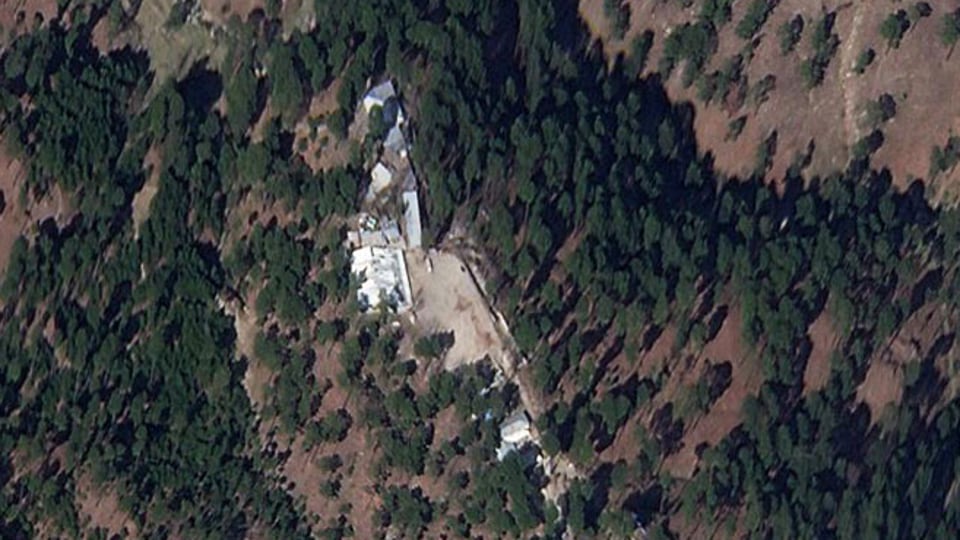
News agency Reuters reported that images “produced by Planet Labs Inc, a San Francisco-based private satellite operator, showed at least six buildings on the madrasa site on March 4” were virtually unchanged from an April 2018 satellite photo of the facility.
The report also said the images showed “no discernible holes in the roofs of buildings, no signs of scorching, blown-out walls, displaced trees around the madrasa or other signs of an aerial attack”.
But two officials in India, who asked not to be named, said the Indian Air Force (IAF) dropped precision bombs on the JeM camp in Balakot in Khyber Pakhtunkhwa province, adding that the unprecedented strike met its objective.
The officials said IAF’s Mirage 2000s dropped Israeli Spice 2000 bombs with penetration warheads to destroy the Jaish camp in the pre-dawn strike, India’s response to the Pulwama suicide bombing of a Central Reserve Police Force (CRPF) convoy that killed 40 security personnel. JeM claimed responsibility for the February 14 attack in Jammu and Kashmir. “Bombs with penetration warheads, such as the Spice 2000, break through the rooftops of buildings targeted and explode inside,” said former IAF chief Air Chief Marshal Fali Major (retd).
On February 28, IAF said it had credible evidence to prove that the Mirage 2000 strikes against the terror camp met their objective. The evidence, consisting satellite and radar imagery, has been handed over to the government, which now has to decide whether to reveal it or not, one of the officials said.
In Coimbatore, Air Chief Marshal BS Dhanoa said on Monday IAF does not count casualties in an operation as its job is to hit the targets, remarks that came against the backdrop of a debate on the damage caused by India raids. “Air Force is not in a position to clarify how many people were inside... We don’t count human casualties, we count what targets we have hit or not hit... We can’t count how many people have died. It depends on how many people were there,” the IAF chief said.
Proof of the attack has become a major political issue with several Opposition asking for proof on the number of casualties. Pakistan, its media, and a section of the foreign media, have suggested that Indian jets missed the target. Officials in India’s intelligence establishment said soon after the attack that 300-350 people, including terrorists and commanders, were killed in the air raid.


