
 E-Paper



Delhi AQI breaches 400-mark amid pollution concerns, Bawana worst-hit
Tuesday's AQI levels were marginally higher than Monday, when the AQI was in the 'very poor' category, with a recording of 345 as of 8 am

 Prefer HTon Google


Delhi's struggle for clean air continues as the national capital as the air quality plummeted to ‘severe’ category with an overall Air Quality Index (AQI) recorded at 421 at 7 am on Tuesday.
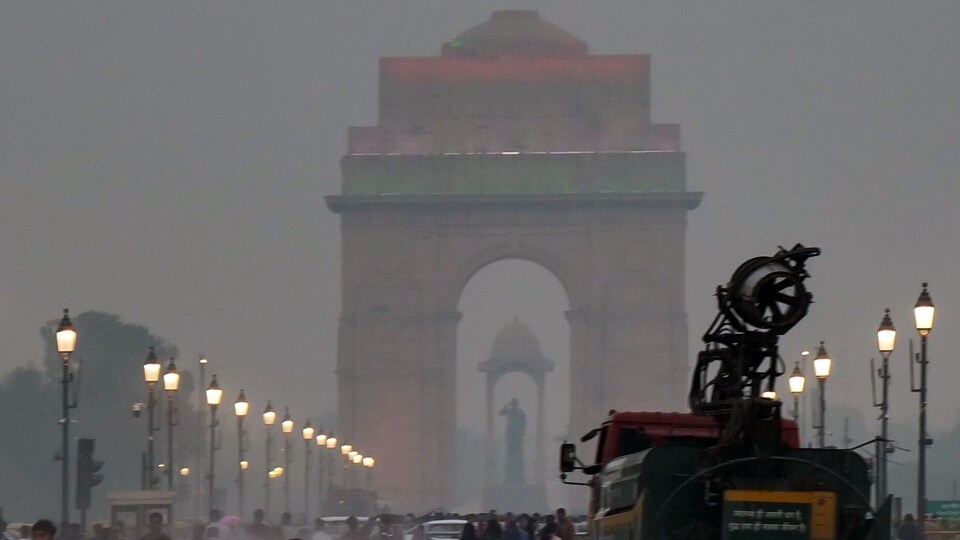
According to data from the Central Pollution Control Board (CPCB), most parts of the city logged alarming pollution levels with the AQI going above the 400-mark.
Bawana recorded the worst AQI of 462, RK Puram and Patparganj at 446 and 438, respectively. Among other most polluted areas of Delhi were Anand Vihar with an AQI of 412, Alipur with 442, and Chandni Chowk with an AQI of 416.
Tuesday's AQI levels were marginally higher than Monday, when the AQI was in the 'very poor' category, with a recording of 345 as of 8 am.
According to CPCB, an AQI between 0 and 50 is considered 'good', 51-100 'satisfactory', 101-200 'moderate', 201-300 'poor', 301-400 'very poor', and 401-500 'severe'.
Delhi's air troubles have worsened since last month, especially after Diwali when the city burst firecrackers. Besides, farm fires in the adjacent states and low wind activity have also contributed to the alarming pollution.
Check area-wise AQI here:
| Monitoring Station | AQI |
|---|---|
| Anand Vihar | 421 |
| Alipur | 442 |
| Bawana | 462 |
| Chandni Chowk | 416 |
| RK Puram | 446 |
| Sonia Vihar | 433 |
| Patparganj | 438 |
GRAP 3 in Delhi
Restrictions under Stage 3 of the Graded Response Action Plan (GRAP) have been imposed in Delhi-NCR after the city’s air quality slipped into the ‘severe’ category.
The implementation of Stage III curbs, which include a ban on non-essential construction work and closure of stone crushers and mining activities, is in addition to the actions already enforced under Stages I and II of GRAP.
Classes up to Class 5 are required to shift to hybrid mode under Stage 3. Parents and students have the option to choose online education wherever available.
Under Stage 3, the use of BS-III petrol and BS-IV diesel cars (4-wheelers) is restricted in Delhi and nearby NCR districts. Persons with disabilities are exempt.
Govt's pollution app turns black
Meanwhile, the government’s pollution monitoring app and website went dark for most of Monday even as toxic haze visibly thickened across the Capital—the latest unexplained breakdown in a system meant to help residents measure the pollution they can already see and feel.
An update finally came late in the night, by when it crossed into its worst levels and headed for the “severe” category, above 400.


