
 E-Paper



No cloud seeding in Delhi today, announces IIT Kanpur. Here's why
In an official statement, IIT Kanpur said that the process is highly dependent on the right atmospheric conditions.

 Prefer HTon Google


A day after cloud seeding attempts did not produce desired results in the national capital on Tuesday, the Indian Institute of Technology, Kanpur said that the attempt planned for Wednesday, October 29, has been put on hold due to “insufficient moisture in the clouds”.
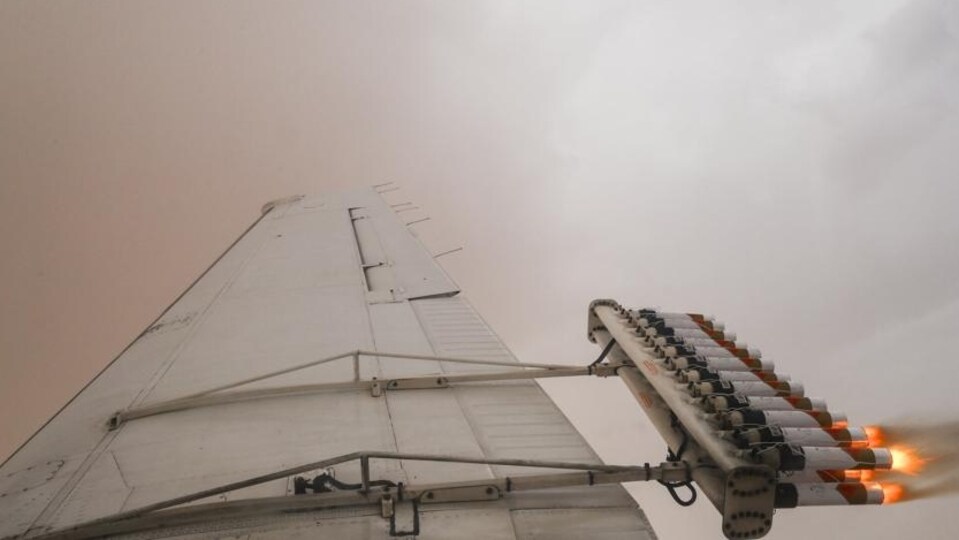
In an official statement, IIT Kanpur said that the process is highly dependent on the right atmospheric conditions.
The two cloud seeding attempts done on Tuesday were carried out by the Delhi government in collaboration with IIT Kanpur. They cost the approximately ₹1.28 crore in total, as reported earlier by Hindustan Times.
Explaining why the attempts did not work, IIT Kanpur said that it was because the moisture level in the clouds was not enough, however the trial delivered valuable insights.
“While rainfall could not be triggered yesterday because moisture levels were around 15 to 20%, the trial delivered valuable insights,” it said.
Cloud seeding attempts fail, but provide ‘valuable’ lessons
According to the institute, even though the cloud seeding attempts did not produce favourable results, it did however led to measurable reduction of major pollutants such as PM2.5 and PM10.
Also read: 'If we fear failure...': IIT Kanpur director on future of cloud seeding trials in Delhi
“Monitoring stations set up across Delhi captured real-time changes in particulate matter and moisture levels. The data shows a measurable reduction of 6 to 10 percent in PM2.5 and PM10 concentrations, indicating that even under limited moisture conditions, cloud seeding can contribute to improved air quality,” read the statement by IIT Kanpur.
“These observations strengthen our planning for future operations and allow us to better identify conditions where this intervention can deliver maximum benefit. Such learnings form the foundation for more effective deployments ahead,” it added.
Delhi air remains ‘very poor’
Day after failed attempts at cloud seeding in Delhi, the air in the national capital remained under the "very poor" and "poor" categories in most places on Wednesday morning.
As of 12 pm, the AQI in Anand Vihar was at 316 under the ‘very poor’ category, while at ITO it was at the edging mark of 300.
RK Puran recorded an AQI of 305 and Wazirpur of 332, putting air in both these areas in ‘very poor’ category.
This comes as the Graded Response Action Plan (GRAP) II norms are already in place in the national capital. Additionally, the Commission for Air Quality Management (CAQM) has prohibited the entry of commercial goods vehicles registered outside the national capital that are non-compliant with BS-VI emission standards.


