
 E-Paper



Delhi high court judge to head the tribunal on PFI ban
Once an organisation is banned under the UAPA, a tribunal is set up by the Centre within 30 days, to see whether or not there is ample cause for declaring the outfit an “unlawful association”. The tribunal will seek the outfit’s reply, within 30 days, and will subsequently hold a probe.


The Centre has appointed Delhi high court judge Dinesh Kumar Sharma as head of Unlawful Activities (Prevention) Tribunal to review its recent five-year ban on Popular Front of India (PFI) and its affiliate organisations, after a nationwide crackdown led to arrests and recovery of purported incriminating documents from offices and residences of the outfit’s office bearers last week.
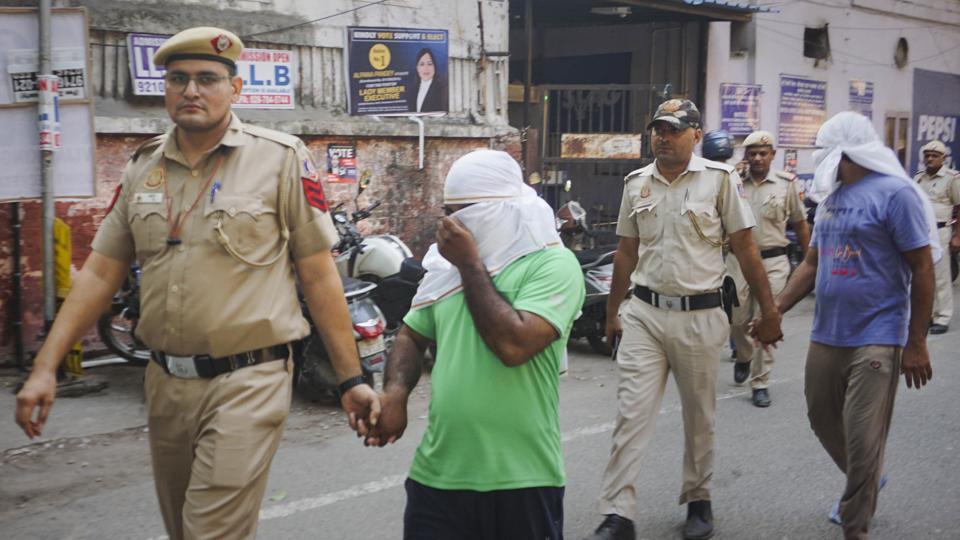
The PFI and its eight affiliate outfits were banned under the stringent Unlawful Activities (Prevention) Act (UAPA) on September 28.
An office memorandum issued on October 3 by the department of justice in the law ministry said Justice Sharma’s period as head of the tribunal will be counted as part of his “actual service”.
Justice Sharma was nominated by Delhi high court chief justice SC Sharma.
“Chief Justice of Delhi High Court has nominated Justice Dinesh Kumar Sharma, Judge to be appointed as the Presiding Officer of the Unlawful Activities (Prevention) Tribunal in the matter of Popular Front of India (PFI) and its associates or affiliates or fronts… for the purpose of adjudicating whether or not there is sufficient cause for declaring these organizations as an Unlawful association,” the memorandum said.
Once an organisation is banned under the UAPA, a tribunal is set up by the Union government, within 30 days, to see whether or not there is ample cause for declaring the outfit an “unlawful association”. The tribunal will seek the outfit’s reply, within 30 days, and will subsequently hold a probe. The entire exercise must be over in six months.
By convention, the tribunal is headed by a sitting high court judge after the ministry of home affairs (MHA) makes a formal request to the law ministry in this regard. The request is forwarded by the latter to the chief justice of the concerned high court, which recommends a judge to head the tribunal.
The office memorandum issued by the department of justice is followed by a formal notification by MHA.
The Centre on September 28 outlawed PFI and its affiliates for five years, accusing them of indulging in Islamic radicalisation and terrorist activities. The move came following a crackdown on the group’s leaders and office bearers by the National Investigation Agency (NIA) and local police across several states in which nearly 350 people were rounded up.
The ministry said that PFI, its associates or affiliates and fronts have been involved in violent terrorist activities with the intent to create a reign of terror in the country, thereby, endangering the security and public order of the state.
The ban under UAPA’s section 3, which makes PFI a “terrorist organisation”, is expected to cripple its funding, recruitment, and other activities as anyone found associated with it can be booked under terror charges in any part of the country, an NIA official had earlier said, asking not to be named.
In response through a statement, the PFI said it had dissolved itself and asked its members to stop their activities.
The PFI’s affiliates include Rehab India Foundation (RIF), Campus Front of India (CFI), All India Imams Council (AIC), National Confederation of Human Rights Organisation (NCHRO), National Women’s Front, Junior Front Empower India Foundation and Rehab Foundation, Kerala.


