
 E-Paper



Delhi next on NCB radar to launch Mumbai-style crackdown on drugs
A Mumbai-style crackdown brings in an element of uncertainty for drug consumers who may not be detected when they make the purchase, but much later

 Prefer HTon Google


The Narcotics Control Bureau, which traced back the drug trail that emerged during investigations into actor Sushant Singh Rajput’s death, and arrested nearly 20 people in Mumbai will next turn its focus on rampant drug abuse in the national capital Delhi too and other metros, a senior official of the country’s lead drug enforcement agency said.
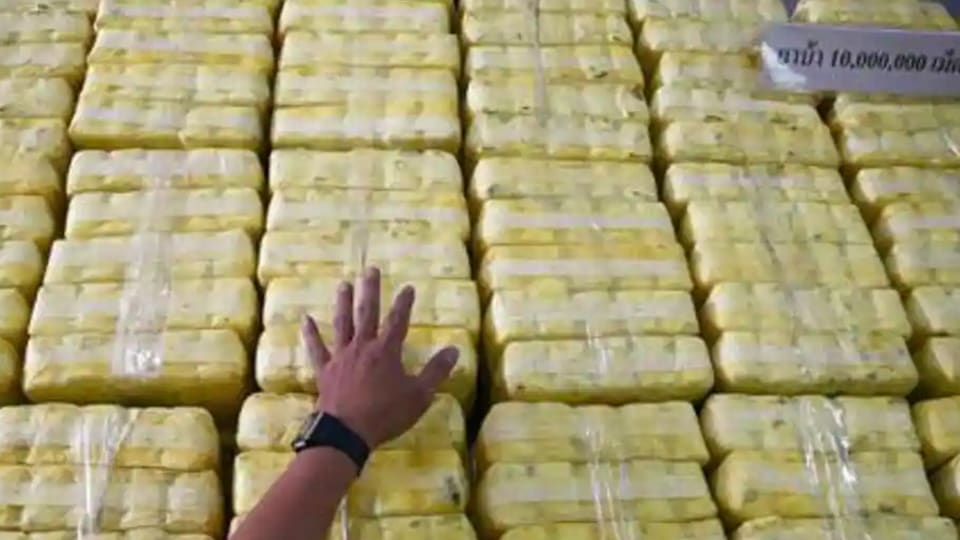
The official did not elaborate if the agency already has a lead. “ We will focus on Delhi too,” he said, suggesting that the NCB was looking at a Mumbai-style operation that would go up the value chain right to the cartels that supply drugs to Mumbai.
Officials investigating the Mumbai case haad started with information about purchase of drugs by one person and then expanded the probe that has netted nearly 20 people including actor Rhea Chakraborty and could singe several Bollywood A-listers and politicians as investigations proceed.
Such an operation also brings in an element of uncertainty for drug consumers who may not be detected when they make the purchase, but much later.
Delhi, according to a nationwide survey on drug consumption released by the government in 2019, was among the small group of states - Uttar Pradesh, Punjab, Haryana, Maharashtra, Madhya Pradesh and Andhra Pradesh were the others - that contributed more than half of the country’s 77 lakh problem opioid users.
This survey also revealed how huge India’s drug problem was. According to this survey, a senior NCB official said, 2.1% of the country’s population used opioids, thrice the global average of 0.7% and four times Asia’s 0.46%.
The NCB estimates that if only 20 lakh of the 77 lakh people who use opioids are dependents who consume a minimum of 0.5 gram of heroin everyday, the average daily consumption of heroin in the country comes to 1000 kgs per day. This means there is a demand for a minimum 360 tonnes of retail quality or 36 tonnes of wholesale (relatively pure) quality of heroin per year. The international value of this requirement of the wholesale quality of heroin comes to ₹1,44,000 crore.
In contrast to this huge requirement, law enforcement agencies were able to seize only 2.4 tonnes of heroin in 2019, the year the nationwide study was published.
Officials said they were working to dismantle the international supply chains used by drug traffickers and had started sharing and receiving real-time information from drug enforcement agencies in the United States, Canada, Australia, Russia, the United Kingdom and South Africa to jointly push back against the drug culture. And scoring some successes too.
India’s geographic location does complicate the effort. India is sandwiched between Golden Crescent on the northwestern frontier, and Golden Triangle on the northeastern frontier.
There are indications that in addition to Afghanistan, parts of Pakistan near the Afghan border, are also used by the Pakistani drug traffickers to convert Afghan opium into heroin. Myanmar throws another challenge with its heroin and methamphetamine production and porous borders, the NCB official said. India’s eastern neighbour is the second largest opium producer with 33,000 hectares of land under cultivation in Shan and Kachin provinces, which share a border with China.


