
 E-Paper



Delhi University may drop Pak, China, Islam courses from political science syllabus; faculty slams move
Following the Pahalgam attack, Delhi University department heads were reportedly asked to remove any unnecessary glorification of Pakistan from their syllabus.

 Prefer HTon Google


The MA Political Science syllabus at Delhi University may lose references to Pakistan, China, Islam, and political violence as the university is likely to drop courses on these subjects from the syllabus.
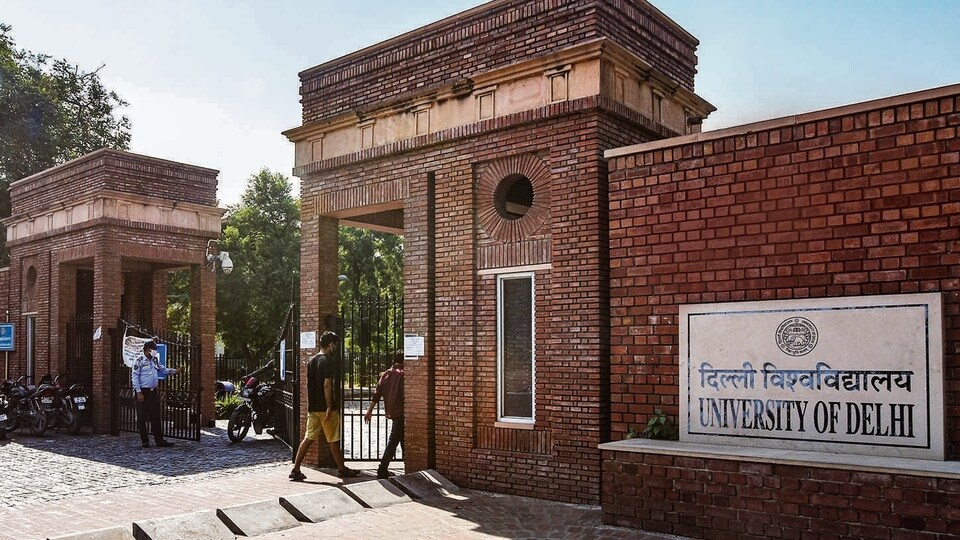
'Pakistan and the World', 'China's Role in the Contemporary World', 'Islam and International Relations', 'Pakistan: State and Society' and 'Religious Nationalism and Political Violence' will likely be either dropped or replaced by other courses.
Following the April 22 Pahalgam attack, department heads at Delhi University were asked to remove any unnecessary glorification of Pakistan from their syllabus, university Vice Chancellor Yogesh Singh told news agency ANI.
Faculty slams move
The move to potentially drop these courses from the MA Political Science course at Delhi University has not gone down well with the faculty, who argue that it would undermine geopolitical understanding.
Dr. Monami Sinha, a member of the Standing Committee, said the Political Science PG syllabus came under "significant scrutiny" when the university's Standing Committee on Academic Matters met to discuss the syllabi of several courses.
"It is imperative to study Pakistan in detail because, pedagogically, we need to train our students and foster scholarship on Pakistan, as it remains one of India's constant foreign policy challenges," she stated in her note.
She also called China an emerging key player in the Global South, emphasising why its important to include a course on it.
Abha Dev, Secretary of Democratic Teachers' Front (DTF) also objected to the move, emphasising academic autonomy. "Academic autonomy of Departments stands eroded. The dumbing down of courses by revisions centred around "beliefs" rather than questions of pedagogy and scientific inquiry is unfortunate. Forced revisions are retrograde and are politically motivated. DU was known for its UG courses. These forced changes will adversely impact students' scholarships. This should worry all of us," said Abha Dev.
Rudrashish Chakraborty, DUTA Executive Council member, reminded the university authorities of the importance of debate. The official argued that while changes can be suggested, departments cannot be mandated to enforce them.
“Instead of cancelling uncomfortable questions, one needs to always engage even with the perceived 'other' to equip oneself with the intellectual wherewithal to tackle the 'other' in the new global geopolitical order,” said Chakraborty, in a statement.
If the courses on Pakistan, China, and Islam are replaced, the new ones will be referred to the department's course committee, which will then prepare a new syllabus.
This syllabus will be presented for approval to the university syllabus panel and then tabled in the Academic Council for approval.
(With ANI inputs)


