
 E-Paper



Doctors’ strike enters second day in Delhi; thousands affected
The doctors have been protesting against the NMC bill, which was passed by the Rajya Sabha with some amendments on Thursday.


Thousands of patients were affected for the second day on Friday as nearly 20,000 resident doctors and medical students in Delhi continued their protest against the National Medical Commission (NMC) bill.
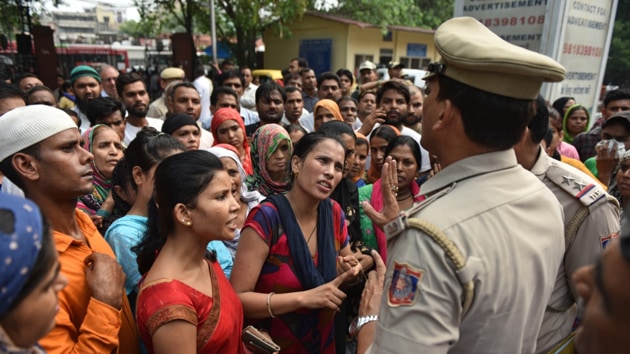
The doctors have been protesting against the NMC bill, which was passed by the Rajya Sabha with some amendments on Thursday. It will regulate medical education and the profession. The bill, which seeks to replace the graft-tainted Medical Council of India (MCI), got the nod of the Lok Sabha on July 29.
Three key resident doctors’ association met with the Union health minister Dr Harsh Vardhan to discuss their reservations with the NMC bill. The minister clarified the government’s position on some issues such as the community health practitioners and the national exit test.
“I met a group of representatives from @AIIMSRDA , @FordaIndia and #URDA today at @MoHFW_INDIA office. During this time I resolved the doubts of the doctors about the #NationalMedicalCommissionBill, 2019 @PMOIndia #NMCBill (sic),” Dr Harsh Vardhan tweeted.
After that senior officials from the ministry, including the health secretary, also discussed the matter for two hours.
“We have just reached back to AIIMS after the meeting with the ministry officials. A general body meeting is now being held to discuss what can be done further,” said Dr Rajeev Ranjan, general secretary of All India Institute of Medical Sciences’ (AIIMS) Resident Doctors’ Association.
Services restricted
Hospitals had to restrict their out-patient clinics to follow-up patients, cancel routine surgeries and scale back emergency services.
The outpatient clinics at Lok Nayak Jai Prakash Narayan Hospital, the biggest Delhi government-run medical institution, was barely functional and the emergency services were available only to patients in critical condition.
“We are having a meeting now to see how to manage the situation, but the OPD will likely function like yesterday and the emergency department will take in only the most critical patients. No other new admissions will be done. All routine surgeries will have to be cancelled as well,” said Dr Kishore Singh, medical director of the hospital.
Around 40 of the striking resident doctors were detained on Thursday outside Parliament. They were later released late in the evening.
“The medical fraternity across the nation is utterly shocked and saddened by the despotic attitude of the Central Government in getting the NMC Bill passed in the Rajya Sabha without giving due considerations to amendments pressed by our fraternity, except a minor amendment of increasing the number of elected representatives in the NMC,” presidents of three doctors’ unions leading the strike said in a letter.
The Resident Doctors’ Association at All India Institute of Medical Sciences, the Federation of Resident Doctors’ Association and the United Resident and Doctors Association have boycotted work over the bill.
“We will continue with the indefinite strike as decided earlier including withdrawal of residents from emergency services,” the letter said.
More than 50,000 people are treated in the out-patient clinics of hospitals run by various government agencies in Delhi every day. Around 40% of these patients travel from neighbouring states for treatment.
AIIMS alone performs about 100 routine surgeries a day.
Doctors have said they are against some of the provisions of the new bill, mainly the proposal for a common exam — National Exit Test (NEXT) —as the final year exam for the undergraduate course, a licentiate exam for a career in medicine, as an entrance test for postgraduate courses, and a screening test for students graduating from foreign countries.
Section 45 of the bill also threatens the autonomy of the NMC, the doctors say. It allows the central government to override any recommendations or suggestions by the NMC and give directions to it and the autonomous boards regarding policy matters.
The doctors are also concerned about the reduction in the number of elected representatives from 75% in the Medical Council of India to 20% in NMC. They are also against the fee regulation for about 50% of seats down from 85% by the state governments.


