E-Paper



Doda terror attack: Operational challenges mount for army
This was the sixth major attack in the Jammu region this year and came a week after five soldiers were killed in a terror ambush in Kathua district

 Prefer HTon Google


The Doda encounter, the latest in a series of worrying attacks in which several soldiers were killed, has put the spotlight on the resurgence of terror in the Jammu region during the last two years, and raised questions over key operational and intelligence challenges facing the armed forces south of the Pir Panjal range, officials and experts said on Tuesday.
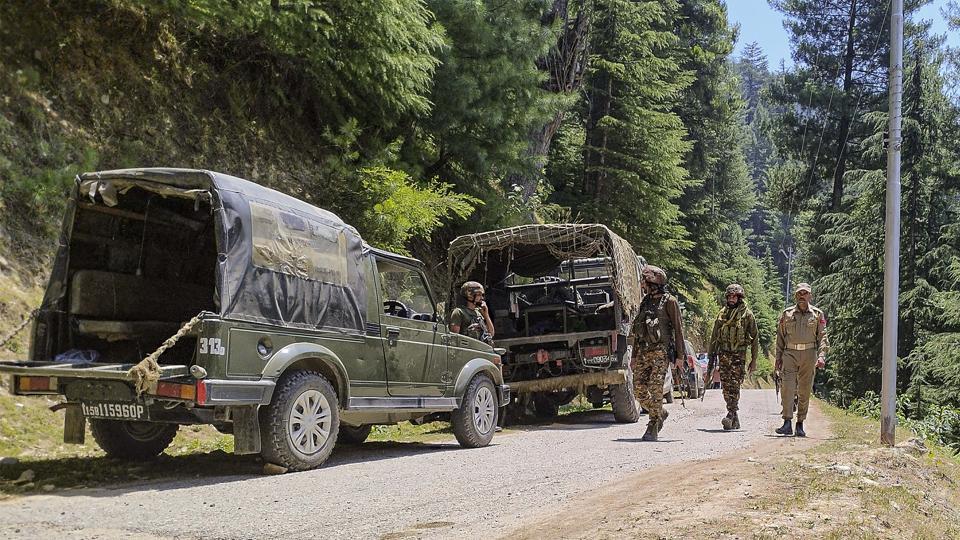
This was the sixth major attack in the Jammu region this year and came a week after five soldiers were killed in a terror ambush in the neighbouring Kathua district, indicating that terrorists had opened a new front in a relatively peaceful part of the Union territory.
The spike in the attacks points to the alarming presence of several small groups of Pakistan-backed infiltrators in the region that is no longer as heavily dominated by security forces as it was before the Ladakh military standoff began, and the army was forced to divert some of its forces there, officials said.
The terrorists clearly want to open a new front to engage the army in an area that was relatively quiet for several years, said former Northern Army Commander Lieutenant General DS Hooda (retd).
“These groups have infiltrated into Jammu & Kashmir with a clear strategy to foment trouble in the Jammu region, in contrast to the earlier trend of terrorists sneaking across the Line of Control (LoC) and then making their way to the Kashmir valley for carrying out strikes,” he said.
The rising attacks have also raised questions about the quality of intelligence available to the security forces to plan their operations and deter the terrorists, said one of the officials cited above, who asked not to be named.
The centre of gravity of terrorism has shifted from the Kashmir valley to the Jammu region, especially after the army redeployed its forces to strengthen its posture against the Chinese People’s Liberation Army in the Ladakh theatre and the vacuum created is being exploited, said Lieutenant General Vinod Bhatia (retd), a former director general of military operations.
“The terror network in the Jammu region is alive and kicking. Their handlers in Pakistan are calibrating the violence levels to create instability. They have intensified this effort after things returned to normal in the Kashmir valley,” Bhatia said.
The army has buttressed its force levels to some extent in the region and reorientated its units operating there, but clearly more needs to be done, the experts said.
“We must tighten our counter-infiltration grid to prevent terrorists from sneaking into Jammu & Kashmir. Human intelligence network also must be robust to take on the terrorists,” Hooda said.
The difficult terrain in some of the areas is one of the key challenges confronting the army, said a second official. In several instances, the terrorists have struck the army and managed to disappear in the mountain forests, with manhunts launched to get them proving futile.
“The terrain is a mix of mountains and forests. The topography offers the terrorists both hiding ground and escape routes. LoC crisscrosses such terrain and that too poses a challenge,” the official said.
Terrorists have the upper hand against the security forces because of the element of surprise, said former Northern Army commander Lieutenant General BS Jaswal (retd). “This advantage can be decimated with enhanced intelligence,” he added.