E-Paper



India to get its first dengue vaccine Qdenga by first half of 2027
The Takeda vaccine, Qdenga, is likely to be introduced in India in the first half of 2027 and the price has not yet been decided

 Prefer HTon Google


Hyderabad-based Dr Reddy’s Laboratories will promote and distribute India’s first anti-dengue vaccine by Takeda Pharmaceuticals across India’s private market for paediatric and adult vaccination, the companies announced on Friday.
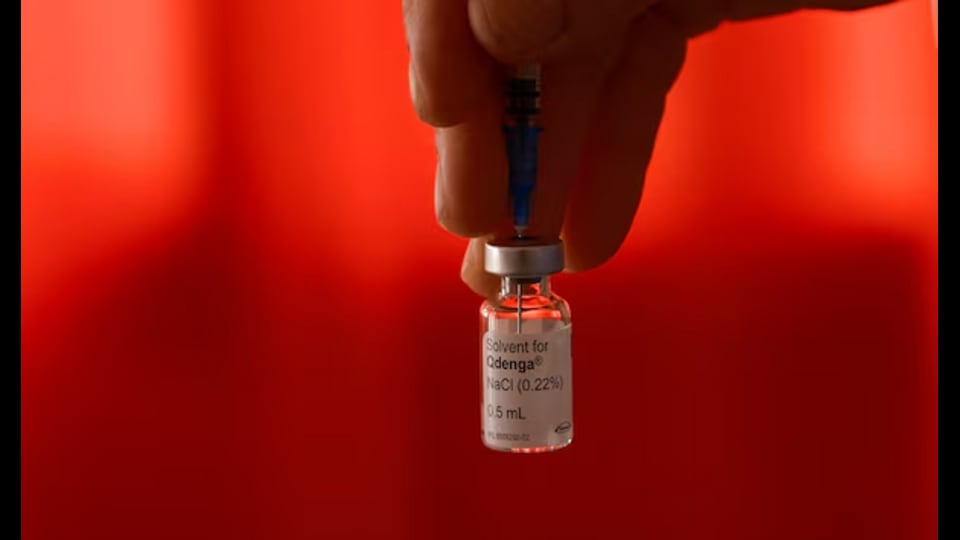
The Takeda vaccine—Qdenga—is likely to be introduced in India in the first half of 2027, they added. However, the vaccine’s price has not yet been decided.
“The approval for marketing authorisation was just granted in July. Hence, the immediate priority is to complete the necessary local processes required before commercial distribution can begin. It would be premature to speculate on pricing before the remaining local processes are complete,” said Mahender Nayak, head of intercontinental markets, Takeda.
Also Read | Maharashtra reports sharp spike in vector-borne disease cases
He added that through the collaboration announced today, Takeda and Dr Reddy’s will support healthcare-professional engagement, disease awareness, promotion and distribution of Qdenga across India’s private market for paediatric and adult vaccination, in accordance with applicable regulatory requirements.
“While inclusion in India’s public immunization program remains an important long-term ambition, private-market availability through Dr. Reddy’s will provide a pathway for eligible individuals to access the vaccine once it becomes available. Further details will be shared at the appropriate time,” added Nayak.
The collaboration follows the approval of Qdenga’s marketing authorisation by India’s Central Drugs Standard Control Organization (CDSCO) in July for individuals aged between 4 and 60 years. Dengue remains a significant and evolving public-health challenge in India. According to a nationwide dengue surveillance study conducted by the Virus Research and Diagnostic Laboratory of the Indian Council of Medical Research, all four dengue virus serotypes (DENV-1 to DENV-4) are co-circulating across multiple regions in India, with 1 in 14 patients being infected with multiple dengue serotypes concurrently.
Also Read | Noida Sector 108 RWA seeks park fogging amid dengue concerns
With dengue cases occurring year-round across India, dengue prevention and management is an urgent public-health priority.
Qdenga is a live-attenuated tetravalent dengue vaccine, built on a DENV-2 backbone with structural proteins from DENV-1, DENV-3, and DENV-4, enabling broad immune coverage across all four dengue serotypes.