
 E-Paper



Election commissioners’ letter to cabinet secretary concerned senior poll official, not CEC Gyanesh Kumar
The letter to cabinet secretary TV Somanathan was dated July 29 and spoke of a senior deputy election commissioner.

 Prefer HTon Google


A letter sent to the cabinet secretary by the two election commissioners, Sukhbir Singh Sandhu and Vivek Joshi, was regarding the functioning of a senior deputy election commissioner (DEC), a person privy to the developments told HT on Sunday, a day after the poll panel clarified that the communication had nothing to do with its policy matters.
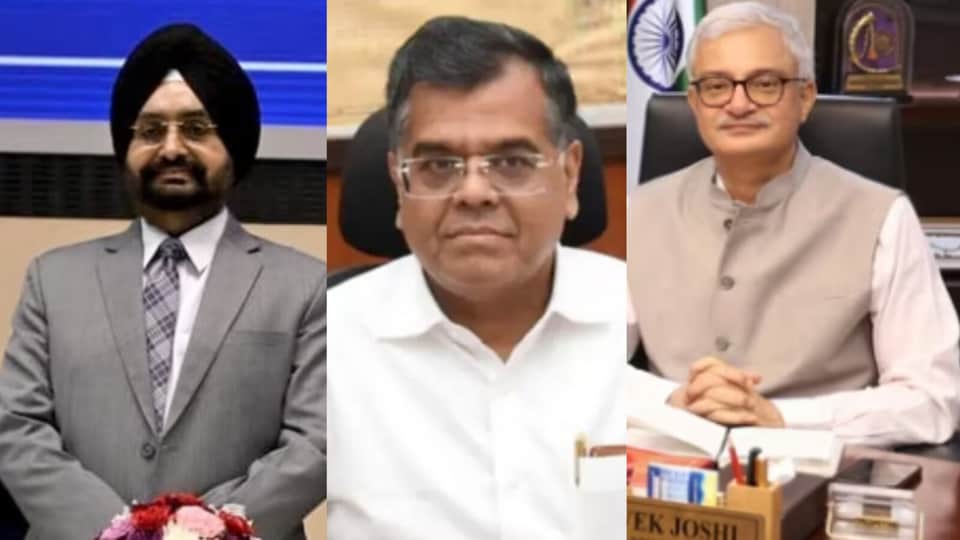
The letter to cabinet secretary TV Somanathan was dated July 29 and spoke of the senior official involved in poll-related matters, according to the person cited above, who did not want to be named. The person did not disclose the contents of the letter, calling it a “classified” matter.
Officials generally take up such matters involving the functioning of personnel with the chief election commissioner (CEC). Had the letter been against CEC Gyanesh Kumar himself, protocol would have dictated that it be marked to the President.
Deep Dive

The development comes amid a news report that has sparked a buzz over alleged differences within the body tasked with conducting elections in India, including over issues of work allocation and oversight of the commission’s information and technology (IT) division.
After the report that Sandhu and Joshi had objected to certain key decisions of the Election Commission of India (ECI), including those related to the contentious Special Intensive Revision (SIR) process, opposition parties have called for Kumar’s resignation and the Supreme Court’s intervention, while also questioning the integrity of the election process.
The poll body has rejected charges of one-sided decision-making, saying differences are part of the deliberation process but all ECI decisions are "unanimous". The ruling Bharatiya Janata Party (BJP) distanced itself from the controversy.
In a press note after a meeting on Saturday, the poll panel said: “The letter to Cabinet Secretary was not related to any policy matter of the Commission or IT division but related to working of an officer on deputation to ECI. The work re-distribution orders issued by the concerned officer were not actually implemented after the orders of the two Commissioners and the oversight over the IT division by the DEC was never actually withdrawn.”
Also Read | Election Commission presents united front in face of mounting criticism
There have been allegations over the centralisation of ECINet and restrictions on access, as well as claims that the two election commissioners had raised concerns over the issue. ECINet is the poll panel's digital platform to handle all election-related information.
Amid the controversy, the commission said field officers have role-based access to the ECINET system as per their statutory powers. It added that a panel headed by a senior DEC and including an independent expert from the IITs/IIITs "will review the ECINET to double-check that it complies with the provisions of the Acts and Rules and submit report to the Commission".
Also Read | 'Mark VIP': Election Commission adds fresh feature in app for officials amid SIR
"Various upgradations of the portal have already been made based on the inputs from State CEOs [chief electoral officers] in the past few months. In case, any further flexibility is required by the field officers, that will be made operational. Henceforth, all the new initiatives about IT modules and portals will be discussed in the Committee of Officers...before approval by the Commission," ECI's press note on Saturday said.


